
Chronic Conditions in Adults Explained: A Clear Guide

TL;DR:
- Most American adults have at least one chronic condition, which requires ongoing care and limits daily activities. Managing these illnesses effectively involves lifestyle changes, regular medical follow-up, and addressing social factors like housing and food access. Building realistic routines and maintaining social connections improve long-term outcomes and quality of life.
A chronic condition is defined as a health issue lasting one year or more that requires ongoing medical attention or limits daily activities. This definition, established by the CDC, sets chronic illness apart from the short-term infections and injuries most adults recover from within days or weeks. Understanding chronic conditions in adults explained through this lens matters because 3 in 4 American adults have at least one chronic condition, and over half live with two or more at the same time. That scale shapes everything from how you interact with your doctor to how you plan your daily routine. Knowing what you are dealing with is the first step toward managing it well.
What are common chronic conditions affecting adults?
Chronic conditions cover a wide range of health issues, but several appear far more frequently than others. Heart disease, type 2 diabetes, hypertension, arthritis, asthma, and chronic obstructive pulmonary disease (COPD) are among the most common. Cancer also qualifies as a chronic condition in many cases, particularly when treatment extends over months or years. Conditions like HIV, when managed with antiretroviral therapy, follow the same long-term pattern.
What makes this list significant is not just its length. Many adults live with more than one of these conditions simultaneously. A person managing type 2 diabetes often also has hypertension and elevated cholesterol. Each condition can complicate the management of the others, which is why coordinated care matters so much.
The table below shows how several common chronic conditions differ in their primary impact and management focus.
| Condition | Primary system affected | Core management focus |
|---|---|---|
| Type 2 diabetes | Metabolic | Blood glucose control, nutrition |
| Hypertension | Cardiovascular | Blood pressure monitoring, medication |
| Arthritis | Musculoskeletal | Pain management, physical activity |
| Asthma/COPD | Respiratory | Medication adherence, avoiding triggers |
| Heart disease | Cardiovascular | Lifestyle changes, medication, monitoring |
Medical literature also distinguishes chronic conditions as lasting more than three months, compared to acute illnesses that resolve in days to weeks. That distinction is useful when you are trying to understand whether a new diagnosis represents a temporary setback or a long-term shift in how you manage your health.
What are the risk factors and causes of chronic conditions?
Most chronic diseases share a common set of behavioral risk factors. The CDC identifies four primary contributors: smoking, poor nutrition, physical inactivity, and excessive alcohol use. These behaviors do not cause disease overnight. They accumulate over years, gradually increasing the risk of conditions like heart disease, diabetes, and certain cancers.
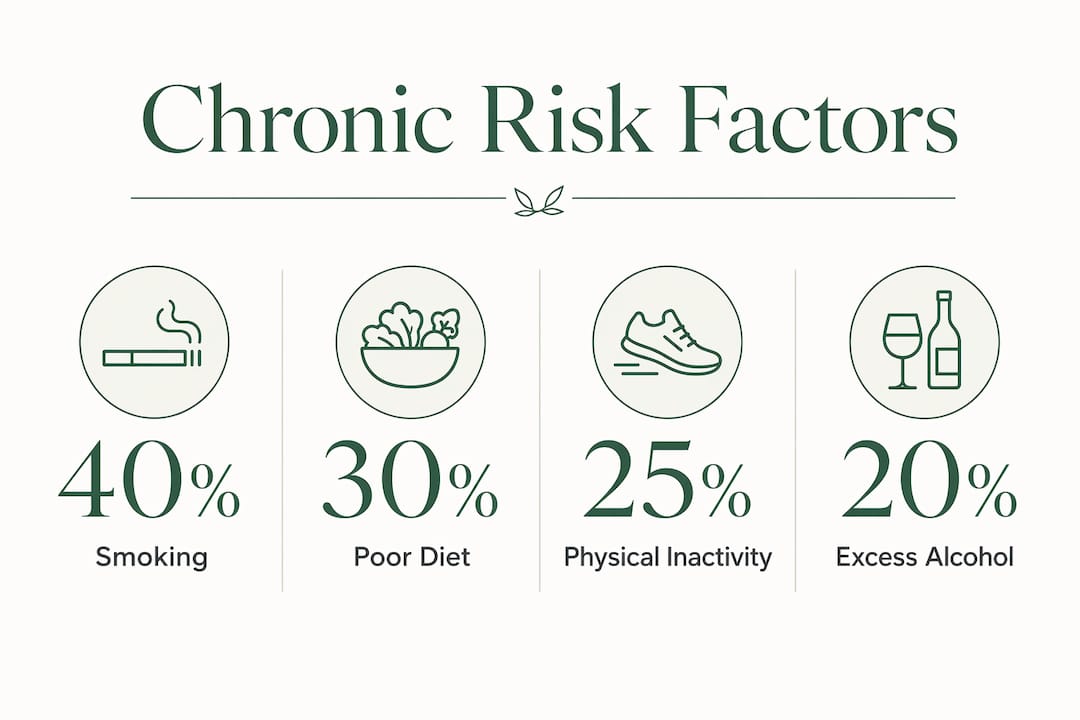
Age and genetics also play a role. Your risk for many chronic conditions rises as you get older, and a family history of heart disease or diabetes increases your personal likelihood of developing those conditions. That said, genetics are not destiny. Behavioral changes reduce risk even in people with strong family histories.
Social and environmental factors shape outcomes just as powerfully as individual choices. Social determinants of health, including housing stability, access to nutritious food, neighborhood safety, and proximity to healthcare, significantly influence both the likelihood of developing a chronic condition and the ability to manage one effectively. A person living in a food desert faces real barriers to the dietary changes that could lower their blood pressure or blood sugar.
- Smoking accelerates arterial damage and lung deterioration, raising risk for heart disease, COPD, and several cancers.
- Poor nutrition drives inflammation, weight gain, and insulin resistance, the foundation of type 2 diabetes.
- Physical inactivity weakens the cardiovascular system and contributes to obesity, hypertension, and joint deterioration.
- Excessive alcohol use damages the liver, raises blood pressure, and disrupts metabolic function.
- Chronic stress compounds all of the above by disrupting sleep, increasing inflammation, and making healthy habits harder to sustain.
Pro Tip: If you have a family history of a chronic condition, ask your doctor about screening timelines. Catching early signs before symptoms appear gives you the most options.
How can adults effectively manage chronic conditions?
Effective chronic disease management adults rely on combines medical care with consistent lifestyle changes. The lifestyle medicine framework identifies six evidence-based pillars: nutrition, physical activity, sleep, stress management, social connections, and avoiding risky substances. Each pillar reinforces the others. Better sleep, for example, reduces stress hormones that drive inflammation and poor food choices.

Medical management is equally non-negotiable. Regular follow-up visits and medication reviews every few months are critical to catching subtle changes before they become emergencies. Skipping appointments because you feel stable is one of the most common and costly mistakes adults with chronic conditions make.
Setting clear health targets gives you something concrete to work toward. If you have hypertension, knowing that your goal is a blood pressure reading below 130/80 mmHg tells you exactly what your daily choices need to support. Understanding specific diagnostic targets helps patients maintain consistent management behaviors over time.
Home monitoring is a practical tool, but it works best when kept focused. Tracking one or two key indicators, such as blood pressure or fasting glucose, is more sustainable and informative than trying to measure every possible variable. Burnout from over-monitoring is real, and it leads people to abandon tracking altogether.
Pro Tip: Start with the lifestyle pillar that feels most achievable for you right now. Building consistency incrementally produces better long-term results than trying to overhaul everything at once.
Nutrition deserves special attention because it affects nearly every chronic condition. The role of nutrition in chronic health management extends beyond weight control to reducing inflammation, stabilizing blood sugar, and supporting cardiovascular function. Small, consistent dietary improvements compound over months into meaningful clinical change.
What challenges do adults face living with chronic conditions?
Living with a chronic condition is not a single, fixed experience. Symptoms fluctuate. Some days feel manageable; others do not. Recognizing this variability as normal rather than a sign of failure is one of the most important shifts adults with chronic illness can make.
Multiple coexisting conditions create a specific challenge: the treatment for one condition can complicate another. A medication that controls blood pressure may affect kidney function. An anti-inflammatory drug for arthritis may raise blood sugar. Managing these interactions requires close communication with your care team, not just following a single condition’s protocol in isolation.
The emotional weight of chronic illness is real and often underestimated. Fatigue, frustration, and social withdrawal are common. Many patients successfully maintain active, socially engaged lives despite chronic condition limitations, but this usually requires deliberate effort and a support system.
Practical strategies that help adults navigate these challenges include:
- Building a support network. Family members, friends, and peer support groups reduce isolation and provide practical help during difficult periods.
- Setting realistic goals. Expecting to feel perfect every day sets you up for disappointment. Aiming for steady, gradual improvement is more sustainable.
- Communicating openly with your provider. Reporting symptom changes promptly, rather than waiting for your next scheduled visit, allows for faster adjustments.
- Involving family caregivers. Caregivers who understand your condition and treatment plan can provide critical support and help you stay on track.
Ergonomic and lifestyle adjustments also matter more than most people realize. For adults dealing with joint pain or fatigue, active lifestyle seating and posture-conscious habits reduce physical strain during daily activities.
How do social determinants affect chronic condition outcomes?
Where you live, work, and eat shapes your health outcomes as much as the medications you take. Social determinants of health create real barriers to screening, treatment continuity, and the lifestyle changes that chronic disease management requires. These are not personal failures. They are structural realities that your care plan needs to account for.
The table below outlines key social determinants and their direct effects on chronic condition management.
| Social determinant | Effect on chronic condition management |
|---|---|
| Housing instability | Disrupts medication routines and follow-up care |
| Food insecurity | Limits access to the nutrition changes that reduce disease burden |
| Geographic isolation | Reduces access to specialists and regular monitoring |
| Economic barriers | Leads to delayed care and medication non-adherence |
| Limited health literacy | Reduces ability to understand and act on treatment plans |
Patient advocacy is one of the most underused tools available. Asking your provider about community health resources, sliding-scale services, or telehealth options can open access that geography or cost would otherwise block. Coordinated care, where your primary care provider communicates directly with specialists, reduces the gaps where chronic conditions worsen unnoticed. Preventive care, including screening and immunizations, complements ongoing management but remains underused across all income levels.
Key Takeaways
Effective chronic disease management requires combining consistent medical follow-up, targeted lifestyle changes, and awareness of the social factors that shape your daily health choices.
| Point | Details |
|---|---|
| Definition matters | A chronic condition lasts one year or more and requires ongoing medical attention or limits daily activities. |
| Prevalence is high | Three in four American adults have at least one chronic condition; over half have two or more. |
| Lifestyle pillars work | Nutrition, physical activity, sleep, stress management, social connection, and avoiding risky substances all reduce disease burden. |
| Focused monitoring helps | Tracking one or two key health indicators prevents burnout and improves long-term adherence. |
| Social factors are real | Housing, food access, and economic barriers directly affect your ability to manage a chronic condition successfully. |
What I’ve learned about managing chronic conditions that most articles miss
After years of working alongside patients navigating long-term health conditions, one pattern stands out clearly. The adults who manage best are not the ones who follow every protocol perfectly. They are the ones who build a realistic, flexible routine and stick to it even when life gets complicated.
Most articles focus on what you should do. Few acknowledge how hard it is to do it consistently when you are tired, stressed, or managing more than one condition at once. Chronic conditions modify lifestyles without defining the person. That distinction matters enormously for how you approach daily management.
Self-compassion is not a soft concept in this context. It is a clinical one. Patients who treat a bad week as information rather than failure return to their routines faster. They also communicate more honestly with their providers, which leads to better-adjusted care plans.
The social dimension is the piece I see overlooked most often. Isolation worsens outcomes across nearly every chronic condition. Staying connected, whether through family, a peer group, or a structured program, is as important as any medication. If you are supporting a family member with a chronic condition, your presence and understanding are part of their treatment plan whether anyone has labeled it that way or not.
— Krunal
Chronic care support at Gardenstatemedicalgroup
Gardenstatemedicalgroup serves adults in North Bergen and Secaucus, New Jersey, with a multidisciplinary approach to chronic care management that integrates primary care, cardiopulmonary services, and specialized health programs under one roof.
The team at Gardenstatemedicalgroup builds personalized care plans that address your specific conditions, treatment targets, and lifestyle realities. Whether you are newly diagnosed or have been managing a long-term condition for years, the practice offers primary care services designed to keep your health on track between specialist visits. Scheduling an appointment is the most direct step you can take toward a care plan that fits your life.
FAQ
What is the definition of a chronic condition?
A chronic condition is a health issue lasting one year or more that requires ongoing medical attention or limits daily activities. Medical literature also commonly uses a threshold of more than three months to distinguish chronic from acute illness.
How common are chronic conditions in American adults?
About 3 in 4 American adults have at least one chronic condition, and over half have two or more at the same time. This makes chronic illness the leading driver of healthcare use and cost in the United States.
What are the most effective ways to manage a chronic illness?
The most effective approach combines regular medical follow-up, medication adherence, and the six lifestyle medicine pillars: nutrition, physical activity, sleep, stress management, social connection, and avoiding risky substances. Starting with the most achievable lifestyle change and building from there produces the best long-term results.
Can chronic conditions be prevented?
Many chronic conditions are preventable or significantly delayed by addressing the four main behavioral risk factors: smoking, poor nutrition, physical inactivity, and excessive alcohol use. Genetic and age-related factors also contribute, but behavioral changes reduce risk even in high-risk individuals.
How do social factors affect chronic condition management?
Social determinants such as housing stability, food access, and economic barriers directly affect a person’s ability to follow treatment plans and make the lifestyle changes chronic disease management requires. Coordinated care and community health resources help bridge these gaps.