
COPD Flare Up Treatment: Three Zone Action Plan and Clinic Care
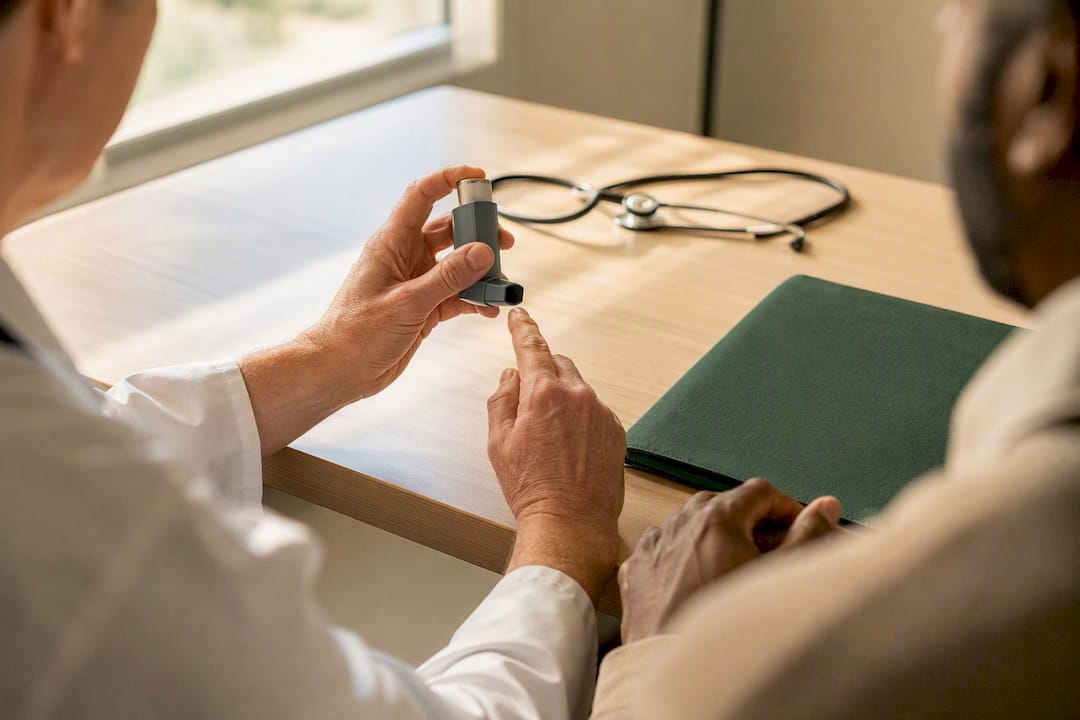
If your breathing suddenly gets worse, use your quick-relief inhaler as your COPD Action Plan directs, sit upright, try pursed-lip breathing, and rest. Follow your plan’s guidance on rescue steroids or antibiotics if you have one. Call 911 or get to an emergency room immediately if you have severe breathlessness at rest, confusion, chest pain, coughing up blood, or trouble speaking or walking.
TL;DR:
- Using a short-acting bronchodilator with proper inhaler technique and pursed-lip breathing can effectively manage mild to moderate COPD flare-up symptoms at home.
- Antibiotics are only recommended if sputum becomes darker and more purulent, indicating a possible bacterial infection, rather than for every exacerbation.
- Severe symptoms such as breathing difficulty at rest, confusion, chest pain, coughing up blood, or inability to speak or walk require immediate emergency care.
- Regular updates to your COPD Action Plan and annual vaccination significantly reduce the risk of future flare-ups and hospital readmissions.
- Proper diagnosis, personalized treatment, and ongoing follow-up with a healthcare provider improve outcomes and recovery after a COPD exacerbation.
Table of Contents
- Recognizing the Signs of a COPD Flare Up
- Immediate At-Home Treatment for a COPD Flare Up
- What Medications Treat a COPD Exacerbation?
- When Should You Go to the ER for a COPD Flare Up?
- Preventing Future Flare Ups With a COPD Action Plan
- How Garden State Medical Group Supports COPD Flare Recovery
- A Clinician’s View on What Actually Reduces Flare Ups
- Get an Action Plan Built Around Your Lungs, Not a Template
- Sources
- FAQ
Recognizing the Signs of a COPD Flare Up
A flare, also called a COPD exacerbation, usually announces itself before it turns dangerous. The trick is catching it early enough to act.
Watch for these changes, especially if they last more than 48 hours:
- Breathlessness that’s noticeably worse than your normal baseline
- A cough that’s more frequent or harder to control
- Sputum that’s thicker, increased in volume, or changed color, often to yellow or green
- New or worsening wheeze
- Low-grade fever or feeling more fatigued than usual
These are yellow-zone symptoms in most Action Plans, meaning it’s time to start rescue measures. Red-zone symptoms, covered below, mean you stop managing this yourself and get emergency help.
Immediate At-Home Treatment for a COPD Flare Up
For mild-to-moderate symptoms, a specific sequence works better than random trial and error. This is the order most clinicians recommend, and it lines up with your personalized Action Plan.
- Use your short-acting bronchodilator (albuterol) exactly as your Action Plan specifies. Don’t guess on dosing. A spacer with your metered-dose inhaler delivers medication more reliably than the inhaler alone, and a nebulizer may work better if you’re too breathless to coordinate an inhaler’s timing.
- Sit upright, lean slightly forward, and try pursed-lip breathing. Inhale through your nose, then exhale slowly through pursed lips for twice as long as the inhale. This keeps your airways open longer and can ease the panic that comes with breathlessness.
- Conserve energy and stay hydrated. Avoid unnecessary movement, sip water steadily, and rest between any tasks that leave you winded.
- Start a rescue pack only if your Action Plan authorizes it. Some patients keep a short course of oral steroids, sometimes paired with an antibiotic, to begin at the first sign of a flare. If your plan doesn’t include this, call your clinician before starting anything new.
- Use home oxygen only at your prescribed flow rate. Higher isn’t safer in COPD.
Pro Tip: Keep a written note of exactly how many puffs you’ve used and when. Overusing a rescue inhaler without following your Action Plan’s frequency limit can cause heart palpitations and anxiety, and it can mask a flare that actually needs medical attention.
What Medications Treat a COPD Exacerbation?
Understanding why your clinician prescribes what they do makes it easier to follow through, especially when side effects show up.
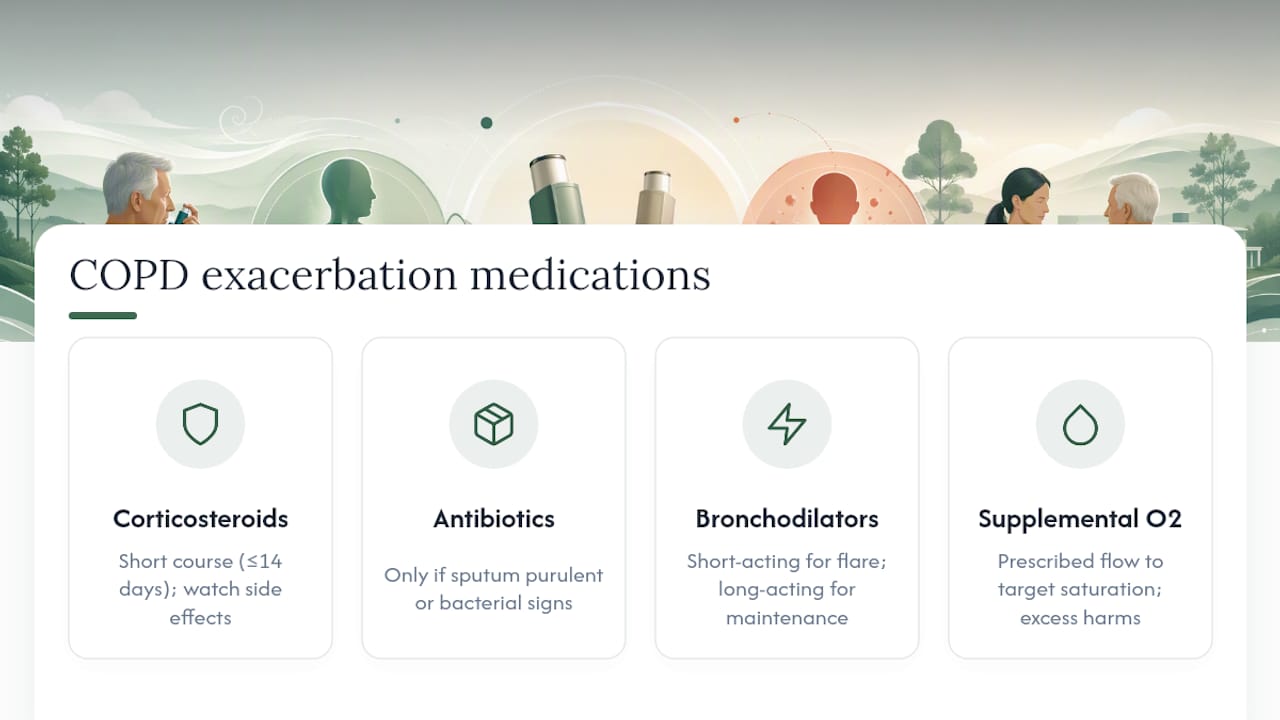
Oral corticosteroids reduce airway inflammation during a flare. Guidelines from the European Respiratory Society and American Thoracic Society support a short course, generally 14 days or less, for exacerbations managed outside the hospital. Watch for elevated blood sugar, mood changes, or trouble sleeping, and mention these to your clinician rather than stopping the course on your own.
Antibiotics aren’t automatic. They’re typically indicated when sputum becomes more purulent, meaning thicker and darker, or when your overall presentation points to a bacterial component. Local resistance patterns and clinical judgment both factor into which antibiotic gets chosen.
Bronchodilators come in two roles. Short-acting versions handle the acute flare; long-acting bronchodilators form your daily maintenance regimen once you’re stable again. Inhaler technique matters more than most patients realize; a poorly timed puff can waste a large share of the dose.
Supplemental oxygen, when prescribed, targets a specific oxygen saturation range rather than “more is better.” Excess oxygen in COPD can actually suppress your drive to breathe and raise carbon dioxide levels, which is why flow rates are prescribed, not improvised.
When Should You Go to the ER for a COPD Flare Up?
Some signs mean you stop treating at home and act immediately. Under most COPD Action Plans, these are your red-zone triggers:
- Severe shortness of breath even while resting
- New confusion, drowsiness, or difficulty staying awake
- Chest pain
- Coughing up blood
- Inability to speak in full sentences or walk without stopping
The American Lung Association’s COPD Action Plan framework treats these as mandatory emergency triggers, not judgment calls. In the hospital, treatment often includes titrated oxygen, IV medications, and for patients with hypercapnic respiratory failure, noninvasive ventilation (NIV), a strongly recommended intervention in ERS/ATS guidelines. Severe cases may require ICU admission or mechanical ventilation. Recovery from a serious exacerbation can take a month or longer, so arrange follow-up care within days of discharge rather than waiting for your next scheduled visit.
Preventing Future Flare Ups With a COPD Action Plan
A written, three-zone Action Plan turns vague worry into a clear checklist. Green zone covers your baseline: daily medications, activity level, and normal symptoms. Yellow zone lists your early warning signs and the exact rescue steps to take, including which medications and what dose. Red zone spells out emergency symptoms and who to call, including your clinician’s number and the nearest emergency room.
Beyond the plan itself, a few habits cut your exacerbation risk measurably:
- Get your annual flu shot and stay current on pneumococcal vaccination.
- If you smoke, ask about cessation resources. Quitting remains the single most effective step for slowing disease progression.
- Check AirNow before spending time outdoors on high-pollution or wildfire-smoke days.
- Enroll in pulmonary rehabilitation, ideally starting soon after hospital discharge, since early rehab supports recovery and reduces readmission risk.
- Review and update your Action Plan every time you’ve needed rescue medication or been hospitalized. It’s a working document, not a one-time form.
For a deeper look at daily habits that support lung function, see how to better manage COPD.
How Garden State Medical Group Supports COPD Flare Recovery
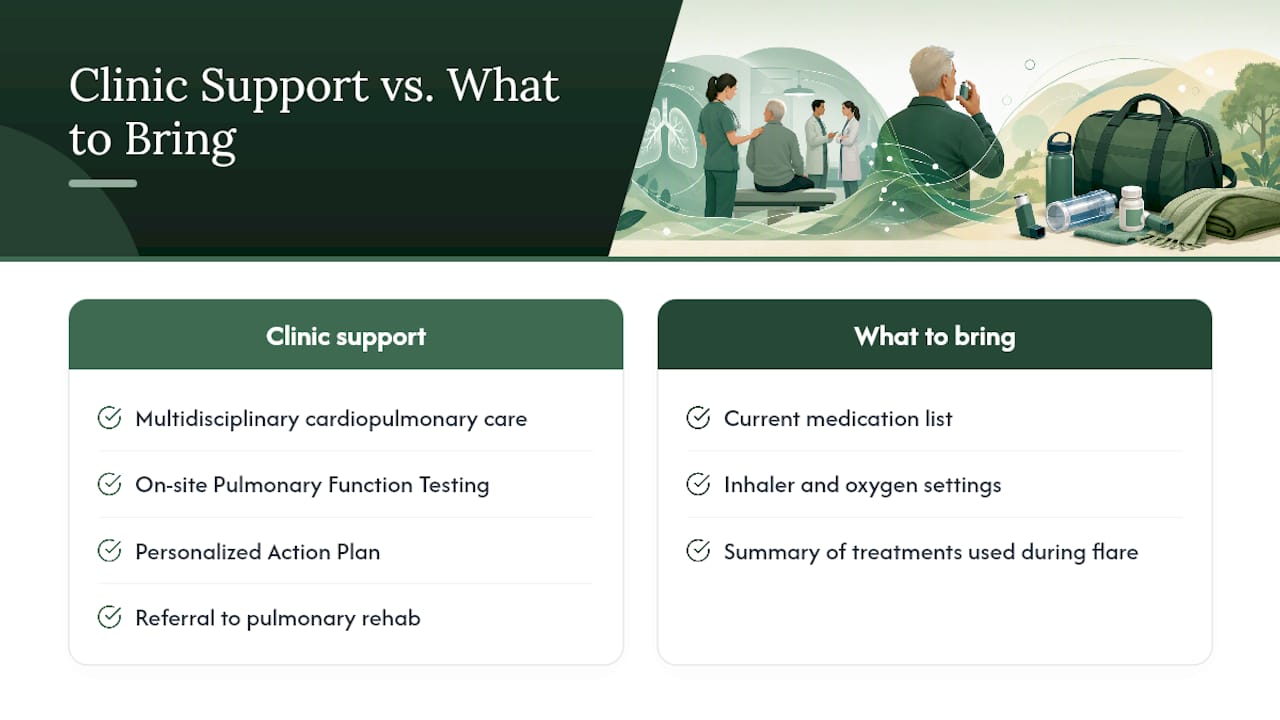
A flare rarely resolves in isolation. Garden State Medical Group takes a multidisciplinary approach, pairing cardiopulmonary care with on-site diagnostics like Pulmonary Function Testing, so your clinician can see how a recent exacerbation has affected your lung function, not just guess from symptoms alone.
A visit after a flare typically results in a personalized Action Plan and, where appropriate, a referral to pulmonary rehab or an updated home-oxygen prescription. Bring your current medication list, inhaler and oxygen settings, and a summary of what you used during the flare. That detail helps your clinician adjust your plan instead of starting from scratch.
A Clinician’s View on What Actually Reduces Flare Ups
The most common mistakes aren’t dramatic. Patients wait too long to call, over-rely on the rescue inhaler without a plan behind it, or skip the annual technique check that catches a leaky spacer seal or mistimed puff. One habit changes outcomes more than any single medication: keep your Action Plan current and have your inhaler technique reviewed at least once a year.
— Garden State Medical Group
Get an Action Plan Built Around Your Lungs, Not a Template
COPD patients can benefit from on-site Pulmonary Function Testing and cardiopulmonary follow-up within the same practice that manages ongoing care, so an Action Plan reflects actual lung function, not just a symptom checklist.
A visit typically starts with Cardiopulmonary Care evaluation and diagnostic testing to see where your lungs stand right now, followed by a personalized Action Plan and, if it fits your case, a referral into pulmonary rehab. Ongoing coordination runs through Chronic Care Management, so your plan gets revisited as your condition changes rather than filed away after one appointment. Appointments are available in-person at multiple locations or by telemedicine. Schedule a visit through Primary Care to get your COPD Action Plan built or updated before your next flare, not during it.
This article is general information, not a substitute for advice from a qualified doctor. Consult a qualified healthcare professional about your own circumstances before acting on anything here.
Sources
- ERS/ATS guideline on management of COPD exacerbations
- NHLBI / NIH — COPD: Living with COPD
- MSD Manual — Treatment of acute COPD exacerbation
FAQ
Can You Have More Than One COPD Flare Up?
Yes, and many patients have several exacerbations over the course of their disease. Each one can cause lasting lung function decline, which is why prevention steps like vaccination and pulmonary rehab matter so much between flares.
Is Prednisone Good for a COPD Flare Up?
Oral corticosteroids like prednisone are commonly used for ambulatory exacerbations, typically in a short course of 14 days or less. They reduce airway inflammation quickly, but they should be started only when your Action Plan or clinician directs it, since side effects like blood sugar spikes can occur.
What Is the Best Medication for a COPD Flare Up?
There’s no single best medication. Most flares are managed with a short-acting bronchodilator like albuterol first, with oral corticosteroids and, if sputum turns more purulent, antibiotics added based on clinician assessment.
How Long Does a COPD Flare Usually Last?
Symptoms often start improving within days of starting rescue treatment, but full recovery to your baseline can take a month or longer after a more severe exacerbation. That’s part of why follow-up care within days of any hospital discharge is so important, not just symptom relief in the moment.