
What Are the Most Common GLP-1 Side Effects to Expect?

Most people who start a GLP-1 medication experience some degree of gastrointestinal upset, especially nausea, during the first weeks or after a dose increase. These GLP-1 side effects are the most common reactions to the drug class, and for the large majority of patients, they are temporary and manageable rather than a reason to stop treatment altogether.
Serious complications exist, but they are far less common than the GI symptoms. These include:
- Pancreatitis
- Gallbladder disease
- Acute kidney injury tied to dehydration
- Severe low blood sugar when combined with insulin or sulfonylureas
- A thyroid tumor signal seen in rodent studies that shapes current human contraindications
The core principle behind managing GLP-1 side effects is titration paired with follow-up care. Doses start low and increase gradually, and experts at Stanford Medicine note that patients who get consistent clinical support and adjust their diet and hydration around each dose change are less likely to quit therapy early. You do not have to just tolerate nausea or constipation until they pass. Small, specific changes, alongside the right pacing from your prescriber, address most of what people struggle with on these medications.
Key Takeaways
GLP-1 side effects are overwhelmingly gastrointestinal, dose-dependent, and manageable through slow titration, dietary adjustment, and consistent clinical follow-up.
| Point | Details |
|---|---|
| GI symptoms dominate | Nausea, vomiting, diarrhea, and constipation are the most common GLP-1 side effects, especially during dose increases. |
| Titration speed matters | Slower dose escalation reduces symptom severity more reliably than pushing to the target dose quickly. |
| Serious risks are rare but real | Pancreatitis, gallbladder disease, and kidney injury from dehydration require prompt medical evaluation. |
| Contraindications are specific | Personal or family history of medullary thyroid carcinoma or MEN2, and pregnancy, rule out GLP-1 therapy. |
| Coordinated care improves outcomes | Garden State Medical Group pairs primary care with nutrition support and diagnostics to help patients manage side effects and stay on treatment. |
Table of Contents
- What Do GLP-1 Drugs Do and When Are They Used?
- How Common Are Nausea, Vomiting, and Other GI Symptoms?
- Why Do GLP-1 Medications Cause These Reactions?
- What Are the Best Ways to Manage Side Effects?
- What Serious Risks Should You Watch for With GLP-1s?
- Who Should Not Take GLP-1 Medications?
- What Monitoring and Follow-Up Should You Expect?
- What Garden State Medical Group Does for Patients on GLP-1 Therapy
- A Note From Garden State Medical Group
- How to Get Started With GLP-1 Care at Garden State Medical Group
- Sources
- FAQ
What Do GLP-1 Drugs Do and When Are They Used?
GLP-1 receptor agonists work by mimicking a gut hormone that slows stomach emptying and signals the brain’s appetite centers that you’re full. That dual action is precisely why gastrointestinal symptoms dominate the side effect profile. When food sits in the stomach longer than usual, nausea, bloating, and reflux follow naturally.
These drugs are prescribed for two main reasons: managing type 2 diabetes by improving blood sugar control, and supporting weight loss in people who meet clinical criteria for it. The same active ingredients show up under different brand names depending on the indication, and formulations vary too. Some are weekly injectables, others are daily oral tablets, and dosing schedules differ by drug and by purpose.
A few practical points follow from this mechanism:
- Appetite reduction is the intended effect, but it’s inseparable from the digestive slowdown that causes side effects.
- Higher doses generally intensify both the benefit and the GI symptoms, which is why dosing starts conservatively.
- People managing type 2 diabetes may already be tracking a1c goals alongside weight, and GLP-1 therapy often moves both numbers at once.
- The same mechanism that helps you eat less can also slow how quickly other oral medications are absorbed, which matters for anyone on multiple prescriptions.
Understanding this mechanism helps explain why the side effect list reads the way it does. It’s not a random assortment of symptoms. It’s a predictable consequence of how the drug changes digestion and appetite signaling.
How Common Are Nausea, Vomiting, and Other GI Symptoms?
Gastrointestinal reactions are, by a wide margin, the most frequently reported issue across GLP-1 clinical trials. Nausea leads the list, and the numbers are specific enough to plan around.
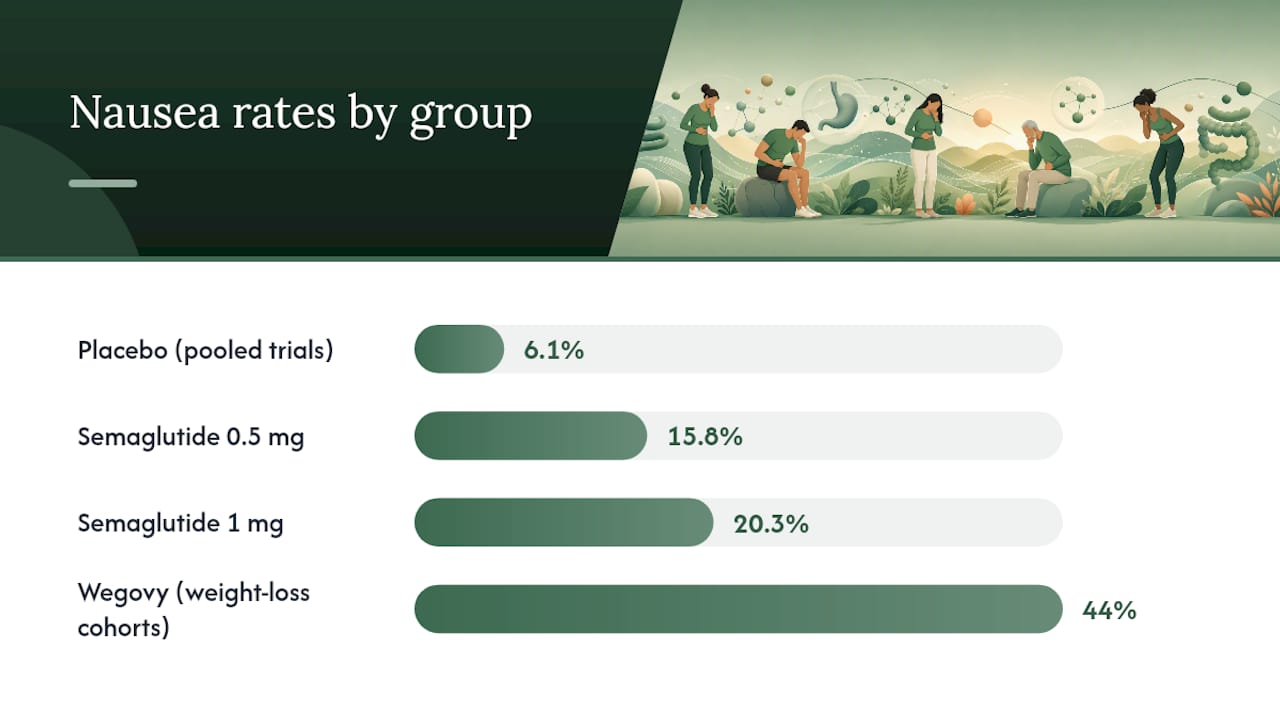
In pooled trials for semaglutide, prescribing information filed with the FDA reported nausea in 6.1% of patients on placebo compared with 15.8% at the 0.5 mg dose and 20.3% at the 1 mg dose. For semaglutide prescribed specifically for weight loss, Wegovy’s trial data showed nausea rates as high as 44% in some cohorts, reflecting the higher doses used for weight management versus diabetes control.
Here’s how the most common effects break down by frequency and behavior:
| Side Effect | Typical Pattern | Notes |
|---|---|---|
| Nausea | Most frequent; peaks during dose increases | Usually eases within days to a couple weeks after each step up |
| Vomiting | Less common than nausea, often follows it | More likely to prompt a dose hold or slower titration |
| Diarrhea | Common, sometimes alternates with constipation | Can contribute to dehydration if untreated |
| Constipation | Very common, especially with higher doses | Often persists longer than nausea |
| Abdominal pain/bloating | Frequent, mild to moderate | Tends to track with meal size and fat content |
| Reflux/dyspepsia | Moderate frequency | Related to delayed stomach emptying |
Vomiting, persistent diarrhea, and constipation are the symptoms most likely to lead someone to stop treatment, mainly because they interfere with daily life more than a wave of nausea does. Beyond the digestive tract, a smaller share of patients report injection-site reactions, mild increases in heart rate, headache, and fatigue.
Nearly all of these cluster around the same window: the first four to eight weeks of treatment and any point where the dose steps up. Once your body adjusts to a given dose, symptoms typically settle, which is exactly why slow titration is the standard approach rather than an optional courtesy.
Why Do GLP-1 Medications Cause These Reactions?
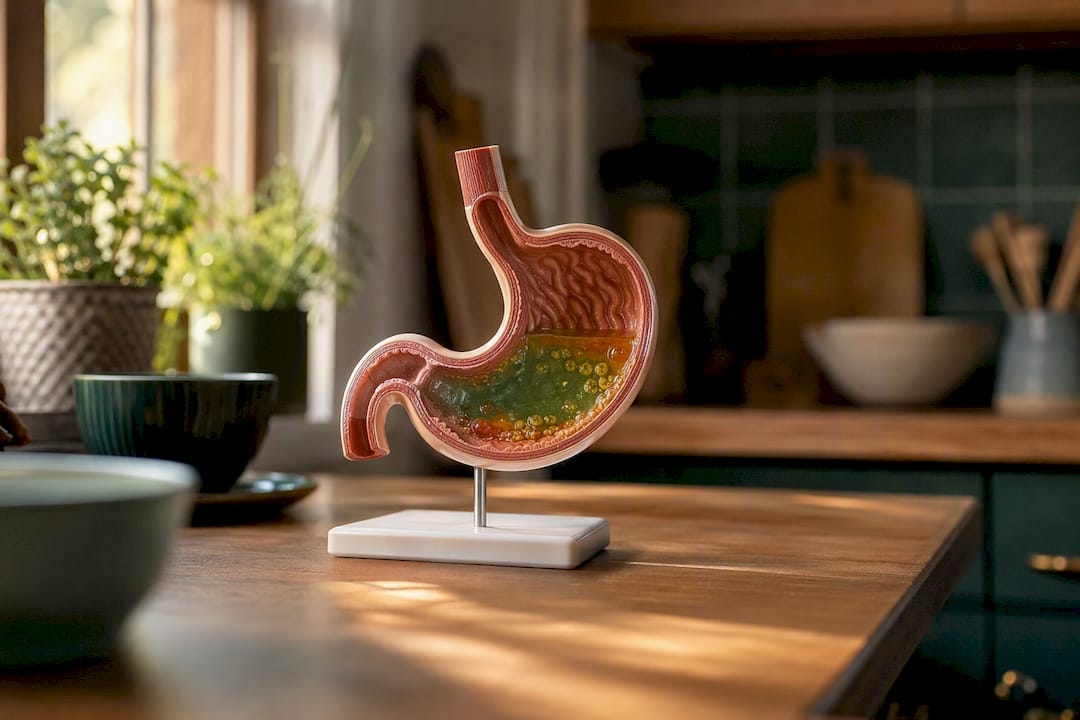
The mechanism is straightforward once you see it laid out. GLP-1 drugs delay how fast food leaves your stomach, and they act on satiety centers in the brain. Both effects are intentional. Both also produce the nausea, bloating, and early fullness that patients report most.
Stanford Medicine’s clinical overview points out that these effects are expected during titration and generally improve as the body adapts to a stable dose. It’s not a malfunction. It’s the drug working as designed, just with a physical cost while your system catches up.
A few variables shift how much any individual feels this:
- Faster dose escalation tends to correlate with a higher incidence and severity of GI symptoms, which is why rushing titration schedules rarely pays off.
- Higher maintenance doses, used more often for weight loss than for diabetes, generally produce more frequent and more intense symptoms.
- Pre-existing gastroparesis, a condition where the stomach already empties slowly, can make GLP-1 related delays far more uncomfortable.
- Reduced kidney function changes how the body handles fluid loss from vomiting or diarrhea, raising the stakes of GI side effects that would otherwise be minor.
- Taking other medications that also slow gastric motility, or drugs with narrow safety margins, can compound the digestive slowdown.
None of these factors mean GLP-1 therapy is off the table for someone with a complicating condition. They mean the starting dose, the pace of increases, and the level of monitoring need to be tailored rather than standardized.
What Are the Best Ways to Manage Side Effects?
Reducing GLP-1 side effects comes down to five coordinated moves, most of which you control directly and a few that require your prescriber’s input.
- Slow the titration. If nausea or GI upset shows up after a dose increase, ask your provider about holding at the current dose longer before stepping up again. There’s no prize for reaching the target dose fast, and a pause rarely costs you progress.
- Change how you eat, not just what you eat. Smaller, more frequent meals reduce the load on a stomach that’s already emptying slowly. Fried and high-fat foods are the worst offenders for triggering nausea and reflux, so trimming those first often brings quick relief.
- Build a fluid and fiber routine to head off constipation. Steady water intake, combined with soluble fiber from foods like oats, chia, or psyllium, addresses one of the most persistent GLP-1 constipation remedies people search for. A short course of an over-the-counter stool softener is reasonable if diet alone isn’t enough. This is one of the more overlooked ways to reduce Ozempic nausea too, since constipation and bloating often amplify a queasy stomach.
- Protect your muscle mass while you lose weight. Rapid weight loss without enough protein or resistance training tends to burn through lean tissue along with fat. Practitioners generally recommend aiming for roughly 0.5 to 0.7 grams of protein per pound of body weight daily, paired with structured resistance training two to three times a week, to blunt that loss. Garden State Medical Group’s guidance on weight management strategies covers this pairing in more detail.
- Reassess other medications with your prescriber. If you’re on insulin or a sulfonylurea alongside a GLP-1 drug, your care team may need to lower those doses to avoid hypoglycemia as your blood sugar control improves. This isn’t a step to manage on your own.
Pro Tip: Keep a simple daily log of what you ate, how much water you drank, and what symptoms showed up. Bring it to every follow-up. It turns a vague “I feel nauseous sometimes” into a pattern your provider can actually act on.
What Serious Risks Should You Watch for With GLP-1s?
The rare but serious risks tied to GLP-1 medications deserve specific attention because they require a different response than typical nausea or constipation. Recognizing red-flag symptoms early matters more than memorizing statistics.
Pancreatitis shows up as severe upper abdominal pain, often radiating to the back, sometimes with nausea and vomiting that doesn’t resemble your usual GI symptoms. StatPearls notes that a definitive causal link between GLP-1 drugs and pancreatitis hasn’t been established, but clinicians still treat suspected cases as a reason to stop the medication and evaluate immediately.
Gallbladder disease, including gallstones, appears at a higher rate in patients on semaglutide for weight loss compared with placebo, according to Wegovy’s trial data. Sudden right-sided abdominal pain, especially after eating, warrants imaging.
Acute kidney injury usually traces back to dehydration from persistent vomiting or diarrhea rather than a direct drug effect. Dehydration is one of the more common precipitating factors for kidney complications in patients on GLP-1 therapy, which makes early rehydration and a low threshold for lab monitoring genuinely important, not just a formality.
Hypoglycemia becomes a real risk specifically when a GLP-1 is layered onto insulin or a sulfonylurea, since both classes already lower blood sugar independently.
Diabetic retinopathy progression has been observed in some patients with existing retinopathy who experience rapid blood sugar improvement, making ophthalmic follow-up worthwhile for anyone with a retinopathy history starting therapy.
The thyroid tumor signal comes from rodent studies showing an increase in C-cell tumors. Human relevance remains unclear, but prescribing information for semaglutide treats this signal seriously enough to build firm contraindications around it, covered next.
Who Should Not Take GLP-1 Medications?
Certain personal and medical histories rule out GLP-1 therapy outright, or demand extra caution before starting.
- Personal or family history of medullary thyroid carcinoma (MTC) or Multiple Endocrine Neoplasia syndrome type 2 (MEN2) is an absolute contraindication, tied directly to the rodent thyroid tumor signal noted in drug labeling.
- Pregnancy and breastfeeding are situations where GLP-1 drugs should be avoided; anyone planning a pregnancy should discuss timing and alternatives with their prescriber well in advance.
- Active pancreatitis or a history of severe gastroparesis typically rules out GLP-1 therapy, since the drug’s effect on gastric emptying compounds both conditions.
- Advanced kidney impairment calls for extra caution and closer monitoring rather than automatic exclusion, particularly given the dehydration related kidney risks discussed above.
- Combined use with insulin, sulfonylureas, or other glucose-lowering drugs isn’t a contraindication, but it does require dose coordination to avoid hypoglycemia.
None of these apply to most candidates for GLP-1 therapy. But if any of them describe your history, that’s a conversation to have with your prescriber before your first dose, not after a side effect shows up.
What Monitoring and Follow-Up Should You Expect?
A structured monitoring plan is what separates side effects that resolve smoothly from ones that escalate unnecessarily.
- Establish a baseline before starting. This typically includes kidney function testing and, for patients with diabetes, a retinopathy screening if one hasn’t been done recently.
- Track symptoms consistently. A simple log of GI symptoms, hydration, and any new physical changes gives your care team real data instead of a vague recollection weeks later.
- Recheck kidney function if GI symptoms turn severe. Persistent vomiting or diarrhea is the scenario where labs matter most.
- Contact your clinician urgently for severe abdominal pain, vomiting that won’t stop alongside signs of dehydration, sudden vision changes, or fainting.
- Lean on integrated support. Patients who have access to a dietitian or nurse follow-up alongside their prescriber are more likely to stick with treatment through the adjustment period rather than stopping at the first rough week.
What Garden State Medical Group Does for Patients on GLP-1 Therapy
Managing GLP-1 side effects well takes more than a prescription. It takes a team that can adjust the plan as your body responds. Garden State Medical Group brings together primary care, cardiopulmonary evaluation, on-site radiology, and nutrition support under one roof, so a symptom that needs imaging or lab work doesn’t send you chasing referrals across town.
In practice, that means:
- Individualized titration schedules built around how you’re actually responding, not a fixed timeline
- Telemedicine follow-up for quick check-ins between in-person visits
- Diagnostic testing on-site when a symptom like abdominal pain needs a closer look
- Coordinated care for patients also managing chronic conditions like diabetes or heart disease
Your first visit typically involves a full medication and health history review, so the titration plan fits your specific risk profile from day one.
A Note From Garden State Medical Group
Side effects are common, but they are rarely the whole story. What determines whether someone sticks with GLP-1 therapy usually isn’t the nausea itself. It’s whether they had a plan for it and someone to call when it got uncomfortable. Slower titration and honest symptom reporting change outcomes more than any single dietary trick.
If something feels off, tell your care team early rather than waiting it out alone. We would rather adjust your plan in week three than have you quit in week four.
— Garden State Medical Group
How to Get Started With GLP-1 Care at Garden State Medical Group
If GI symptoms, dosing questions, or a rocky start on a GLP-1 medication have you wondering whether your current plan fits, a coordinated care team changes what’s possible here. Garden State Medical Group manages GLP-1 therapy through primary care, with chronic care management and on-site diagnostics available the moment a symptom needs a closer look, rather than a separate referral and a weeks-long wait.

Getting started is simple. Schedule a visit with Garden State Medical Group’s primary care team, bring a current list of every medication and supplement you take, and if you’ve already started a GLP-1 drug, bring a few weeks of symptom notes if you have them. That single visit is usually enough to build or adjust a titration plan that actually accounts for how your body responds, not a generic schedule. Book your appointment to talk through your options and get a plan built around your history.
Sources
- GLP-1s 101: What the science says about weight loss, side effects, safety — Stanford Medicine
- OZEMPIC (semaglutide) prescribing information — DailyMed
- Semaglutide - StatPearls - NCBI Bookshelf
This article is general information, not a substitute for advice from a qualified doctor. Consult a qualified healthcare professional about your own circumstances before acting on anything here.
FAQ
What are the long-term side effects of GLP-1 medications?
Long-term data point mainly to sustained GI tolerance issues in a minority of patients, gallbladder disease risk, and the need for ongoing kidney and, in some cases, retinal monitoring. Most people who tolerate the first few months well continue without new complications.
What do you wish you knew before starting a GLP-1?
Patients most often say they underestimated how much slower titration helps and how much smaller meals and steady hydration reduce nausea from the start. Knowing that symptoms typically ease as your body adjusts to each dose makes the first few weeks easier to push through.
What foods should you avoid while taking a GLP-1?
High-fat and fried foods are the most common trigger for nausea and reflux because they slow stomach emptying even further on top of the drug’s own effect. Large meals in general tend to worsen bloating and discomfort more than smaller, frequent ones.
Who should not take a GLP-1 medication?
Anyone with a personal or family history of medullary thyroid carcinoma or MEN2, active pancreatitis, severe gastroparesis, or who is pregnant or breastfeeding should not take a GLP-1 without a detailed discussion with their prescriber. Garden State Medical Group reviews this history at the first visit before recommending any GLP-1 treatment plan.
Recommended
- Statin Side Effects: What You Need to Know
- Understanding Glycemic Index and Its Link to Heart-Related Issues | Garden State Medical Group | Garden State Medical Group
- Post-Holiday Health Hazards That Could Spike Your Blood Sugar | Garden State Medical Group | Garden State Medical Group
- The 3 Steps to Better Management of Type 1 Diabetes | Garden State Medical Group | Garden State Medical Group