
GLP-1 for Weight Loss: What the Evidence Really Shows

GLP-1 receptor agonists are effective medical treatments that commonly produce double-digit percentage body-weight loss for many patients when used with clinical supervision and lifestyle support. A systematic review and meta-analysis of randomized controlled trials found that a substantially higher proportion of patients on a GLP-1 agent lost weight compared with placebo, with tirzepatide and semaglutide ranking highest for effectiveness.
That is a meaningful clinical result, but it comes with real caveats. Most patients experience gastrointestinal side effects during dose escalation, and clinical evidence on discontinuation shows that weight regain is common once the medication stops. GLP-1 weight loss works best as part of a supervised, ongoing plan rather than a short course of treatment.
If you are considering this category of medication, here is where to start:
- Schedule a clinical evaluation to review your BMI, health history, and current medications.
- Ask your provider to screen for contraindications, including thyroid cancer history and pregnancy.
- Plan for regular follow-up visits to monitor side effects, labs, and progress.
Quick fact: Patients on GLP-1 therapy are roughly three times more likely to achieve weight loss than those on placebo, based on pooled trial data from the meta-analysis cited above.
Key Takeaways
GLP-1 medications produce meaningful weight loss for most patients, but sustained results depend on medical supervision, dose tolerance, and a follow-up plan for after treatment ends.
| Point | Details |
|---|---|
| Efficacy is well documented | Pooled trial data shows 78.5% of GLP-1 patients achieve weight loss versus 26.5% on placebo. |
| Side effects are mostly GI | Nausea and digestive symptoms are common and typically managed through slow dose titration. |
| Plateaus are physiological | Weight loss commonly slows between months four and six and plateaus around 12 to 18 months. |
| Stopping risks regain | Discontinuation studies show many patients regain weight within a year of stopping treatment. |
| Supervised programs matter | Garden State Medical Group pairs GLP-1 prescribing with cardiopulmonary evaluation, diagnostics, and nutrition follow-up. |
This article is general information, not a substitute for advice from a qualified doctor. Consult a qualified healthcare professional about your own circumstances before acting on anything here.
Table of Contents
- How Do GLP-1 Medications Cause Weight Loss?
- What Percentage of Body Weight Can You Lose on GLP-1s?
- Who Qualifies for GLP-1 Weight Loss Treatment?
- What Are the Side Effects and Risks of GLP-1 Drugs?
- Injectable vs. Oral GLP-1: Which Formulation Fits You?
- How Long Does It Take to See Results, and What Happens if You Stop?
- What Should You Know About Cost, Insurance, and Procedures?
- Our Take on the GLP-1 Conversation
- Start Supervised GLP-1 Care With Garden State Medical Group
- Sources
- FAQ
How Do GLP-1 Medications Cause Weight Loss?
GLP-1 stands for glucagon-like peptide-1, a hormone your gut releases naturally after eating. GLP-1 receptor agonists mimic that hormone at a higher, sustained level than your body produces on its own, and that sustained signal is what drives the weight loss.
The mechanism works on three fronts at once. In the brain, GLP-1 activity signals satiety centers in the hypothalamus, which is why patients often describe feeling full faster and staying satisfied longer between meals. In the stomach, the medication slows gastric emptying, so food sits longer before moving into the small intestine. In the pancreas, it enhances glucose-dependent insulin secretion, which helps regulate blood sugar swings that often trigger hunger and cravings. Stanford Medicine’s clinical overview walks through these three mechanisms in detail.
That slowed gastric emptying explains more than appetite control. It is also the direct cause of the nausea, bloating, and reflux many patients report, especially in the first weeks of treatment or after a dose increase. It matters for procedural planning too: food and liquid can remain in the stomach longer than expected, which is relevant if you are scheduled for anesthesia or a colonoscopy.
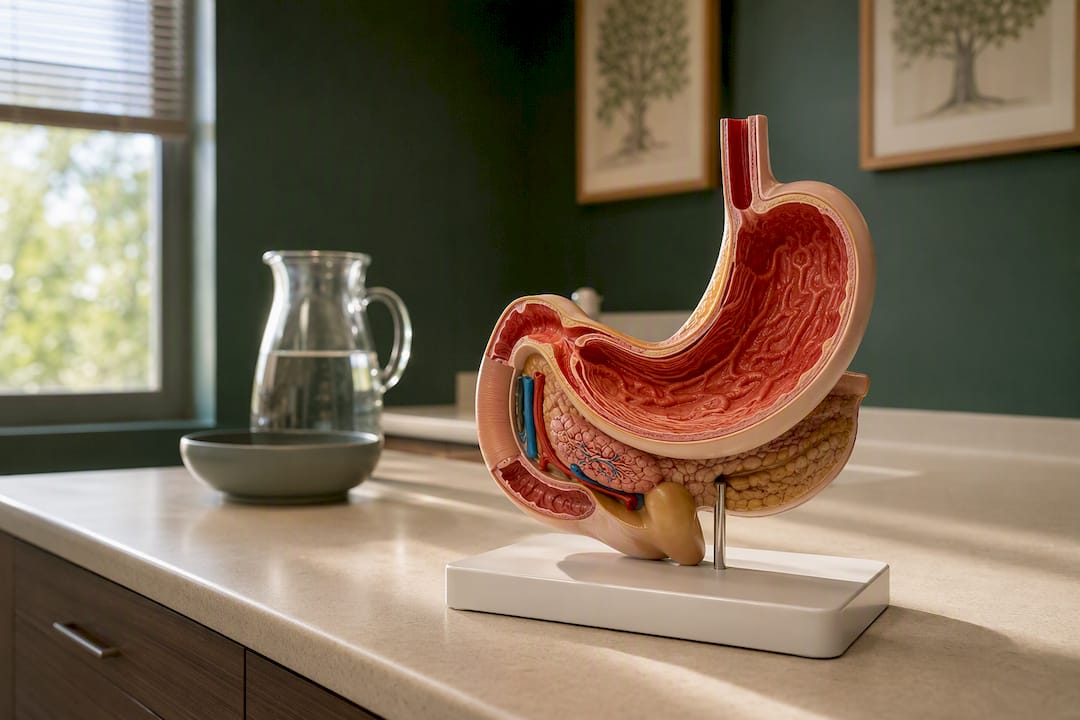
The same mechanism explains why weight loss on GLP-1 therapy typically follows a predictable curve rather than a straight line. Appetite suppression tends to be strongest early on, then the body partially adapts, which is why most patients see a plateau month into treatment rather than continuous decline.
Pro Tip: If nausea hits hard after a dose increase, eating smaller, lower-fat meals for a few days often helps more than skipping food altogether. Skipping meals can worsen nausea once you do eat.
What Percentage of Body Weight Can You Lose on GLP-1s?
Trial data gives a realistic range, and it varies by agent, dose, and how long you stay on treatment. The meta-analysis of randomized controlled trials reported a pooled odds ratio of 11.37 for achieving weight loss on a GLP-1 agent versus placebo, with tirzepatide and semaglutide showing the strongest relative performance across the trials reviewed.
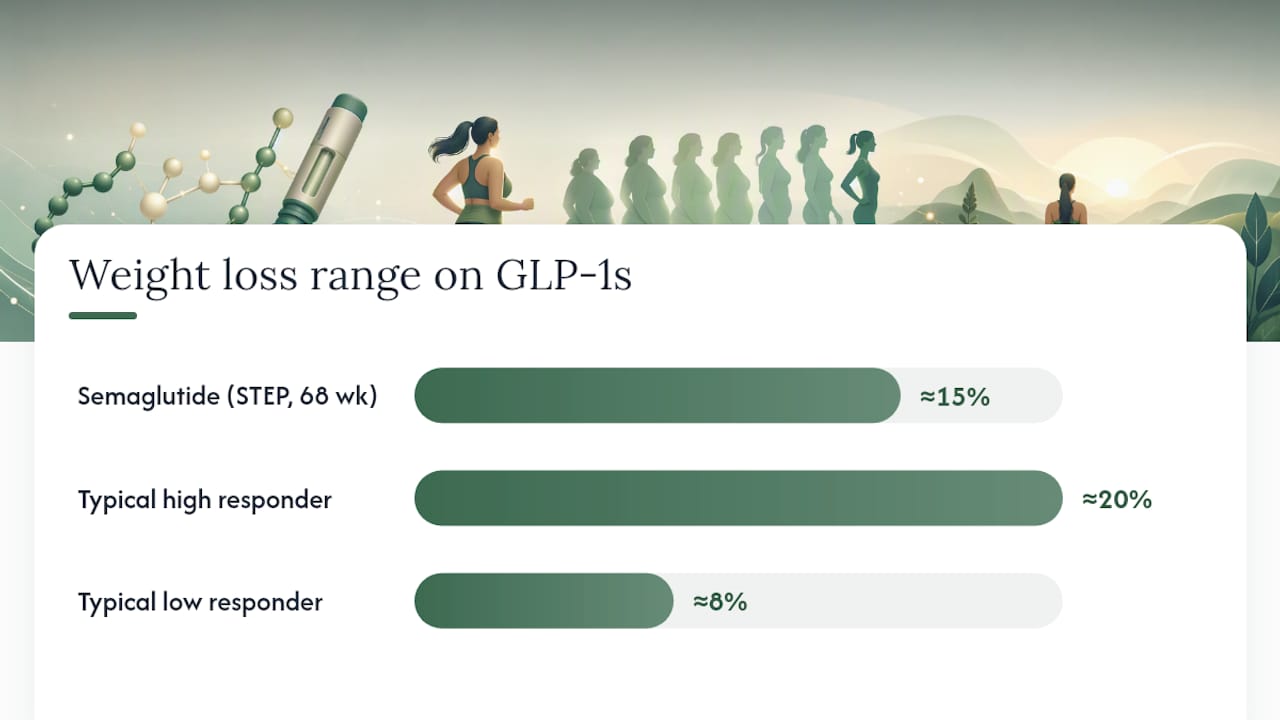
By the numbers: Semaglutide produced approximately 15% average body-weight loss at 68 weeks in the STEP program, according to a clinical review of GLP-1 discontinuation outcomes. Dual-agonist compounds have shown higher average results in comparative trial data, though individual response still varies widely.
A few factors explain why one patient loses 20% of body weight and another loses closer to 8% on the same medication:
- Dose reached. Patients who tolerate and reach the target maintenance dose generally see more weight loss than those who stay on a lower dose due to side effects.
- Agent and mechanism. Dual-acting compounds that target more than one receptor pathway tend to show higher average results in head-to-head trial comparisons.
- Adherence and lifestyle support. Patients paired with nutrition counseling and consistent follow-up tend to sustain results better than those managing the medication alone.
- Baseline metabolic factors. Starting weight, insulin resistance, and other health conditions all shift individual response.
Trial populations also come with limits worth knowing. Most large studies followed patients for 68 weeks to two years under close clinical monitoring, conditions that do not always mirror real-world adherence once insurance friction, side effects, or cost interrupt treatment. A meta-analytic comparison of newer and older GLP-1 agents found that tolerability, not raw efficacy, is often what determines whether a patient stays on therapy long enough to see results. The best GLP-1 for weight loss on paper is not always the best choice for a given patient if side effects force discontinuation.
Who Qualifies for GLP-1 Weight Loss Treatment?
Clinical guidelines generally set candidacy around body mass index, adjusted for whether you have weight-related health conditions. A BMI of 30 or higher typically qualifies on its own. A BMI of 27 or higher often qualifies when paired with a condition like type 2 diabetes, hypertension, or sleep apnea. Your provider will weigh your full health picture, not just the number on the scale.
Certain conditions rule GLP-1 therapy out entirely, and a few call for extra caution. Your provider will typically walk through the following before prescribing:
- Review absolute contraindications. A personal or family history of medullary thyroid carcinoma or multiple endocrine neoplasia syndrome type 2 (MEN2) rules out GLP-1 therapy, as does pregnancy or plans to become pregnant.
- Flag relative cautions. A history of pancreatitis, severe gastroparesis, or certain inflammatory bowel conditions warrants a closer look and sometimes a different treatment path.
- Run baseline labs. Expect a metabolic panel, kidney function tests, and often a thyroid check before your first dose.
- Document comorbid conditions. Diabetes, cardiovascular disease, and sleep apnea history all factor into dosing decisions and follow-up frequency.
- Confirm current medications. Your provider checks for drug interactions, particularly with insulin, sulfonylureas, and other medications that affect blood sugar or gut motility.
If any of this raises questions specific to your health history, a chronic care management program is often where that conversation belongs, especially when diabetes or heart disease are already part of your care picture.
What Are the Side Effects and Risks of GLP-1 Drugs?
Gastrointestinal symptoms are, by far, the most common issue patients report. Nausea, vomiting, diarrhea, and constipation show up most often during dose increases, and a tolerability and safety review of GLP-1 agents confirms these mild-to-moderate GI effects as the dominant side-effect category across studies.
Clinicians manage this mostly through slow, deliberate dose titration rather than jumping straight to a maintenance dose. Smaller starting doses held for several weeks give your digestive system time to adjust before the next increase.
Rare but serious risks exist and deserve straight talk, not minimization:
- Pancreatitis. Sudden, severe abdominal pain that radiates to the back warrants immediate medical attention and typically means stopping the medication.
- Gallbladder disorders. Rapid weight loss itself raises gallstone risk, and GLP-1 therapy can compound that.
- Thyroid C-cell tumors. GLP-1 medications carry a boxed warning based on rodent studies, which is why the thyroid cancer history screening in candidacy review matters.
Monitoring typically includes periodic labs, a symptom check-in at follow-up visits, and attention to hydration and protein intake, since reduced thirst is a less obvious side effect clinicians watch for in the early weeks of therapy.
Pro Tip: Keep a symptom log for the first month, even if it feels unnecessary. Patterns like “nausea always shows up two days after a dose increase” help your provider fine-tune your titration schedule instead of guessing.
Injectable vs. Oral GLP-1: Which Formulation Fits You?
Injectable GLP-1 medications remain the most established option, typically dosed weekly, with the largest trial base behind their long-term effectiveness data. Oral GLP-1 formulations have expanded the picture. Yale Medicine’s overview of GLP-1 pills explains that recent approvals have brought oral options into the same treatment category as injectables, changing access for patients who prefer to avoid self-injection. Coverage details on the newest oral approval, including its administration without food or water restrictions, are covered in partner clinical reporting.
Formulation choice matters beyond convenience. Oral absorption can be more variable and typically requires specific timing around food and water, while injectables deliver a steadier release. Your provider factors in your daily routine, needle aversion, and insurance formulary when helping you choose.
A supervised program built around GLP-1 therapy usually includes more than the prescription itself:
- Titration schedule. Most protocols start low and increase every four weeks based on tolerability.
- Nutrition counseling. Guidance on protein intake and meal structure helps preserve lean mass as weight comes off.
- Behavioral health support. Habit and mindset work often determines whether results stick.
- Care delivery options. In-person visits, telemedicine follow-up, and integrated diagnostics all play a role depending on your needs. Cleveland Clinic’s clinical summary emphasizes combining medication with diet and activity changes, matching FDA labeling for these drugs.
How Long Does It Take to See Results, and What Happens if You Stop?
Weight loss on GLP-1 therapy typically follows a recognizable arc. Loss tends to be fastest in the first three to four months, then slows noticeably around months four through six as your body partially adapts to the medication’s appetite-suppressing effects. Many patients reach a plateau somewhere between 12 and 18 months, and that plateau reflects physiology, not failure.
Clinical insight from Stanford Medicine frames this plateau explicitly as a physiological adaptation rather than a sign the treatment has stopped working, which matters because plenty of patients assume a plateau means it is time to quit. Our guide to restarting progress after a weight loss plateau covers strategies for pushing past that stall point.
Stopping the medication carries real consequences. Discontinuation studies show that a substantial share of patients, in some extension trials roughly two-thirds, regain weight within a year of stopping treatment, based on the clinical review of GLP-1 discontinuation. That is why maintenance planning, sometimes a step-down dosing approach, gets discussed well before treatment ends rather than after.
- Build strength training into your routine early to protect lean mass as fat loss accelerates.
- Prioritize protein intake at every meal, not just after workouts.
- Discuss a maintenance or step-down plan with your provider before you consider stopping.
Pro Tip: Track strength, not just scale weight, during rapid loss phases. Losing muscle along with fat undermines your metabolic rate long after the medication stops.
What Should You Know About Cost, Insurance, and Procedures?
Insurance coverage for GLP-1 weight loss medications varies significantly by plan, and that variability is often the biggest practical barrier patients face. Medicare coverage policies have been shifting, and the Medicare GLP-1 bridge program illustrates how payer rules and assistance options continue to evolve for patients trying to access these medications affordably.
Two procedural issues deserve attention before you start therapy. Delayed gastric emptying, the same mechanism driving weight loss, raises aspiration risk during anesthesia and can complicate bowel prep for colonoscopy. Tell every surgical or procedural team that you are on a GLP-1 medication, since many practices now recommend pausing the drug for a set period beforehand.
Daily management comes down to a short list of habits:
- Stay ahead of hydration, since reduced thirst sensation is common and easy to miss.
- Hit your protein target daily to protect lean mass.
- Keep strength training in your weekly routine.
- Call your clinic promptly for severe abdominal pain, persistent vomiting, or signs of dehydration.
Our Take on the GLP-1 Conversation
The evidence supports GLP-1 medications as genuinely effective tools for obesity, not a shortcut and not a miracle. The meta-analytic data on efficacy is strong. The discontinuation data is just as strong a warning that treating GLP-1 therapy as a temporary fix sets patients up for regain.
Where conventional advice falls short is in treating the plateau as a stopping point. Patients read a plateau as failure and either push for a dose increase that brings more side effects or abandon treatment altogether, when the better move is often patience paired with better nutrition and strength work.
What we think patients should prioritize first is not the medication choice, it is the follow-up structure around it. A patient on a mid-tier GLP-1 agent with consistent monitoring, nutrition support, and a real maintenance plan will likely do better long-term than a patient on the highest-efficacy drug managed with no follow-up at all. The drug matters less than the program built around it.
— Garden State Medical Group
Start Supervised GLP-1 Care With Garden State Medical Group
Garden State Medical Group gives North Bergen and Secaucus patients something a prescription alone cannot: a coordinated team watching every part of your GLP-1 treatment, not just the dose.

A supervised program here starts with a full medical evaluation, including cardiopulmonary assessment and in-house radiology and diagnostic testing, so your provider has a complete health picture before prescribing anything. From there, nutrition counseling and scheduled follow-up visits track your progress, manage side effects early, and adjust your plan as your body adapts, rather than leaving you to figure out a plateau or a side effect on your own between refills.
Getting started is straightforward. Call to schedule an initial evaluation, confirm your insurance coverage ahead of time, and ask about telemedicine follow-up if in-person visits are hard to fit into your schedule. Bring a list of current medications and any recent labs to your first appointment. Our weight loss programs page has details on what to expect, and our guide on joining a weight management program walks through enrollment step by step.
Sources
- GLP-1 receptor agonists for weight loss: A systematic review and meta-analysis of randomized controlled trials - PMC
- GLP-1s 101: What the science says about weight loss, side effects, safety - Stanford Medicine
FAQ
Which GLP-1 Works Best for Weight Loss?
Trial data ranks tirzepatide and semaglutide highest for relative effectiveness in the meta-analysis of randomized controlled trials, though the best choice for you depends on tolerability, existing health conditions, and how well you respond to a given agent.
What Are the Downsides of GLP-1 Medications?
The most common downsides are gastrointestinal side effects like nausea and constipation, along with rare but serious risks including pancreatitis and gallbladder disorders. Weight regain after stopping treatment is also common, making long-term planning essential.
How Many Pounds per Month Can You Lose on GLP-1?
Trial data reports averages around 15% total body weight lost over roughly 68 weeks with semaglutide, which works out to a gradual monthly pace that is fastest in the first few months and slows as you approach a plateau. Individual results vary based on dose, agent, and adherence.
Who Cannot Take GLP-1 Medications?
Anyone with a personal or family history of medullary thyroid carcinoma or MEN2 syndrome should not take GLP-1 medications, and pregnant patients are also excluded. Patients with a history of pancreatitis or certain gastrointestinal conditions need a careful risk discussion with their provider before starting.