
High Blood Pressure Emergency: When to Call 911
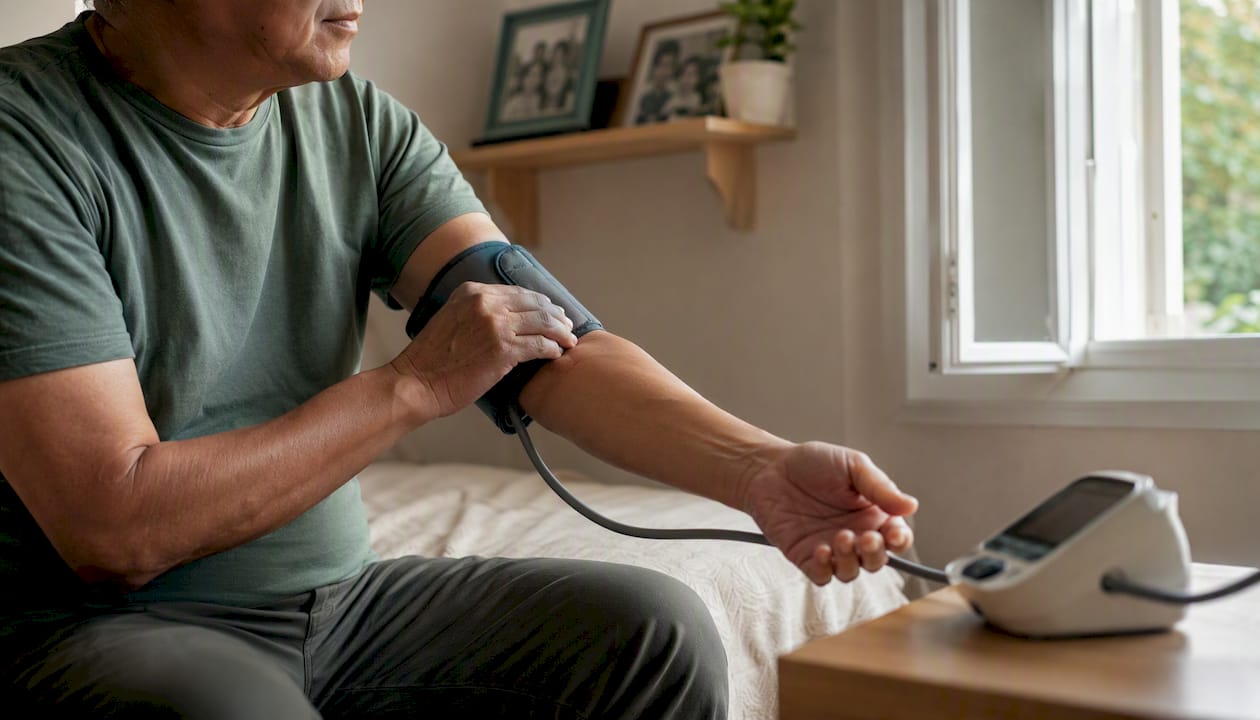
A blood pressure reading of 180/120 mm Hg or higher is the number that defines a hypertensive crisis. On its own, that number is not always a 911 emergency. It becomes one when it’s paired with signs of organ damage, like chest pain, shortness of breath, vision changes, or trouble speaking.
Here’s the first move: sit down, rest for about one minute, and recheck your blood pressure. If the reading stays at or above 180/120 and any symptom below shows up, call 911 immediately.
Call 911 right away if a reading of 180/120 or higher comes with any of these:
- Chest pain, pressure, or shortness of breath
- Sudden confusion, slurred speech, or weakness on one side
- Severe headache with vision changes or nausea
Key Takeaways
A blood pressure reading of 180/120 mm Hg or higher becomes a true emergency only when it appears alongside symptoms of acute organ damage, and that combination is what determines whether you call 911 or your doctor’s office.
| Point | Details |
|---|---|
| Know the threshold | A reading of 180/120 mm Hg or higher defines a hypertensive crisis, but the number alone doesn’t mean 911. |
| Recheck before reacting | Rest one minute, recheck with a validated cuff, and reassess before deciding your next step. |
| Watch for organ-damage symptoms | Chest pain, confusion, slurred speech, vision changes, or severe headache alongside a high reading means call 911 now. |
| Don’t self-medicate aggressively | Skip extra doses on your own; rapid, unsupervised BP drops can reduce blood flow to organs. |
| Follow up promptly | Garden State Medical Group offers same-week primary care and cardiopulmonary follow-up after a hypertensive event. |
Table of Contents
- Is This a High Blood Pressure Emergency? Start Here
- What Symptoms Signal a Hypertensive Emergency?
- What to Do Right Now for a Dangerously High Reading
- What Happens in the Emergency Department
- Hypertensive Emergency or Urgency? A Fast Way to Decide
- Recovering From a Hypertensive Crisis: What Comes Next
- Why We Take Every High Reading Seriously
- Getting Follow-Up Care After a Blood Pressure Scare
- Sources
- FAQ
Is This a High Blood Pressure Emergency? Start Here
Not every dangerously high reading means a trip to the emergency room, but every dangerously high reading deserves your full attention. The clinical term is hypertensive crisis, and it splits into two very different situations that call for two very different responses.
A hypertensive crisis is generally defined as a blood pressure reading of 180/120 mm Hg or higher. What happens next depends entirely on whether your body is showing signs of acute damage from that pressure spike.
Quick facts that matter:
- Hypertensive emergency: BP at or above 180/120 plus evidence of new, acute damage to the brain, heart, kidneys, eyes, or major blood vessels. This needs immediate hospital-level treatment.
- Hypertensive urgency: BP at or above 180/120 with no signs of acute organ damage. This still needs prompt medical attention, just not necessarily a 911 call.
- Left untreated, a true emergency can progress toward stroke, heart attack, acute kidney injury, or permanent retinal damage.
Major medical organizations are careful to point out that the number alone doesn’t decide the treatment path. A reading of 190/125 with no symptoms is a very different situation than 182/121 with chest pain. Organ damage, not the exact digits on the cuff, is what determines whether you need an ambulance or an urgent phone call to your doctor.
What Symptoms Signal a Hypertensive Emergency?
When blood pressure spikes to crisis levels, the danger isn’t the number itself. It’s what that pressure does to your organs in real time. Symptoms tend to cluster by which organ system is under strain, and recognizing the pattern helps you describe what’s happening clearly if you do end up calling for help.

| Organ system | Warning signs |
|---|---|
| Brain | Severe headache, confusion, sudden weakness, slurred speech, vision loss |
| Heart | Chest pain or pressure, shortness of breath, irregular heartbeat |
| Kidneys | Sharply decreased urination, blood in the urine, unexplained swelling |
| Eyes | Blurred vision, sudden vision changes, seeing spots |
| Aorta | Sudden, severe chest or back pain, often described as tearing |
Some of these signs carry more weight than others. Chest pain, sudden confusion, slurred speech, and severe headache with vision changes are the ones clinicians treat as red flags almost every time, because they point directly at the brain, heart, or aorta. These are also flagged consistently in broader symptom guides for cardiovascular and neurological warning signs.
If your blood pressure is confirmed at 180/120 or higher and any of these symptoms appear, that combination is your signal to call 911. Waiting to “see if it passes” is the one mistake that turns a manageable crisis into lasting organ damage. A sudden drop in urine output paired with a high reading can point to kidney injury just as clearly as chest pain points to the heart.
What to Do Right Now for a Dangerously High Reading
Panic makes blood pressure worse, so the first job is to slow down and follow a sequence.
- Stop what you’re doing and sit or lie down in a quiet spot.
- Rest for about one minute. Your arm should be supported at heart level, feet flat on the floor, back supported.
- Recheck your blood pressure using a validated cuff and correct positioning. A cuff that’s too small or an arm dangling at your side can inflate the reading by a surprising margin, so this step matters more than people assume.
- Write down the number and the time. If a second reading is needed later, this record helps a clinician or EMS see the trend.
- Decide based on the second reading. Still 180/120 or higher with any organ-damage symptom? Call 911. Still high but no symptoms? Contact your doctor’s office the same day.
While you wait for help or a callback, don’t reach for an extra dose of your blood pressure medication on your own. Rapidly lowering blood pressure without medical supervision can actually reduce blood flow to organs that have adjusted to operating at a higher pressure over time, which sometimes causes more harm than the high reading itself.
Sitting upright rather than lying flat tends to be more comfortable if chest pain or shortness of breath is present. Avoid caffeine, and avoid the temptation to “walk it off.” If you know you’re dealing with heart attack symptoms rather than a pressure spike alone, treat that as its own 911 emergency regardless of the exact BP number.
Pro Tip: Keep a current medication list, your usual blood pressure range, and the time of your last dose somewhere accessible, like a phone note or wallet card. When EMS or an ER team knows your baseline and what’s already in your system, they can act faster and more precisely.
What Happens in the Emergency Department
Once you arrive, the team’s first job is confirming whether this is truly a hypertensive emergency or a high reading without organ involvement. That distinction shapes everything that follows.
Expect a repeat blood pressure check on a validated machine, an ECG to look at heart rhythm and strain, basic bloodwork, and often a chest X-ray. If neurological symptoms are present, a CT scan of the head is standard to rule out bleeding or stroke.
For confirmed hypertensive emergencies, treatment usually involves titratable IV medications like nicardipine or labetalol rather than oral pills, because IV drugs can be adjusted minute by minute. The goal isn’t to normalize blood pressure instantly.
Patients with confirmed organ damage typically need ICU-level monitoring and may see specialists in cardiology, nephrology, or neurology depending on which organ was affected.
| What happens | Why it matters |
|---|---|
| ECG and labs | Rule out heart strain, kidney injury, or other acute damage |
| CT head (if indicated) | Checks for stroke or bleeding when neurological signs appear |
| IV antihypertensives | Allow precise, gradual BP reduction under monitoring |
| ICU admission | Reserved for confirmed organ damage requiring close observation |
Hypertensive Emergency or Urgency? A Fast Way to Decide
The line between these two categories comes down to one question: is there new organ damage right now, or not?
- Emergency: BP at 180/120 or higher and a symptom pointing to organ damage. Needs IV medication and hospital admission.
- Urgency: BP at 180/120 or higher with no new symptoms. Needs medication adjustment and close follow-up, usually within a day or two, but not an ambulance.
The decision flow is simple in practice: recheck the number after resting, screen yourself for the symptoms listed earlier, and only call 911 when both the number and a symptom line up together. A person with chronically elevated blood pressure who feels completely normal, aside from a high home reading, generally falls into the urgency category and can be managed through a same-day call to their primary care provider.
Pro Tip: Anxiety, pain, and even a full bladder can temporarily spike a reading into crisis territory without any real danger. That’s exactly why the one-minute recheck step exists, and skipping it is one of the most common reasons people head to the ER unnecessarily.
Recovering From a Hypertensive Crisis: What Comes Next
Whether you were treated for an emergency or managed as an urgency case, the days right after matter. If you were sent home after an urgency evaluation, plan to see your primary care provider within a day or two so your medications can be adjusted before pressure climbs again. If you were hospitalized for a true emergency, your discharge plan should include a scheduled follow-up, not just a prescription refill.
Long-term, consistent blood pressure control is the most reliable way to prevent another crisis, far more so than reacting to individual spikes after they happen. That means daily medication adherence, regular home monitoring, and attention to diet and activity, including the kinds of food choices that support healthy blood pressure.
Common triggers worth knowing about:
- Skipping or running out of blood pressure medication
- Stimulant use, including certain recreational drugs
- Untreated pain or acute illness
- Sudden withdrawal from certain medications
Understanding what typically drives blood pressure numbers up over time gives you a real shot at catching the next spike before it becomes a crisis.
Why We Take Every High Reading Seriously
In practice, most patients who come in with a very high reading don’t have an emergency. Our focus is confirming that quickly, ruling out organ damage, and then figuring out why the pressure spiked in the first place. That’s where follow-up care actually earns its keep. Primary care, cardiopulmonary specialists, and on-site imaging work together to optimize medications and catch the pattern before it repeats.
Getting Follow-Up Care After a Blood Pressure Scare
If you’ve just come home from an ER visit or an urgent care appointment for a high blood pressure reading, the work isn’t finished. It’s just beginning. Garden State Medical Group offers same-week primary care follow-up in North Bergen and Secaucus, so you’re not left waiting weeks to get your medication regimen reviewed after a scare like this.
Our team coordinates primary care for ongoing blood pressure management, cardiopulmonary care if your heart or lungs need a closer look, and on-site radiology and diagnostic testing so imaging doesn’t require a separate referral and a separate wait. If distance or timing is an issue, telemedicine visits are available for the initial follow-up conversation. Bring your discharge paperwork, your current medication list, and any home blood pressure readings you’ve logged since the event. For patients managing broader cardiometabolic risk, our multidisciplinary programs build a longer-term plan around your specific numbers. Call our North Bergen or Secaucus office this week to schedule your follow-up visit.
Sources
- Hypertensive Crisis - StatPearls - NCBI Bookshelf
- When to call 911 for high blood pressure | American Heart Association
- The Management of Elevated Blood Pressure in the Acute Care Setting: A Scientific Statement From the American Heart Association | Hypertension
Always consult your clinician or local emergency services for guidance specific to your situation.
This article is general information, not a substitute for advice from a qualified doctor. Consult a qualified healthcare professional about your own circumstances before acting on anything here.
FAQ
When should you go to the ER for high blood pressure?
Go to the ER, or call 911, if your blood pressure is 180/120 mm Hg or higher after a one-minute recheck and you have symptoms like chest pain, shortness of breath, severe headache, vision changes, or confusion.
What are the symptoms of a blood pressure crisis?
Symptoms include severe headache, chest pain, shortness of breath, vision changes, confusion, slurred speech, decreased urination, and sudden severe back or chest pain that may signal aortic involvement.
How can I bring my blood pressure down immediately?
The safest first step is to sit down, rest for a minute, and recheck your reading rather than self-medicating; if it’s confirmed high with symptoms, call 911 instead of trying to lower it yourself at home.
What will the ER do for very high blood pressure?
Expect a repeat BP check, an ECG, bloodwork, and possibly imaging like a chest X-ray or CT scan, followed by titratable IV medication if a true hypertensive emergency is confirmed.
Can Garden State Medical Group help after a hypertensive crisis?
Yes. Garden State Medical Group provides prompt primary care and cardiopulmonary follow-up in North Bergen and Secaucus for patients recovering from a high blood pressure event.
Recommended
- Understanding Your Blood Pressure Numbers: A Clear Guide
- A Guide to Monitoring Your Blood Pressure during Isolation | Garden State Medical Group | Garden State Medical Group
- 4 Healthy Food Choices to Control Your Blood Pressure | Garden State Medical Group | Garden State Medical Group
- Hypertension Management: What You Need to Know