
Hypertension Stages: What Your Numbers Mean and Next Steps
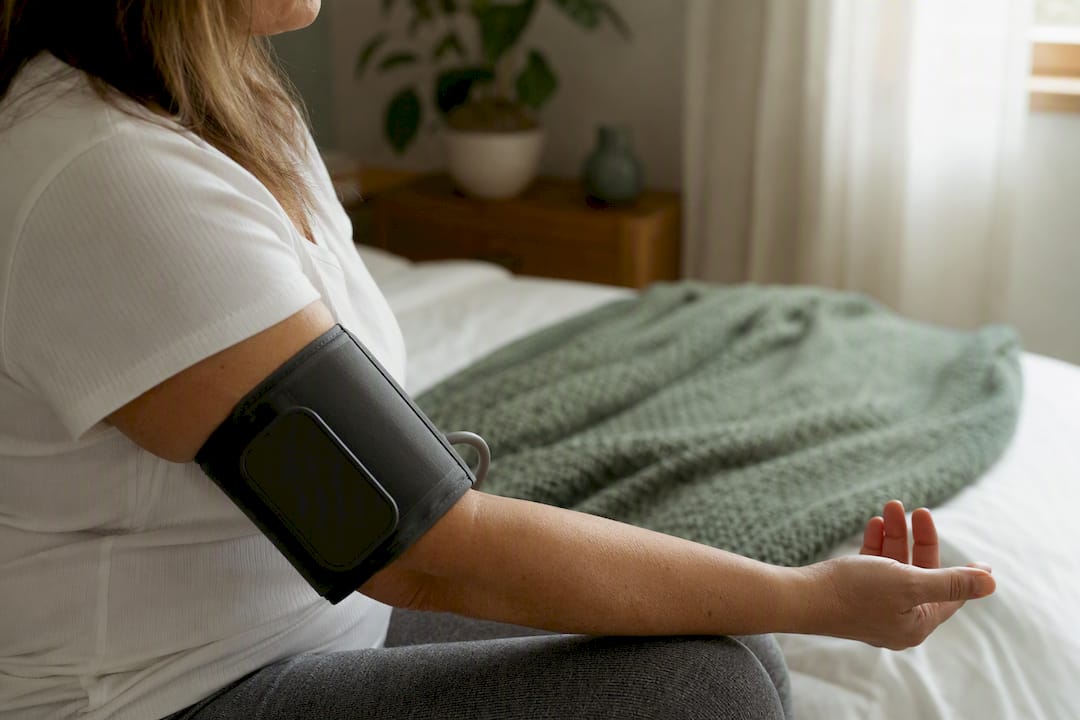
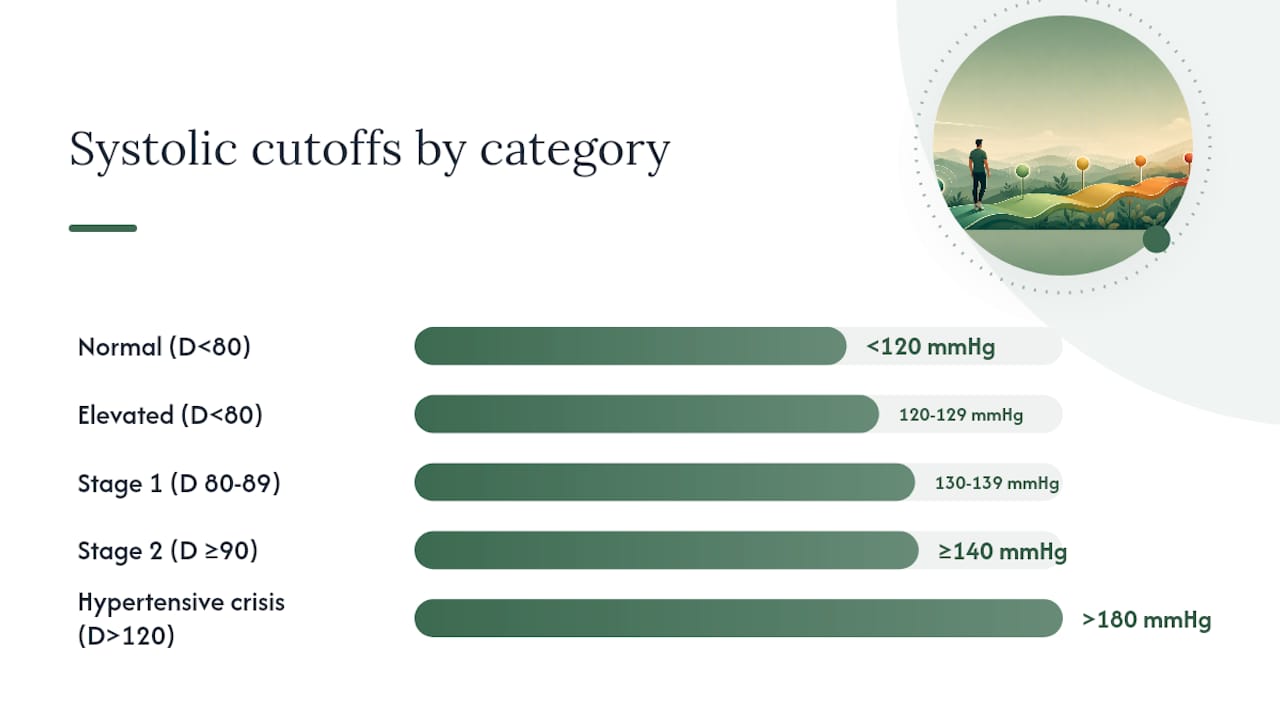
Blood pressure falls into five categories based on your systolic (top) and diastolic (bottom) numbers: Normal (below 120/80 mm Hg), Elevated (120-129/under 80), Stage 1 (130-139 or 80-89), Stage 2 (140/90 or higher), and Hypertensive crisis (above 180/120), according to the 2025 ACC/AHA guideline. If your reading falls into different categories for the top and bottom numbers, the higher category wins, so a reading of 125/85 counts as Stage 1.
If your blood pressure tops 180/120 and you have chest pain, shortness of breath, or vision changes, call 911 immediately. Without symptoms, contact your clinician the same day.
| Category | Systolic (mm Hg) | Diastolic (mm Hg) |
|---|---|---|
| Normal | Below 120 | Below 80 |
| Elevated | 120-129 | Below 80 |
| Stage 1 | 130-139 | 80-89 |
| Stage 2 | 140 or higher | 90 or higher |
| Hypertensive crisis | Above 180 | Above 120 |
Key Takeaways
Hypertension stages range from Normal below 120/80 to hypertensive crisis above 180/120, and treatment decisions depend on both your stage and your overall cardiovascular risk.
| Point | Details |
|---|---|
| Know your exact numbers | Normal is below 120/80, Stage 1 starts at 130/80, and Stage 2 begins at 140/90. |
| Higher category rules | If systolic and diastolic fall in different categories, the higher one determines your stage. |
| Crisis threshold demands action | Above 180/120 with symptoms means call 911; without symptoms, contact your clinician the same day. |
| Staging guides but doesn’t dictate treatment | Clinicians weigh overall cardiovascular risk alongside your category before starting medication. |
| Get evaluated, not just measured | Garden State Medical Group pairs blood pressure readings with full clinical context through primary care and cardiopulmonary evaluation. |
Table of Contents
- Understanding the Hypertension Stages and What They Mean for You
- How Blood Pressure Gets Measured Accurately
- Symptoms That Signal an Emergency vs. a Non-Urgent High Reading
- Treatment Approaches Across the Hypertension Management Stages
- How Often You Should Monitor Blood Pressure at Home
- The Real Risks of Letting High Blood Pressure Go Untreated
- Why Doctors Treat Staging as a Guide, Not a Hard Line
- Our Perspective on Managing Blood Pressure Long Term
- Get Your Blood Pressure Evaluated at Garden State Medical Group
- Sources
- FAQ
Understanding the Hypertension Stages and What They Mean for You
Each of the hypertension stages tells a slightly different story about your heart and blood vessels, and each one comes with its own set of clinical next steps. Here’s what typically happens at each level, based on guidance from the American Heart Association.
- Normal (below 120/80): Your blood vessels are handling pressure well. Clinicians usually recommend a recheck once a year and general heart-healthy habits.
- Elevated (120-129/under 80): This is a warning sign, not yet a diagnosis. Lifestyle changes, tracked through resources like Garden State Medical Group’s guide to blood pressure numbers, often prevent progression.
- Stage 1 (130-139 or 80-89): This is where clinicians start weighing your overall cardiovascular risk, not just the number itself. Someone with diabetes or a family history of heart disease may get medication at this stage, while someone with no other risk factors might get three to six months to try lifestyle changes first.
- Stage 2 (140/90 or higher): Medication becomes the standard recommendation, often paired with lifestyle changes rather than instead of them.
- Hypertensive crisis (above 180/120): This is a medical emergency when paired with symptoms, and urgent regardless.
Doctors rarely stage blood pressure in isolation. A 45 year old with Stage 1 readings, no diabetes, and normal cholesterol gets a different treatment plan than a 45 year old with the same numbers plus kidney disease. Staging tells you where you sit on a chart. Risk assessment tells your doctor what to actually do about it.
Pro Tip: If your systolic and diastolic numbers land in different categories, don’t average them. The higher category always determines your stage, since diastolic hypertension carries real risk even when systolic looks fine.
How Blood Pressure Gets Measured Accurately
A single number from a rushed office visit rarely tells the full story. Accurate readings depend on preparation and consistent technique.
- Sit quietly for five minutes before measuring, back supported, feet flat, arm resting at heart level.
- Avoid caffeine, exercise, and smoking for 30 minutes beforehand.
- Use a cuff sized correctly for your arm. A cuff that’s too small can inflate your reading by several points.
- Take two or three readings one minute apart and average them.
Clinic readings, home blood pressure monitoring (HBPM), and ambulatory blood pressure monitoring (ABPM) don’t always agree, and that’s expected. Clinic readings can run high because of nerves, a pattern called white-coat hypertension. HBPM, taken with a validated home device over several days, often gives a more honest picture of your everyday pressure. ABPM straps a portable monitor to your arm for 24 hours, taking readings automatically day and night, and it’s the preferred method for confirming white-coat or masked hypertension because clinic-only readings miss both patterns.
When shopping for a home monitor, choose an automated, upper-arm cuff device validated by an independent testing body rather than a wrist unit, which tends to run less accurate. Most clinicians confirm a hypertension diagnosis using an average of readings collected over one to two weeks, not a single office visit.
Symptoms That Signal an Emergency vs. a Non-Urgent High Reading
Most people with high blood pressure feel completely normal, which is exactly why routine checks matter. Hypertension earned the nickname “the silent killer” because damage to arteries, the heart, and the kidneys builds quietly for years before anything hurts.
That silence breaks when pressure spikes into emergency territory. Call 911 if a reading above 180/120 comes with any of the following:
- Chest pain or pressure
- Shortness of breath
- Sudden back pain
- Numbness or weakness, especially on one side
- Vision changes
- Difficulty speaking or understanding speech
Those symptoms, especially in combination, can point to a heart attack, stroke, or aortic damage, and every minute counts. If your reading is above 180/120 but you feel fine, don’t call 911. Contact your clinician right away instead. Your doctor can assess these related symptoms and decide whether you need to be seen same day.
Reading above 180/120 with symptoms: call 911. Reading above 180/120 with no symptoms: call your doctor’s office the same day. That distinction is the entire difference between an emergency room visit and an urgent office appointment.
Treatment Approaches Across the Hypertension Management Stages
Treatment tracks the stage, but it never ignores the whole patient. Two people with identical numbers can end up on different plans depending on their broader cardiovascular risk.
For Elevated and many Stage 1 cases, lifestyle changes come first. Clinicians typically give these changes three to six months to work before adding medication, unless the patient already has diabetes, chronic kidney disease, or a history of heart disease, in which case medication often starts sooner. Stage 2 is different. Guideline authors now favor starting many adults directly on a single-pill combination of two medications rather than one drug at a time, since combination therapy controls pressure faster and patients tend to stick with one pill more reliably than two.
The most common first-line drug classes include:
- ACE inhibitors
- Angiotensin receptor blockers (ARBs)
- Thiazide diuretics
- Calcium channel blockers
On the lifestyle side, four changes make the biggest measurable difference: a DASH-style eating pattern rich in vegetables, fruit, and low-fat dairy, cutting sodium, regular aerobic activity, and limiting alcohol. Weight loss compounds all of these effects, since even modest loss can lower systolic pressure measurably.
Pro Tip: Missing doses is the single biggest reason blood pressure medication fails, not the wrong drug choice. Set a phone reminder, pair pills with an existing habit like brushing your teeth, and bring your log to every follow-up so your clinician can adjust before a small problem becomes a bigger one.
How Often You Should Monitor Blood Pressure at Home
Monitoring frequency should match your stage and whether your treatment plan recently changed. Someone stable at Normal doesn’t need daily checks. Someone just started on a new medication for Stage 2 does.
| Category | Suggested home monitoring frequency |
|---|---|
| Normal | Annual check at a routine visit |
| Elevated | Weekly, plus after major lifestyle changes |
| Stage 1 | several times per week |
| Stage 2 or recent medication change | Daily for 2 to 4 weeks, then as directed |
Log the time of day, your posture, and which device you used alongside each reading. That context matters, since a reading taken standing right after a walk looks different from one taken seated after rest. Bring the log to your appointments rather than a summary, since clinicians often catch patterns a quick recap misses.

If your home numbers and clinic numbers disagree consistently, your clinician may order ABPM to sort out whether you have white-coat hypertension, masked hypertension, or a genuinely elevated pattern.
The Real Risks of Letting High Blood Pressure Go Untreated
Sustained high pressure damages tissue slowly, and the damage adds up regardless of whether you feel it happening. The organs most affected include:
- The heart (heart attack, heart failure)
- The brain (stroke, cognitive decline)
- The kidneys (chronic kidney disease)
- The eyes (vision loss from retinal damage)
- The arteries in the legs (peripheral artery disease)
Risk climbs as your numbers climb, and it accumulates over years rather than resetting month to month. The World Health Organization identifies hypertension as one of the leading preventable risk factors for death worldwide, which underscores why even moderate, sustained elevation deserves real attention rather than a shrug. Chronic inflammation from high blood pressure can also affect less obvious tissue. Some dental research links poor oral health to blood pressure changes, a reminder that cardiovascular strain rarely stays contained to one system.
Why Doctors Treat Staging as a Guide, Not a Hard Line
Categories exist to help clinicians make consistent decisions, not to draw a safety line at an exact number. The Merck Manual notes that these cutoffs are somewhat arbitrary, and that cardiovascular risk actually climbs steadily even within the range labeled Normal.
That distinction matters for anyone sitting at 118/78 and assuming they’re in the clear. You are, relatively speaking, but risk isn’t a light switch that flips on at 130/80.
Guideline authors built these categories from decades of observational and trial data showing risk rising along a continuous curve. The stages are a practical shorthand for that curve, not a claim that 129/79 is safe and 130/80 suddenly isn’t.
- Categories guide treatment decisions and insurance coding.
- The underlying risk relationship is continuous, not stepped.
- Trending in the wrong direction across “Normal” readings still deserves attention.
Our Perspective on Managing Blood Pressure Long Term
Numbers on a chart only matter if someone helps you act on them. At Garden State Medical Group, our multidisciplinary team pairs primary care with cardiopulmonary services and on-site testing, so a Stage 1 reading doesn’t sit in isolation. It gets context from your labs, your history, and a clinician who sees the whole picture. If you’ve been tracking readings at home and aren’t sure what they mean for you specifically, that’s exactly the conversation worth having with a provider who knows your chart.
Get Your Blood Pressure Evaluated at Garden State Medical Group
A number on a home monitor only tells you so much. Garden State Medical Group gives you what a cuff alone can’t: a clinician who reviews your reading alongside your labs, your history, and your risk factors in the same visit, with on-site diagnostic testing available if something needs a closer look.
Whether you’re managing Stage 1 numbers with lifestyle changes or need medication adjusted after a Stage 2 diagnosis, our primary care team can build a plan around your specific risk profile. For more complex cases involving heart or lung involvement, our cardiopulmonary care specialists offer focused evaluation, and our chronic care management program supports patients who need ongoing monitoring and medication oversight. Telemedicine visits are available for patients who want to review home readings without an in-person trip, and most major insurance plans, including Medicare and Medicaid, are accepted. Schedule a primary care appointment today to get your numbers reviewed by someone who can act on them.
Sources
- 2025 ACC/AHA Guideline for the Prevention, Detection, Evaluation, and Management of High Blood Pressure in Adults | JACC
- Understanding Blood Pressure Readings | American Heart Association
- High Blood Pressure - Merck Manual Consumer Version
This article is general information, not a substitute for advice from a qualified doctor. Consult a qualified healthcare professional about your own circumstances before acting on anything here.
FAQ
What Are the Stages of Hypertension?
The main categories are Normal (below 120/80), Elevated (120-129/under 80), Stage 1 (130-139 or 80-89), Stage 2 (140/90 or higher), and hypertensive crisis (above 180/120).
Is 140/90 Dangerously High Blood Pressure?
A reading of 140/90 meets the threshold for Stage 2 hypertension and typically calls for medication, but it’s not an emergency unless it’s paired with symptoms like chest pain or vision changes.
How Do I Lower My Blood Pressure Quickly at Home?
Sit down, rest quietly, and avoid caffeine or stimulants. If a single high reading isn’t paired with symptoms, recheck it after resting rather than assuming it’s an emergency, and contact your clinician if it stays elevated.
Is Stage 1 Hypertension Serious?
Stage 1 deserves real attention, since it often responds well to lifestyle changes within three to six months, though clinicians may add medication sooner if you have diabetes, kidney disease, or other cardiovascular risk factors.
When Should I Call 911 for High Blood Pressure?
Call 911 if your reading is above 180/120 and you have chest pain, shortness of breath, vision changes, numbness, or difficulty speaking, since these symptoms can signal a hypertensive emergency.
Recommended
- Understanding Your Blood Pressure Numbers: A Clear Guide
- Hypertension Management: What You Need to Know
- 4 Healthy Food Choices to Control Your Blood Pressure | Garden State Medical Group | Garden State Medical Group
- A Guide to Monitoring Your Blood Pressure during Isolation | Garden State Medical Group | Garden State Medical Group