
Why Cardiovascular Screening Matters for Your Heart Health

Cardiovascular screening is the process of evaluating your heart and blood vessel health to detect risk factors before symptoms ever appear. The importance of cardiovascular screening comes down to one straightforward reality: most serious cardiac events, including heart attacks and strokes, develop silently over years. By the time you feel something, the damage is often already underway. Catching elevated blood pressure, abnormal cholesterol, or high blood glucose early gives you and your doctor a real window to act.
A few key facts worth knowing upfront:
- Medicare Part B covers cardiovascular screenings, including blood tests for cholesterol, lipid, and triglyceride levels, once every 5 years at no cost for eligible beneficiaries.
- The 2019 ACC/AHA prevention guidelines recommend that adults aged 40–75 undergo a 10-year atherosclerotic cardiovascular disease (ASCVD) risk estimation before any preventive medication is considered.
- Research published in Heart shows that 80% of cardiac events and strokes are preventable, and early detection and intervention account for 25%–75% of that prevention potential.
- Personalized clinician-patient risk discussions are central to translating screening numbers into a plan that fits your life.
Table of Contents
- Why cardiovascular screening is your first line of defense
- What tests are included in a cardiovascular health check
- How early detection changes your health outcomes
- What US clinical guidelines say about screening frequency
- How to understand your results and what to do next
- How screening results have shaped real patient outcomes
- How your lifestyle directly affects screening results
- Key Takeaways
- FAQ
Why cardiovascular screening is your first line of defense
Heart disease remains the leading cause of death among adults in the United States, and the most dangerous aspect is how quietly it progresses. High blood pressure typically produces no symptoms at all, which means the only way to know your numbers is to have them measured regularly. The same applies to high cholesterol and elevated blood glucose. Screening closes that gap between what your body is doing and what you actually know about it.
The value here is not just detection. It is timing. Finding a risk factor early, before it has caused arterial damage or triggered a cardiac event, gives lifestyle changes and medical therapy the best possible chance to work. That window narrows considerably once symptoms appear.
What tests are included in a cardiovascular health check
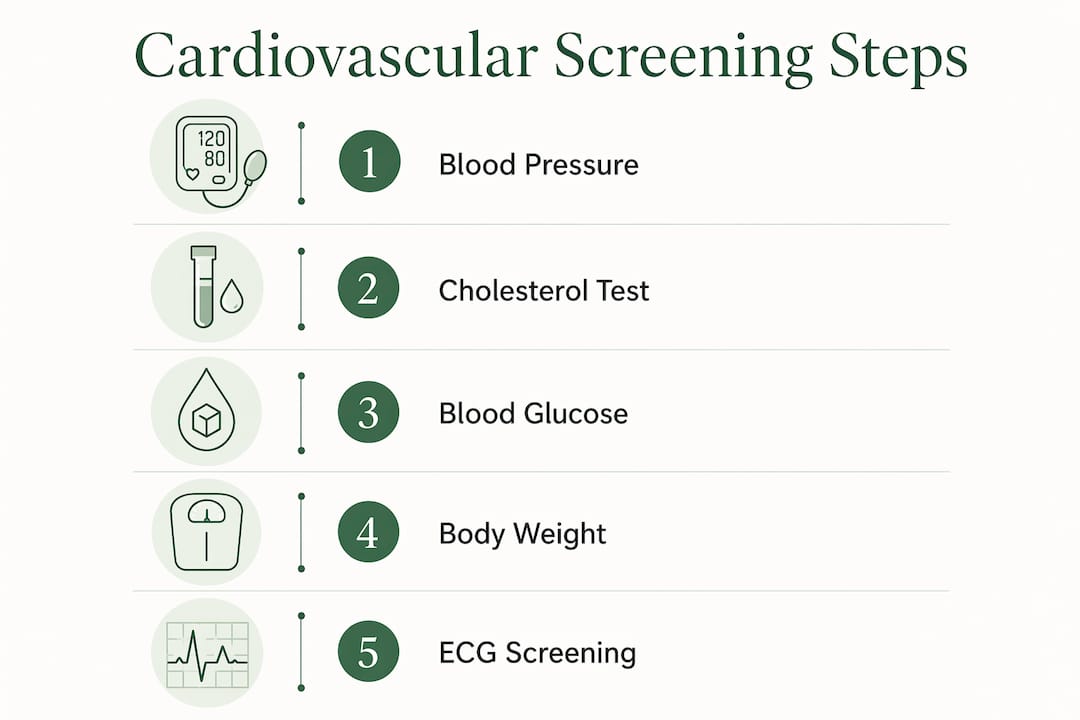
A standard cardiovascular health check covers several core measurements, each targeting a different piece of your overall risk picture.
- Blood pressure: The American Heart Association recommends checking blood pressure at every regular visit, or at least once per year if your reading is below 120/80 mm Hg. More frequent checks apply if your numbers are elevated or risk factors exist.
- Cholesterol and lipid panel: This measures total cholesterol, LDL, HDL, and triglycerides. Screening typically begins around age 20 and repeats every 4–6 years for normal-risk adults, with more frequent testing if risk is elevated.
- Blood glucose: Elevated blood sugar raises your risk for type 2 diabetes, which directly increases cardiovascular risk. Testing is recommended at least every 3 years for eligible adults.
- Body weight and BMI: Measured during routine visits to assess obesity-related cardiovascular risk.
- ECG (electrocardiogram): Useful for diagnosing suspected heart conditions, but the U.S. Preventive Services Task Force recommends against routine ECG screening for asymptomatic adults at low cardiovascular risk, since false positives can lead to unnecessary invasive follow-up procedures.
Medicare Part B covers the cholesterol, lipid, and triglyceride blood tests at no cost when your provider accepts assignment, making these screenings financially accessible for millions of Americans.
How early detection changes your health outcomes
Research in Heart makes the case plainly: 80% of cardiac events and strokes are preventable, and early detection accounts for a substantial share of that prevention. Catching a risk factor before it becomes a clinical event gives you options that simply do not exist after a heart attack.
Statistic to know: 80% of cardiac events and strokes are preventable, with early detection and intervention responsible for 25%–75% of that prevention potential.
Screening results also motivate real behavior change. When you see your own numbers, the conversation with your doctor shifts from abstract advice to a concrete plan. The American Heart Association notes that less-than-ideal results are not a verdict. They are an opening to start improving your health in a measurable way. That framing matters, because patients who understand their risk tend to follow through on lifestyle adjustments and prescribed therapies more consistently.
Pro Tip: Ask your doctor to walk you through your 10-year ASCVD risk score at your next visit. Seeing a specific number makes the conversation about prevention far more concrete and personal.
What US clinical guidelines say about screening frequency
The 2019 ACC/AHA guidelines provide the clearest framework for cardiovascular screening in the United States. Here is how the recommendations break down by age and risk:
- Ages 20–39: Assess traditional ASCVD risk factors at least every 4–6 years.
- Ages 40–75: Calculate a 10-year ASCVD risk score using the Pooled Cohort Equations before initiating any preventive medication, including statins, antihypertensives, or aspirin.
- Borderline risk (5%–7.5% 10-year risk) or intermediate risk (7.5%–20%): Consider additional risk-enhancing factors or a coronary artery calcium (CAC) score to sharpen the decision about preventive therapy.
- Medicare beneficiaries: Cardiovascular blood panels covered once every 5 years at no cost.
The guidelines also recognize that standard calculators do not capture everything. Factors like family history of early heart disease, ethnicity, and pregnancy-related hypertension all influence true risk and should be part of any thorough clinician-patient risk discussion. You can find a broader overview of age-based screening recommendations in this adult screening age guide.
How to understand your results and what to do next
Getting your results is only half the process. Understanding what they mean for your specific situation is where the real work begins. A result that falls outside the ideal range is not a diagnosis of heart disease. It is information, and the ACC/AHA guidelines are clear that the goal of risk estimation is to match the intensity of preventive efforts to your actual risk level and your readiness to act.
Next steps after screening typically follow a tiered approach. Lifestyle changes, including diet improvements, increased physical activity, and quitting tobacco, come first for most patients. Medications are considered when risk is high enough that the benefit clearly outweighs any side effects, and only after a shared decision-making conversation with your clinician.
Preparing well also improves the accuracy of your results. Bringing a current medication list and a log of home blood pressure readings helps your doctor distinguish between true hypertension and temporary white coat elevation. One practical risk to keep in mind: routine ECG for low-risk asymptomatic adults can produce false positives that trigger invasive follow-up without meaningful benefit, which is why clinical judgment guides when that test is appropriate.
How screening results have shaped real patient outcomes
The population-level data on cardiovascular screening tells a consistent story. Most Americans who have experienced a heart attack had at least one unfavorable cardiovascular risk factor beforehand, according to the 2019 ACC/AHA guidelines. That pattern points directly to a missed opportunity for earlier intervention.
When screening identifies elevated LDL cholesterol in a 45-year-old with no symptoms, starting a statin and adjusting diet can meaningfully reduce the 10-year probability of a first cardiac event. The same logic applies to blood pressure: controlling hypertension before it damages arterial walls or the kidneys changes the long-term trajectory of a patient’s health. These are not hypothetical benefits. They are the documented outcomes that shaped current US screening guidelines. For more on how preventive heart conversations fit into your care, Gardenstatemedicalgroup has additional resources worth reviewing.
How your lifestyle directly affects screening results
Your daily habits show up in your screening numbers, often more directly than people expect. Diet quality, physical activity, smoking status, body weight, and sleep all influence blood pressure, cholesterol, and blood glucose. The ACC/AHA guidelines place lifestyle optimization at the center of cardiovascular prevention, ahead of medication for most patients.

A diet high in fruits, vegetables, and whole grains consistently correlates with lower LDL and better blood pressure control. Regular physical activity, even brisk walking most days of the week, reduces multiple cardiovascular risk factors simultaneously. Tobacco use, on the other hand, accelerates arterial damage and raises risk across every screening metric. The practical takeaway is that improving your lifestyle before your next screening is not just preparation. It is treatment. Your numbers will reflect the changes you make, and those changes give your clinician more to work with when planning your care. Explore heart health prevention tips for specific steps you can take between appointments.
Gardenstatemedicalgroup offers cardiopulmonary care and primary care services at its North Bergen and Secaucus, New Jersey locations, with a multidisciplinary team that includes preventive screenings, diagnostic testing, and personalized risk management. If you are ready to understand your cardiovascular risk and take a concrete next step, scheduling a screening with a qualified physician is the place to start.
Key Takeaways
Cardiovascular screening gives you and your doctor the information needed to prevent heart attacks and strokes before they happen, with 80% of cardiac events considered preventable through early detection and intervention.
| Point | Details |
|---|---|
| Screening detects silent risk | High blood pressure and high cholesterol rarely cause symptoms, making measurement the only reliable way to know your status. |
| Medicare covers key blood panels | Blood tests for cholesterol, lipid, and triglyceride levels are covered by Medicare Part B once every 5 years at no cost. |
| ACC/AHA guidelines set the framework | Adults aged 40–75 should have a 10-year ASCVD risk score calculated before any preventive medication is prescribed. |
| Results guide action, not alarm | Less-than-ideal numbers open the door to lifestyle changes and targeted therapy, not a definitive diagnosis. |
| Lifestyle changes show up in your numbers | Diet, activity, and tobacco avoidance directly affect blood pressure, cholesterol, and blood glucose readings. |
FAQ
What does cardiovascular screening actually check for?
Cardiovascular screening measures blood pressure, cholesterol and lipid levels, blood glucose, and body weight to identify risk factors for heart disease and stroke before symptoms develop.
How often should you get a cardiovascular health check?
Blood pressure should be checked at least once per year for most adults, while cholesterol screening is recommended every 4–6 years for normal-risk adults, with more frequent testing if risk factors are present.
Does Medicare cover cardiovascular screenings?
Yes. Medicare Part B covers blood tests for cholesterol, lipid, and triglyceride levels once every 5 years at no cost when your provider accepts assignment.
What should you do if your screening results are abnormal?
Abnormal results are a starting point, not a verdict. Your clinician will discuss lifestyle modifications first, and medications may be considered if your 10-year ASCVD risk is high enough to justify them through shared decision-making.
Is a routine ECG recommended for everyone?
No. The U.S. Preventive Services Task Force recommends against routine ECG for asymptomatic adults at low cardiovascular risk, because false positives can lead to unnecessary invasive procedures without meaningful health benefit.
Recommended
- 5 Healthy Habits That Protect Your Cardiovascular System | Garden State Medical Group | Garden State Medical Group
- Heart Health Tips: Your 2026 Prevention Guide
- Managing Your Heart’s Health: The Value of Cardiac Care | Garden State Medical Group | Garden State Medical Group
- 5 Things You Can Do to Improve Your Cardiac Health | Garden State Medical Group | Garden State Medical Group