
What Is Outpatient Care? A Clear Patient Guide

TL;DR:
- Outpatient care involves receiving medical services without a formal inpatient admission, regardless of overnight stays. It includes diagnostic tests, minor surgeries, behavioral health sessions, and chronic disease management. Medicare covers outpatient services under Part B with specific cost-sharing, emphasizing the importance of understanding care classifications to avoid unexpected expenses.
Outpatient care is defined as any medical service you receive without a formal inpatient admission order from a physician. That single distinction, not how long you stay or where you are in a hospital building, determines whether your care is classified as outpatient or inpatient. Services ranging from lab tests and X-rays to minor surgeries and behavioral health sessions all fall under outpatient care. Medicare Part B, administered by the Centers for Medicare and Medicaid Services (CMS), covers most of these services under specific cost-sharing rules. Understanding this classification matters because it directly affects your bill.
What is outpatient care and what services does it include?
Outpatient care covers a wide range of medical services delivered in settings that do not require a formal hospital admission. The key factor is the physician’s admission order. Without that order, you are classified as an outpatient, even if you spend the night in a hospital bed under observation status. Observation stays can last 24–48 hours and still count as outpatient care for billing purposes. That surprises many patients who assume an overnight stay automatically means inpatient status.
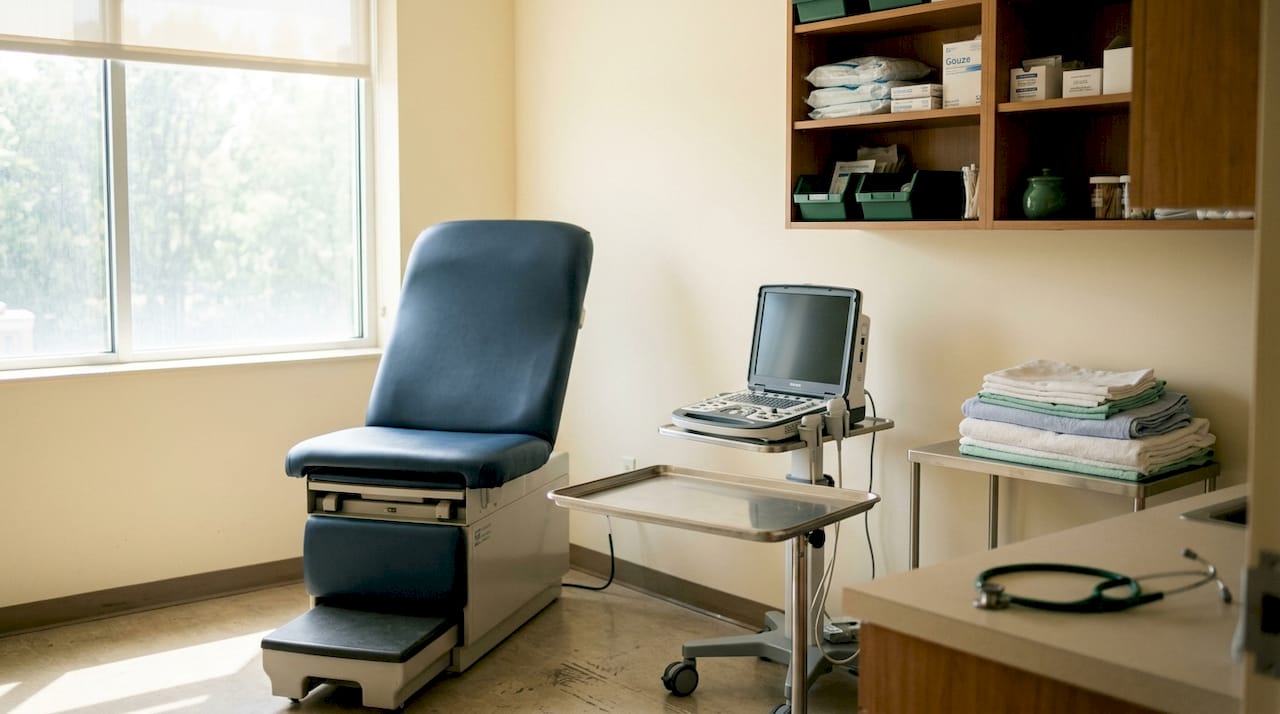
The settings where outpatient care happens are more varied than most people realize. You can receive outpatient services at a physician’s office, a hospital outpatient department, an ambulatory surgery center, an urgent care clinic, or a dedicated outpatient behavioral health facility. Each setting operates under the same core rule: no formal admission, no inpatient classification.
Common outpatient services include:
- Diagnostic tests such as blood work, MRIs, CT scans, and X-rays
- Minor surgical procedures like cataract removal, hernia repair, and colonoscopies
- Same-day procedures including biopsies and joint injections
- Behavioral health sessions through Partial Hospitalization Programs (PHP), Intensive Outpatient Programs (IOP), and standard outpatient therapy
- Preventive care visits, vaccinations, and chronic disease monitoring appointments
Behavioral health programs use a structured tier system. PHP programs require 20 or more hours per week, IOP programs run 9–20 hours per week, and standard outpatient therapy falls below 9 hours per week. Each tier matches a different level of clinical need, giving patients and providers a clear framework for choosing the right intensity of care.
How does Medicare cover outpatient care costs?
Medicare’s coverage rules for outpatient services are specific and worth knowing before you schedule any procedure. Medicare Part B covers outpatient hospital services including emergency room visits, laboratory tests, and same-day surgeries. Part B applies a $283 annual deductible in 2026, after which you typically pay 20% coinsurance on covered services. That 20% applies to each service separately, which means a single outpatient visit involving multiple procedures can generate multiple cost-sharing charges.
This is where patients often get caught off guard. Medicare Part A covers inpatient hospital stays with a separate deductible of $1,736 per benefit period in 2026. If you are admitted as an inpatient, Part A applies. If you are under observation status, Part B applies instead. The financial difference between these two classifications can be significant, particularly for patients who need skilled nursing facility care afterward, since Part A admission is required to qualify for that benefit.
| Coverage Type | Medicare Part | 2026 Deductible | Patient Cost Share |
|---|---|---|---|
| Outpatient hospital services | Part B | $283 annually | 20% coinsurance per service |
| Inpatient hospital stay | Part A | $1,736 per benefit period | Varies by length of stay |
| Observation status | Part B | $283 annually | 20% coinsurance per service |
Pro Tip: Ask your care team directly whether you are being admitted as an inpatient or placed under observation status. That one question can prevent a surprise bill and protect your eligibility for post-hospital skilled nursing coverage.
Understanding Medicare outpatient billing before your appointment gives you time to plan for out-of-pocket costs rather than react to them after the fact.
What are the benefits of outpatient care compared to inpatient care?
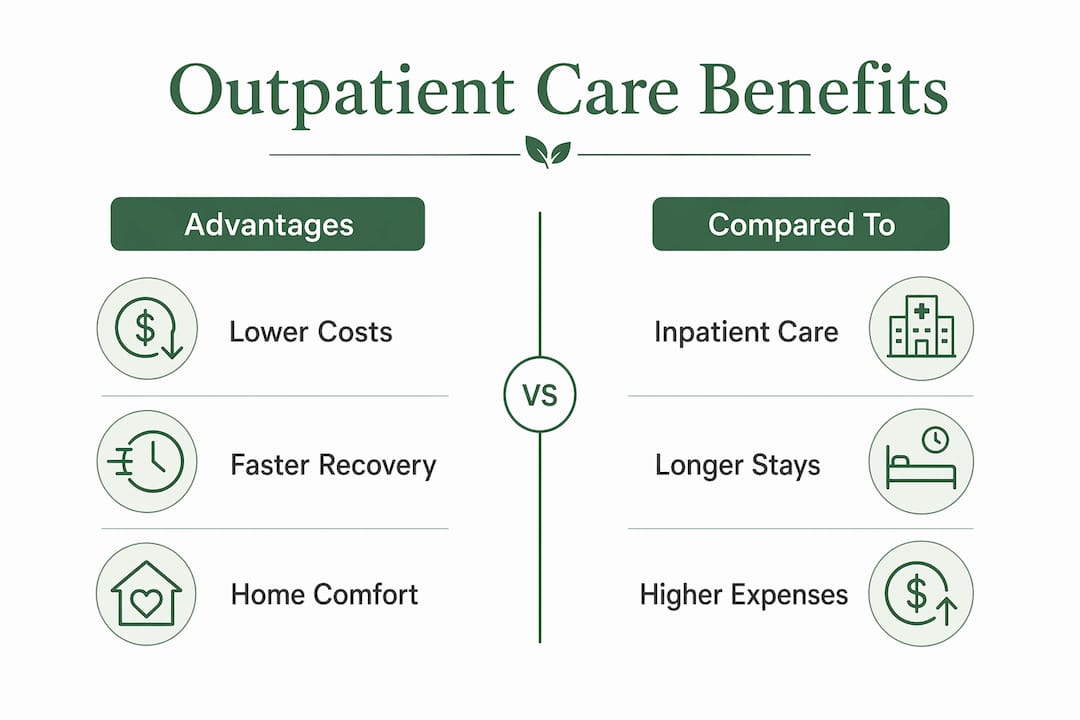
The benefits of outpatient care are real and well-documented. Reduced costs are the primary benefit identified by nearly half of surveyed physicians, driven largely by the elimination of room, board, and around-the-clock staffing expenses. Those savings pass through to patients in the form of lower bills and fewer insurance claims. For patients managing ongoing conditions, that cost difference compounds over time.
Beyond cost, outpatient care offers a recovery environment that inpatient settings simply cannot replicate. Patients who recover at home practice coping skills and habit changes in the same environment where they live daily. That real-world context improves long-term outcomes because the skills learned are immediately applicable, not just practiced in a controlled clinical setting.
Outpatient care lets you heal in your own life, not in a temporary one. Patients who manage recovery at home build habits that stick because they are tested against real daily challenges from day one.
Outpatient care does have limitations you should weigh honestly. It requires a stable home environment, reliable transportation, and a support system capable of assisting during recovery. Outpatient surgery centers follow strict emergency protocols, but they are not equipped for complex post-operative complications the way a full inpatient hospital is. Patients with unstable medical conditions or limited home support are generally better served by inpatient admission.
Key benefits of outpatient care at a glance:
- Lower overall cost by eliminating room and board charges
- Faster return to your normal daily routine
- Recovery in a familiar environment that reinforces real-world habit changes
- Greater scheduling flexibility compared to inpatient admission
- Reduced exposure to hospital-acquired infections
Pro Tip: Before agreeing to outpatient surgery or treatment, confirm that your home setup includes someone who can assist you for at least the first 24 hours post-procedure. Most outpatient facilities require this as a safety condition.
How does outpatient care work for chronic conditions and behavioral health?
Outpatient care is the primary delivery model for managing chronic conditions like diabetes, heart disease, and lung disease. Regular outpatient visits allow your care team to monitor lab values, adjust medications, and catch complications early without requiring hospitalization. This ongoing management approach is more effective and far less expensive than waiting for a condition to worsen to the point of inpatient admission.
For behavioral health, the structured tier system of outpatient programs gives patients a clear progression path. Here is how the levels work in practice:
- Partial Hospitalization Program (PHP): You attend 20 or more hours of structured therapy and medical oversight per week. This level suits patients stepping down from inpatient psychiatric care or those with significant daily functional impairment.
- Intensive Outpatient Program (IOP): You attend 9–20 hours per week, typically spread across three to five days. IOP programs usually last 6–8 weeks and focus on building coping skills while maintaining work or family responsibilities.
- Standard Outpatient Therapy: You attend fewer than 9 hours per week, usually one to two sessions of 1–2 hours each. This level works well for maintenance, relapse prevention, or mild to moderate symptoms.
- Chronic disease monitoring visits: These are regular outpatient appointments with your primary care physician or specialist to track condition progress, review medications, and order updated diagnostic tests.
- Telehealth outpatient sessions: Many outpatient behavioral health and chronic care programs now offer virtual appointments, expanding access for patients with transportation barriers or demanding schedules.
Successful outpatient treatment requires a stable home environment and a reliable support system. Providers assess both before recommending outpatient care for behavioral health or complex chronic conditions. If your home situation is unstable or your support network is limited, your provider may recommend a higher level of care first. You can explore outpatient programs designed for chronic care management to understand what a structured outpatient plan looks like in practice.
Key Takeaways
Outpatient care is defined by the absence of a formal physician admission order, and that single classification determines your billing, coverage, and care pathway.
| Point | Details |
|---|---|
| Definition of outpatient care | Any medical service without a formal inpatient admission order, including observation stays up to 48 hours. |
| Medicare cost exposure | Part B covers outpatient services with a $283 annual deductible and 20% coinsurance per service in 2026. |
| Primary benefit | Outpatient care eliminates room and board costs, reducing overall expenses for patients and insurers. |
| Behavioral health tiers | PHP, IOP, and standard outpatient programs offer structured levels of care matched to clinical need. |
| Home environment matters | Stable home support is a prerequisite for safe and effective outpatient treatment outcomes. |
Why outpatient care is more important than most patients realize
Patients consistently underestimate how much the outpatient versus inpatient classification affects their finances. I have seen patients spend weeks disputing bills because they assumed an overnight hospital stay meant inpatient coverage under Part A, only to learn they were under observation status the entire time and billed under Part B instead. That gap in understanding is not a minor inconvenience. It can mean thousands of dollars in unexpected costs and lost eligibility for post-hospital benefits.
The growth of outpatient care is not just a cost-cutting trend. Advances in minimally invasive surgical techniques, same-day anesthesia protocols, and remote monitoring technology have made it genuinely safe to perform procedures outpatient that once required multi-day hospital stays. Cataract surgery, laparoscopic hernia repair, and many orthopedic procedures now routinely happen in ambulatory surgery centers with patients going home the same day.
My strongest advice is this: before any scheduled procedure or treatment, ask your provider two direct questions. First, will I be admitted as an inpatient or placed under observation status? Second, which Medicare part or insurance benefit applies to this visit? Those two questions give you the information you need to prepare financially and make an informed decision about your care setting. Outpatient care offers real advantages in cost, convenience, and recovery quality. Getting the most from those advantages starts with knowing exactly what you are signing up for.
— Krunal
Outpatient care services at Gardenstatemedicalgroup
Gardenstatemedicalgroup offers a full range of outpatient services across its North Bergen and Secaucus, New Jersey locations, designed to support patients at every stage of care.
From primary care visits and radiology and diagnostic testing to cardiopulmonary care and chronic care management, the practice delivers coordinated outpatient care under one roof. Patients managing diabetes, heart conditions, lung disease, or behavioral health needs can access structured programs built around their specific goals. Gardenstatemedicalgroup accepts most major insurance plans and offers convenient scheduling to keep your care consistent and accessible.
FAQ
What is the definition of outpatient care?
Outpatient care is any medical service provided without a formal physician inpatient admission order. This includes observation stays of up to 48 hours, same-day surgeries, diagnostic tests, and behavioral health sessions.
What is the difference between inpatient and outpatient care?
The difference is determined by a physician’s formal admission order, not by how long you stay in a hospital. Inpatient care triggers Medicare Part A coverage, while outpatient care falls under Part B with different cost-sharing rules.
How does outpatient care work under Medicare?
Medicare Part B covers outpatient hospital services with a $283 annual deductible in 2026 and 20% coinsurance per service. Patients can face multiple copayments in a single visit if several services are provided.
What types of outpatient procedures are most common?
Common outpatient procedures include colonoscopies, cataract surgeries, biopsies, joint injections, and same-day hernia repairs. Diagnostic services like blood work, MRIs, and CT scans are also delivered on an outpatient basis.
Who is outpatient care best suited for?
Outpatient care works best for patients with stable medical conditions, a reliable home support system, and the ability to travel to appointments. Patients with complex post-procedure needs or unstable conditions may require inpatient admission instead.