
Why See a Specialist? A Clear Guide for Patients

TL;DR:
- Seeking a specialist is essential for complex, persistent, or severe health issues beyond primary care’s scope.
- Proper coordination between primary care providers and specialists ensures accurate diagnosis, efficient treatment, and reduces delays.
See a specialist when your condition requires advanced, targeted expertise beyond what a primary care provider can safely manage on their own. That covers a serious new diagnosis, symptoms that persist or worsen despite standard treatment, abnormal test results that need deeper interpretation, or any health problem that is limiting your daily life. The American Academy of Family Physicians and the National Institutes of Health both frame primary care as the starting point and coordination hub, with specialists stepping in for focused diagnostic depth and complex management. Garden State Medical Group, serving North Bergen and Secaucus, New Jersey, offers an integrated path that connects primary care with on-site diagnostics and specialty programs under one roof.
Quick triggers for specialist care:
- A serious diagnosis such as cancer, advanced heart disease, or a complex autoimmune condition
- Symptoms that have not improved after appropriate primary care treatment
- Abnormal imaging or lab results that require specialized interpretation
- A health problem that is affecting your ability to work, sleep, or function
- A need for a procedure or advanced test that a primary care office does not perform
Pro Tip: If you are unsure whether your situation warrants a specialist, write down your three most pressing symptoms, how long you have had them, and what has or has not helped. That list alone will help your primary care provider make a faster, more accurate referral decision.
Table of Contents
- What signs tell you that you need a specialist?
- How do primary care and specialists differ, and when should you go straight to a specialist?
- Which specialties should you consider, and why?
- How do referrals and insurance rules work, and can you insist on seeing a specialist?
- How should you prepare for a specialist appointment?
- What should you expect for wait times and costs, and when is the situation urgent?
- What are the real benefits of specialist care, and what are the trade-offs?
- How Garden State Medical Group supports your path to specialist care
- Key Takeaways
- Why coordinated care is the approach that actually works
- Ready to connect with the right care at Garden State Medical Group?
- Useful sources and further reading
- FAQ
What signs tell you that you need a specialist?
Most people reach a specialist through a pattern, not a single dramatic moment. Recognizing that pattern early can save months of trial-and-error treatment.
Persistent or worsening symptoms are the clearest signal. If you have been treated by a primary care provider and your symptoms have not improved, or are getting worse, a specialist can offer a different diagnostic lens. A patient with knee pain that has not responded to physical therapy and anti-inflammatory medication, for example, is a reasonable candidate for an orthopedic evaluation.
Unexplained symptoms also warrant specialist input. New neurologic deficits, unexplained weight loss, recurrent infections without an obvious cause, or unusual fatigue that bloodwork does not explain all fall into this category. These are situations where a specialist’s focused training can identify what a general workup missed.
When symptoms limit your daily life, that is a clinical signal, not just discomfort. Functional impairment — difficulty walking, sleeping, concentrating, or working — tells a clinician that the condition is not under control and that a higher level of expertise may be needed. According to Consumer Reports, conditions like cancer, autoimmune diseases, and complex cardiovascular issues are among those that typically require specialist management.
Abnormal or escalating test results are another clear indicator. An imaging finding that your primary care provider cannot fully interpret, a lab value trending in the wrong direction, or a biopsy result that needs staging all point toward specialist involvement.
Red flags that need same-day or emergency care rather than a scheduled specialist appointment:
- Sudden chest pain or pressure
- Sudden weakness, numbness, or difficulty speaking
- Severe shortness of breath at rest
- Uncontrolled bleeding
- Sudden vision loss
These symptoms belong in an emergency department, not on a specialist waitlist.
How do primary care and specialists differ, and when should you go straight to a specialist?
Your primary care provider handles preventive care, routine screenings, initial diagnosis, and the management of common conditions. Think of them as the person who knows your full health picture: your medications, your history, your risk factors, and how everything fits together. Research consistently shows that strong primary care systems improve patient outcomes and reduce overall healthcare costs, largely because a coordinated approach avoids duplicate testing and fragmented treatment.

A specialist, by contrast, focuses on one organ system or disease category. A cardiologist does not manage your diabetes or your back pain. What they do is apply deep, current knowledge of heart disease, perform tests that a primary care office typically cannot, and make treatment decisions that require that level of focused training.
Why starting with your PCP usually makes sense:
- Your PCP can rule out simpler explanations before sending you to a specialist
- A coordinated referral means the specialist receives your full history, reducing repeat testing
- Your PCP can flag urgency, which can shorten specialist wait times
- Insurance plans, particularly HMOs, often require a PCP referral before covering specialist visits
When going directly to a specialist is appropriate:
- Obvious acute surgical problems (suspected appendicitis, acute fracture)
- Certain cardiac red flags where time matters (chest pain with exertion, syncope)
- A known chronic condition that already has an established specialist, such as an oncologist managing active cancer treatment
- Insurance plans that allow self-referral, such as most PPOs
Pro Tip: When asking your PCP for a referral, be specific: name the symptom, how long it has lasted, and how it affects your daily function. Saying “my knee pain has kept me from walking more than a block for six weeks” is more actionable than “my knee hurts.” Specificity helps your PCP code the referral with the right urgency level.
Which specialties should you consider, and why?
The table below maps common symptoms and conditions to the specialty most likely to evaluate them, along with the types of tests or procedures that specialty typically performs.
| Specialty | Common reasons to consult | Typical tests or procedures |
|---|---|---|
| Cardiology | Chest pain, palpitations, shortness of breath, high-risk heart disease | ECG, echocardiogram, stress test, cardiac catheterization |
| Endocrinology | Uncontrolled diabetes, thyroid disorders, hormonal imbalances, osteoporosis | Hormone panels, glucose tolerance test, thyroid ultrasound |
| Neurology | Persistent headaches, seizures, numbness, memory concerns, multiple sclerosis | MRI, EEG, nerve conduction studies |
| Orthopedics | Joint pain, fractures, sports injuries, spine problems | X-ray, MRI, joint injections, surgical repair |
| Gastroenterology | Persistent reflux, GI bleeding, abdominal pain, inflammatory bowel disease | Endoscopy, colonoscopy, liver biopsy |
| Dermatology | Suspicious skin lesions, chronic rashes, hair loss, acne unresponsive to treatment | Skin biopsy, patch testing, dermoscopy |
| Psychiatry | Depression, anxiety, bipolar disorder, medication management for mental health | Clinical evaluation, medication titration |
| Oncology | Cancer diagnosis, staging, chemotherapy, radiation planning | Biopsy review, PET scan, tumor marker panels |
| Pulmonology | Chronic cough, asthma not responding to treatment, COPD, sleep apnea | Pulmonary function tests, bronchoscopy, sleep study |
| Nephrology | Chronic kidney disease, kidney stones, electrolyte disorders | Kidney function panels, urinalysis, renal ultrasound |
| OB/GYN | Pregnancy, pelvic pain, menstrual disorders, reproductive health | Pelvic ultrasound, Pap smear, colposcopy |
| ENT | Chronic sinus infections, hearing loss, voice changes, swallowing problems | Audiometry, nasal endoscopy, laryngoscopy |
Specialists perform advanced tests and procedures that go well beyond what most primary care offices can offer, from endoscopy to advanced cardiac imaging. For a deeper look at how these specialties are organized, the types of medical specialists guide from Garden State Medical Group is a useful starting point.
When multiple specialties are involved at once: A patient with diabetes who develops declining kidney function will typically need both an endocrinologist and a nephrologist working in parallel. In these cases, a primary care provider who actively coordinates between teams prevents conflicting treatment plans and reduces the risk of medication interactions.
How do referrals and insurance rules work, and can you insist on seeing a specialist?
The short answer: yes, you can advocate for a specialist visit, but the path depends on your insurance plan.
HMOs generally require a PCP referral before you can see a specialist and will typically only cover in-network providers. PPOs and EPOs often allow self-referral to in-network specialists, though out-of-network visits come with higher cost-sharing. Prior authorization, a separate step where your insurer approves the visit or procedure before it happens, is common for both plan types and can delay care if not handled proactively.
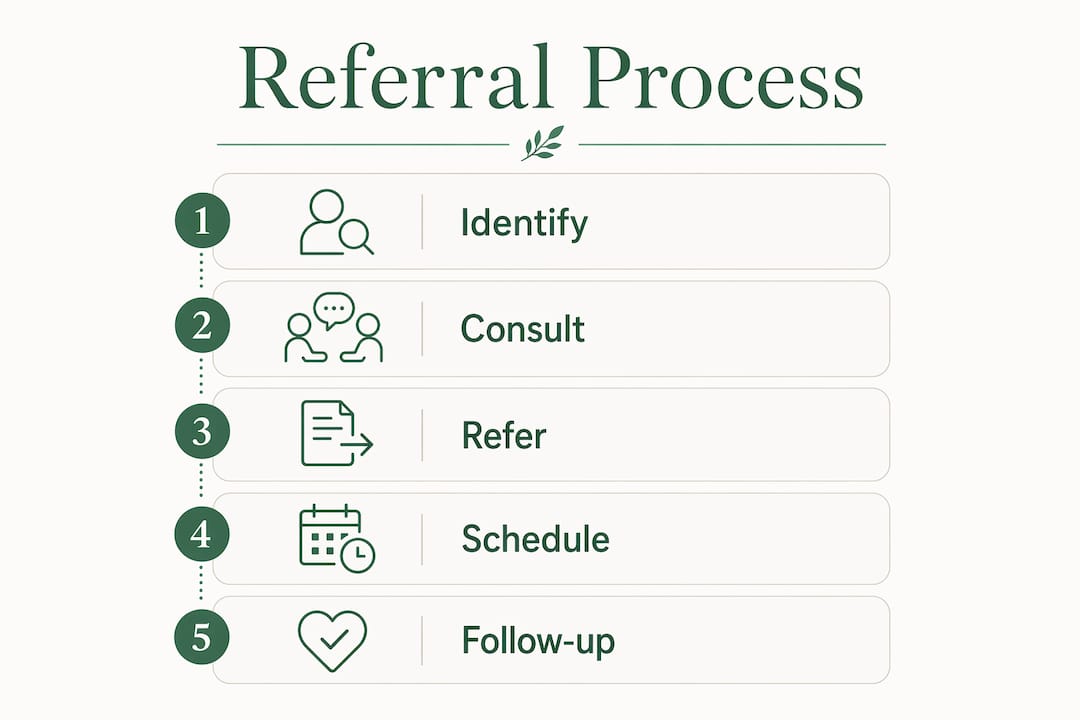
Step-by-step workflow for getting a specialist appointment:
- Talk with your PCP about your symptoms and ask directly whether a specialist referral is appropriate.
- Confirm that your PCP has submitted the referral and, if required, that prior authorization has been requested.
- Call your insurer to verify that the specialist you are being referred to is in-network and that any required authorization is in place.
- Schedule the appointment and ask the specialist’s office to flag urgency if your PCP has indicated it.
- Request an expedited consult in writing if your condition is worsening while you wait.
If your referral is denied:
- Ask your PCP to request a peer-to-peer review with the insurer’s medical director.
- File a formal appeal with your insurance company and document every communication with dates and names.
- Request a second opinion from another physician within your network.
- Contact your state’s insurance commissioner if the denial appears to violate your plan’s terms.
You also have the right to research a specialist’s credentials before your appointment. Board certification by a recognized specialty board and fellowship training are the clearest markers of advanced expertise. If the referred specialist does not feel right, ask your PCP for an alternative.
Pro Tip: When calling your insurer about a referral, use the phrase “medically necessary” and reference the specific diagnosis code your PCP has documented. Insurers process prior authorization requests faster when the clinical language matches their criteria.
How should you prepare for a specialist appointment?
Preparation is what separates a productive specialist visit from one that ends with “let’s repeat some tests.” Bringing the right materials means the specialist spends their time on your problem, not on reconstructing your history.
What to bring:
- A complete list of current medications, including over-the-counter drugs and supplements, with dosages
- Copies of relevant test results, lab reports, and imaging (ask your PCP’s office to send these ahead of time)
- Your referral letter and insurance card
- A written timeline of your symptoms: when they started, how they have changed, and what has helped or made them worse
Describing symptoms clearly matters as much as the records you bring. Lead with onset (“this started three months ago”), pattern (“it happens every morning and improves by afternoon”), severity on a 1–10 scale, and what triggers or relieves it. That structure gives a specialist the clinical picture in under two minutes.
Questions worth writing down before your visit:
- What do you think is causing my symptoms?
- What tests do you recommend, and what will they tell us?
- What are my treatment options, and what are the risks and benefits of each?
- How will you communicate your findings back to my primary care provider?
- What should I watch for that would mean I need to come back sooner?
For a practical checklist that also applies to primary care visits, the visit preparation guide from Garden State Medical Group covers the essentials in plain language.
Pro Tip: At the end of your appointment, ask the specialist to send a written summary of their findings and recommendations directly to your primary care provider. This one step prevents the most common breakdown in coordinated care: the PCP not knowing what the specialist decided.

What should you expect for wait times and costs, and when is the situation urgent?
Wait times vary widely by specialty and geography. Common specialties such as dermatology or orthopedics may have openings within one to two weeks in many areas. High-demand specialties, including neurology and psychiatry, can run one to three months in regions with limited provider supply. Insurance type and whether prior authorization is required both affect how quickly an appointment can be confirmed.
Cost is the other variable worth understanding before you book. Specialist consultation fees are typically higher than primary care visits, and the procedures specialists order, such as endoscopy, advanced imaging, or cardiac catheterization, add to that total. Verifying network status before scheduling is one of the most effective ways to avoid unexpected out-of-pocket costs. Out-of-network visits can result in significantly higher cost-sharing, and some plans will not cover them at all.
If your wait is long and your condition is worsening:
- Ask your PCP to contact the specialist’s office directly and flag clinical urgency.
- Request an expedited consult in writing, citing specific functional limitations.
- Consider a telehealth second opinion through a service like Sinava while you wait for the in-person appointment.
Symptoms that require emergency care now, not a specialist appointment later:
- Chest pain, especially with sweating, nausea, or arm pain
- Sudden facial drooping, arm weakness, or slurred speech
- Severe shortness of breath that is not improving
- Sudden loss of vision in one or both eyes
- Uncontrolled bleeding or a wound that will not close
What are the real benefits of specialist care, and what are the trade-offs?
The clearest benefit of seeing a specialist is diagnostic precision. A cardiologist interpreting an echocardiogram brings a depth of pattern recognition that a generalist cannot replicate, and that precision directly affects treatment decisions. Specialists also have access to procedures and therapies that primary care offices simply do not offer.
For complex or chronic conditions, a specialist provides ongoing management that adjusts as the disease progresses. A rheumatologist managing rheumatoid arthritis, for example, monitors disease activity markers, adjusts biologics, and coordinates with physical therapy in ways that require sustained specialty knowledge.
The trade-offs are real and worth understanding:
- Specialist visits cost more per encounter than primary care, and the tests they order add up quickly
- Without active coordination, seeing multiple specialists for related problems can produce conflicting advice
- Poorly targeted referrals can lead to unnecessary testing, longer timelines, and patient frustration
- Fragmented care, where no single provider holds the full picture, is a genuine risk when specialist involvement is not coordinated through a PCP
How to minimize those risks:
- Keep your primary care provider informed after every specialist visit
- Ask each specialist to document their recommendations in writing and share them with your PCP
- Before agreeing to an invasive procedure, ask what the alternatives are and what happens if you wait
- Request a second opinion before major surgery or a significant change in a long-term treatment plan
Pro Tip: If a specialist recommends a procedure and you are uncertain, a second opinion from another specialist in the same field is not a sign of distrust. Most physicians expect it for high-stakes decisions, and many insurers cover it.
How Garden State Medical Group supports your path to specialist care
Garden State Medical Group, with locations in North Bergen and Secaucus, New Jersey, is built around the idea that primary care and specialty services should work together rather than in parallel. The practice offers integrated primary care as the starting point for most patients, with the ability to coordinate referrals, share results across the care team, and connect patients to the right level of expertise without unnecessary delays.
On-site radiology and diagnostic testing means that when a specialist or primary care provider orders imaging or labs, results come back to the same team, reducing the back-and-forth that slows care in fragmented systems. The practice also offers cardiopulmonary services for patients with heart and lung concerns, along with structured chronic care programs for conditions like diabetes, bone health, and weight management that often require ongoing specialist input.
Telemedicine visits are available for patients who need faster access or have difficulty traveling to a clinic. Both in-person and virtual options are designed to keep care coordinated, with results and recommendations shared across the team.
Key Takeaways
Seeing a specialist is most valuable when your condition is serious, persistent, or complex enough that primary care alone cannot safely manage it.
| Point | Details |
|---|---|
| Know when to go | See a specialist for serious diagnoses, persistent symptoms, abnormal tests, or functional impairment. |
| Start with your PCP | Your primary care provider coordinates referrals, reduces duplicate testing, and flags urgency to shorten wait times. |
| Verify insurance first | Confirm network status and prior authorization before scheduling to avoid unexpected out-of-pocket costs. |
| Prepare your records | Bring medications, test results, a symptom timeline, and a written question list to every specialist visit. |
| Garden State Medical Group | Offers integrated primary care, on-site diagnostics, and cardiopulmonary services in North Bergen and Secaucus, NJ. |
Why coordinated care is the approach that actually works
The conventional wisdom says: “If something is wrong, see a specialist.” That framing misses the most common failure mode in American healthcare, which is not that patients see too few specialists. It is that they see specialists without coordination, end up with three conflicting opinions, and no one synthesizing them into a coherent plan.
The patients who get the most out of specialist care are the ones who arrive with organized records, a clear symptom narrative, and a primary care provider who is still in the loop. The specialist’s job is to go deep on one problem. Your PCP’s job is to hold the full picture. When those two things happen at the same time, the system works. When they do not, you end up repeating tests, waiting longer, and paying more for less clarity.
Garden State Medical Group’s approach to care is built around closing that gap. Sharing results across the team, guiding patients through insurance and referral steps, and keeping primary care at the center of complex cases is not a philosophy. It is a practical structure that reduces the friction most patients experience when navigating specialist care.
Ready to connect with the right care at Garden State Medical Group?
Patients in North Bergen and Secaucus who are trying to figure out whether they need a specialist, or who already have a referral and want coordinated support, have a straightforward option close to home.
Garden State Medical Group accepts most major insurance plans, including Medicare and Medicaid. Before your appointment, verify your coverage on the accepted insurance page to confirm your plan is in network and understand any referral or authorization requirements. From there, you can schedule a primary care visit to get a referral coordinated, or ask directly about cardiopulmonary, radiology, or chronic care services depending on your needs. Appointments are available in person and via telemedicine. Call the office or book online to get started.
Useful sources and further reading
- National Institutes of Health (NIH) — clinical guidance on specialist roles and care coordination
- NIH National Institute on Aging: Talking with Medical Specialists — practical tips for communicating with specialists
- MedlinePlus (U.S. National Library of Medicine) — overview of when and how to use specialist care
- Consumer Reports: When to See a Specialist — patient-centered guidance on specialist indications
- CommonSpirit: Physician Referral Guide — referral process and insurance navigation
- Garden State Medical Group: Types of Medical Specialists — local specialty overview
- Garden State Medical Group: Primary Care Services — integrated primary care in North Bergen and Secaucus, NJ
- American Medical Association (AMA) — physician credentialing and board certification standards
- CDC — public health data and preventive care guidelines
FAQ
Why would someone need to see a specialist?
A specialist is needed when a condition is too complex, serious, or specific for primary care to manage alone. Common reasons include a new serious diagnosis, symptoms that have not improved with standard treatment, abnormal test results requiring advanced interpretation, or a need for a procedure the primary care office does not perform.
What is the difference between a primary care doctor and a specialist?
A primary care provider manages your overall health, coordinates care, and handles a broad range of conditions. A specialist focuses on one organ system or disease category and offers deeper diagnostic tools and procedures within that area.
Can you insist on seeing a specialist?
Yes. You can request a specialist referral from your primary care provider, and if a referral is denied by your insurer, you have the right to appeal, ask for a peer-to-peer review, or seek a second opinion. PPO plans often allow self-referral to in-network specialists without a PCP referral.
What determines whether a doctor is a specialist?
A specialist has completed residency training in a focused area of medicine and typically holds board certification from a recognized specialty board, such as the American Board of Internal Medicine or the American Board of Neurology. Fellowship training beyond residency indicates an additional layer of subspecialty expertise.
How do you prepare for a first specialist appointment?
Bring a complete medication list, relevant test results and imaging, your referral letter, and a written summary of your symptoms including onset, pattern, and severity. A prepared question list covering diagnosis, treatment options, and next steps helps you get the most from the visit.