
Intermittent Fasting Safety: Who It Suits and Who Should Check First

For many healthy adults, intermittent fasting is generally safe, and the side effects reported in trials are usually mild. Safety depends on you: your health conditions, your medications, your age and how you set up your eating window. If you take medicine for diabetes or blood pressure, have kidney or heart disease, are pregnant, or have ever had an eating disorder, talk with your primary care provider before you change when you eat. At Garden State Medical Group, our primary care team in North Bergen and Secaucus can look at your history and medication list with you before you begin.
TL;DR
- Trials in adults with overweight or obesity found no higher risk of adverse events with intermittent fasting than with control diets.
- It is not recommended during pregnancy or breastfeeding, for children, or for people with a history of eating disorders.
- Medicines for diabetes, especially insulin and sulfonylureas, may need to be adjusted by your clinician before you fast. Do not change doses on your own.
- Very short eating windows (under 6 hours) may cause more side effects, so a moderate window is the safer place to start.
- Meal timing is only one part of health. What you eat and how active you are matter as well.
Table of Contents
- What the research says about safety
- Who should avoid intermittent fasting or get medical advice first
- Intermittent fasting and your medications
- Effects on blood pressure and blood sugar
- How to start more safely
- Get checked before you change your routine
- Our perspective
- FAQ
- Sources
What the research says about safety
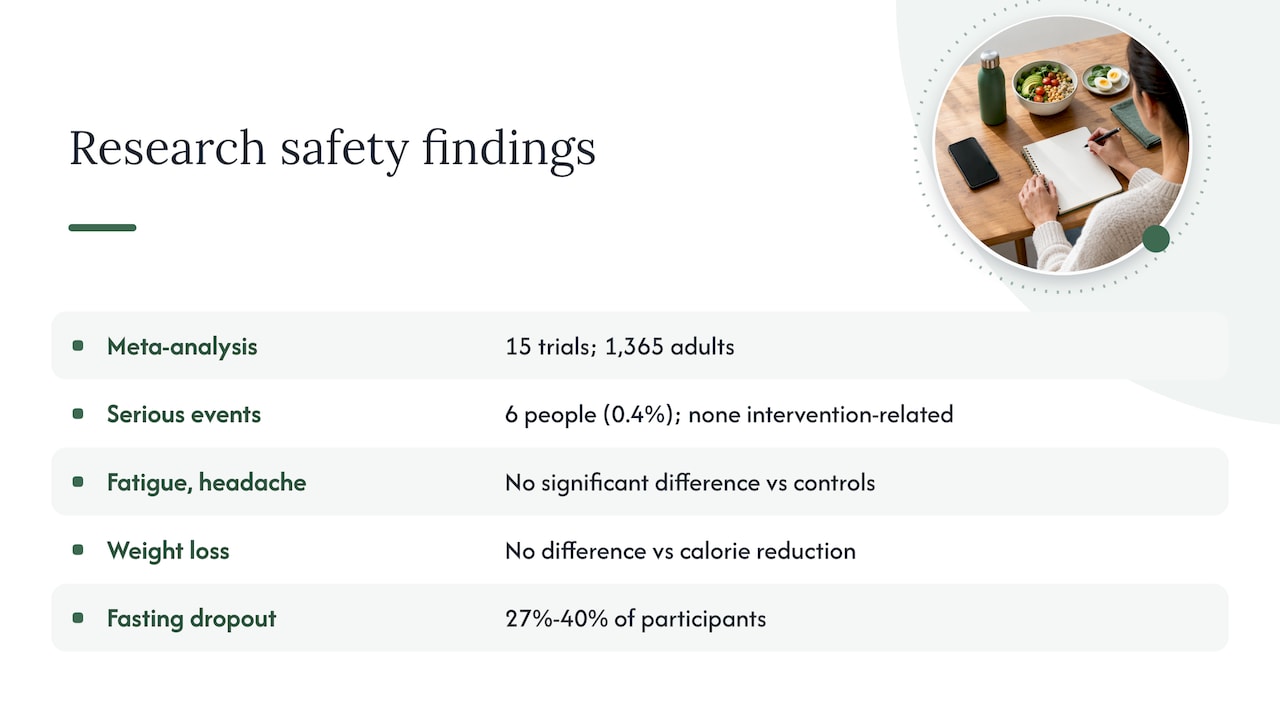
Intermittent fasting means cycling between periods of eating and periods with little or no food. Common versions include time-restricted eating (all meals within a set window, such as 8 hours), the 5:2 pattern (two low-calorie days a week) and alternate-day fasting. A July 2024 meta-analysis in Nutrition Journal pooled 15 randomized trials with 1,365 adults with overweight or obesity. It found no significant difference from control groups in fatigue, headache or dropout. Only 6 participants (0.4%) reported a serious adverse event, and none were related to the intervention.
A 2026 systematic review of time-restricted eating in adults with overweight or obesity reached a similar conclusion: it is generally safe, with mild and temporary side effects that careful screening and monitoring can keep small. The same review notes that an 8-hour eating window is commonly effective, while windows shorter than 6 hours may raise the chance of side effects.
These results come from people who were screened and followed in studies. That is the point of this article: the safest way to fast looks a lot like what happens in a trial. You check your health first, choose a reasonable window, and have someone to ask when something feels wrong.
It also helps to know that fasting is not a magic shortcut. A JAMA review from 2021 found that studies lasting 12 weeks to 12 months showed no difference in weight loss between intermittent fasting and everyday calorie reduction. It also reported that 27% to 40% of participants dropped out of fasting regimens. The best pattern is the one you can keep up comfortably and safely.
Who should avoid intermittent fasting or get medical advice first
The National Institutes of Health’s MedlinePlus Magazine states that intermittent fasting is not safe for everyone, especially people with conditions such as diabetes, kidney disease or heart-related problems. It recommends going through the decision with a dietitian or physician who reviews your health history and your medication list first.
The medical literature names these groups specifically:
- Pregnant or breastfeeding women, and children. A 2026 Lancet Diabetes & Endocrinology paper says fasting is not recommended for them.
- People with a history of eating disorders, or at risk of one. JAMA lists them among those who should not fast.
- Frail older adults and people with weakened immune systems. JAMA names both groups. The Lancet paper adds that caution is needed for older adults who have or are at risk for sarcopenia, which is age-related loss of muscle.
- People with a history of severe low blood sugar (hypoglycemia). The Lancet paper recommends they avoid fasting.
- People with severe or uncontrolled metabolic disease. The time-restricted eating review lists this as a contraindication.
If you are over 65, live with diabetes, heart disease or kidney disease, or take several medicines, you do not need to rule fasting out on your own. You do need a plan made with your clinician. Bring a list of everything you take, including over-the-counter products and supplements.
Intermittent fasting and your medications
This is the area where a quiet change in routine can cause real harm. When you eat less often, the same dose of a blood-sugar-lowering medicine can push your glucose too low. Blood pressure medicines can also have a stronger effect when you eat and drink less.
Diabetes medicines
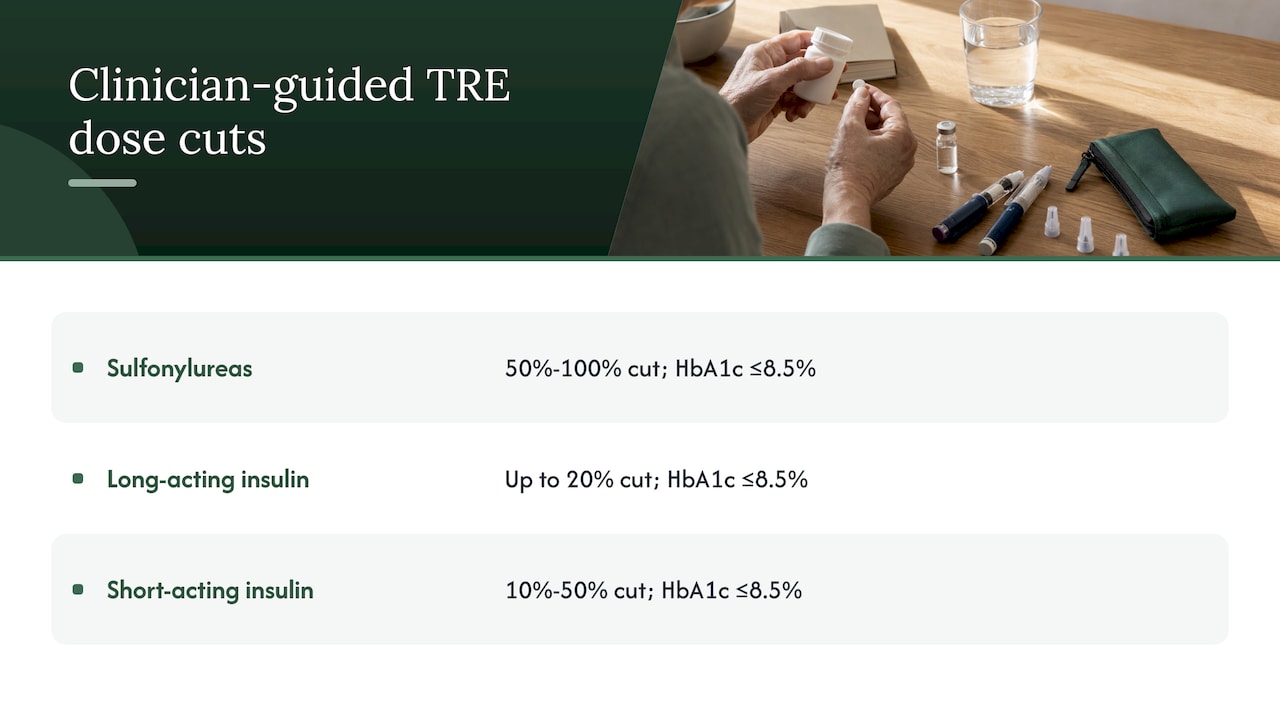
The 2026 Lancet paper on intermittent fasting in type 2 diabetes gives clinicians dose-adjustment ranges. For time-restricted eating, it suggests considering cuts of 50% to 100% in sulfonylureas, up to 20% in long-acting insulin and 10% to 50% in short-acting insulin for people with an HbA1c of 8.5% or lower. HbA1c is the blood test that shows your average blood sugar over about three months. These figures are for a clinician to apply to your situation, not for you to apply on your own.
The paper also advises caution with two newer drug classes. SGLT2 inhibitors carry theoretical risks of ketoacidosis (a buildup of acids in the blood), dehydration and low blood pressure when you fast. GLP-1 receptor agonists also call for caution. For people who use insulin, it recommends continuous glucose monitoring.
An earlier clinical review by Grajower and Horne stresses that for insulin users, the short-term risk of low blood sugar outweighs the possible long-term benefits of fasting. It advises that patients receive specific instructions on when and what to eat if glucose drops below a personal threshold.
The encouraging side is that trials run under supervision have gone well. An NIH Research Matters report described a six-month trial of 75 people with obesity and type 2 diabetes. The fasting group ate only between noon and 8 pm, and no serious side effects occurred, including time outside a safe blood glucose range. The report also notes that some type 2 diabetes medicines need adjustment for time-restricted eating. Supervision made the difference.
What to bring to the conversation
Before you start, write down:
- Every prescription and over-the-counter medicine, with dose and time of day.
- Any supplements you take. Some are meant to be taken with food.
- Your recent blood sugar readings or home blood pressure numbers, if you track them.
- The eating window you are considering, such as 10 am to 6 pm.
- Any episodes of dizziness, fainting or shakiness you have had in the past.
If you manage diabetes, our guides to eating well with type 2 diabetes and step-by-step diabetes management help you prepare questions before the visit.
Effects on blood pressure and blood sugar
Most people ask about safety because they hear fasting may help their numbers. JAMA reports that intermittent fasting has been shown to lower blood pressure, resting heart rate, cholesterol, triglycerides, glucose and insulin. Those improvements typically begin within 2 to 4 weeks and fade within several weeks of returning to a normal diet.
The picture on blood pressure is not uniform. A 2023 narrative review of 10 interventional studies found lower systolic and diastolic pressure compared with baseline, likely linked to weight loss. An umbrella review of trials found fasting was somewhat less effective than continuous calorie restriction at reducing systolic pressure. A 2026 meta-analysis in women with overweight or obesity found lower fasting glucose but no significant change in blood pressure.
For blood sugar, the evidence leans positive. The same umbrella review found reductions in fasting insulin, LDL cholesterol and waist circumference in adults with overweight or obesity. In adults with type 2 diabetes, the Lancet paper reports HbA1c drops of typically 0.3 to 1.2 points, with no serious adverse events or added hypoglycemia risk when medications were adjusted using simple rules.
In practice, this means that if you already take blood pressure or diabetes medicine, your numbers may change as you fast. Your dose may need to change too, which is why regular check-ins matter during the first weeks.
How to start more safely
The 2026 time-restricted eating review describes fasting as a structured behavior change, where screening comes first and the eating window is worked out together with the patient. Here is how that looks in everyday terms.
Pick a moderate window
An 8-hour to 10-hour eating window is the range the review describes as commonly effective. Windows under 6 hours may bring more side effects. You can begin at 12 hours (for example, 8 am to 8 pm) and tighten gradually if you feel well.
Keep the quality of your food high
MedlinePlus Magazine points out that when you eat should not be your only focus. What and how much you eat also count. Current U.S. dietary guidelines recommend a diet rich in fruits, vegetables and whole grains, plus 150 to 300 minutes of moderate activity a week. The time-restricted eating review adds that adequate protein and hydration matter. Drink water through your fasting hours, and make sure your meals include protein so you protect muscle, which is especially important as you age.
Know the warning signs
Stop fasting and contact your clinician if you notice:
- Shakiness, sweating, confusion or a racing heart, which can signal low blood sugar.
- Dizziness or fainting, especially when you stand up.
- Persistent headache, severe weakness or muscle cramps.
- Nausea, vomiting or unusual thirst.
- A growing preoccupation with food, guilt around eating or binge eating after fasts.
If symptoms are severe, such as fainting, confusion or chest pain, call 911 or go to the nearest emergency room.
Plan around tests and procedures
Some tests require fasting on specific days, such as certain blood tests or an abdominal ultrasound. Follow the instructions you receive for those tests, and ask us whether your usual eating window needs a one-time change. Our guide to fasting before an abdominal ultrasound explains what to eat and avoid beforehand.
Get checked before you change your routine
A short visit before you start can answer the questions that matter most: Is fasting appropriate for your conditions? Do your medicines need a new schedule? Are your blood pressure, blood sugar and cholesterol where they should be? Our routine screening guide shows which checks are recommended for your age.
Garden State Medical Group offers primary care at our North Bergen and Secaucus locations, along with on-site blood tests, EKG and other diagnostic testing. For people who want structured support, we also run a Diabetes Prevention and Education Program and Weight Loss Programs. We accept Medicare and Medicaid, and you can book an in-person or telemedicine visit through our site.
If you are thinking about fasting, schedule a primary care visit first and bring your medication list.
Our perspective
Many of our patients in North Bergen and Secaucus ask us about intermittent fasting. Some want to lose weight. Others hope to lower their blood sugar or blood pressure. Our answer is the same every time: the pattern matters less than the person who follows it.
We practice a multidisciplinary approach that combines primary care, on-site diagnostic testing and health programs focused on prevention and chronic disease management. That matters for fasting, because a safe plan starts with a full picture of your health. Blood tests, a heart check and a medication review give you facts to build on, so the choice of an eating window rests on your own numbers.
We also believe in education. Our programs for diabetes prevention, heart health and weight management are designed to help you understand your body and make steady, lasting changes. Fasting can be one tool among many, alongside balanced meals, movement and regular follow-up.
If you decide to try it, we want you to do it with support, not guesswork.
Garden State Medical Group
FAQ
Is intermittent fasting safe for most adults?
For many healthy adults with overweight or obesity, trials show no greater risk of adverse events than with other diets, and side effects tend to be mild. Safety depends on your health history and medicines, so it is wise to have your provider review both before you start.
Can I fast if I take blood pressure or diabetes medication?
Sometimes, but only with a plan from your clinician. Diabetes medicines such as insulin, sulfonylureas, SGLT2 inhibitors and GLP-1 receptor agonists may need changes or extra caution when you fast. Do not adjust doses yourself.
Who should not do intermittent fasting?
It is not recommended for pregnant or breastfeeding women, children, frail older adults, people with weakened immune systems or people with a history of eating disorders, according to JAMA. People with a history of severe low blood sugar should also avoid it.
How long should my eating window be?
A 2026 review describes an 8-hour window as commonly effective and says windows under 6 hours may increase side effects. Starting with a longer window and adjusting with your clinician is a sensible approach.
Does intermittent fasting work better than eating fewer calories every day?
In studies of 12 weeks to 12 months, weight loss was the same with both approaches. Choose the one you can follow comfortably, and talk it through with your provider.
Sources
- Intermittent Fasting, JAMA Lifestyle Behaviors (Li and Heber, 2021)
- Adverse events profile associated with intermittent fasting, Nutrition Journal meta-analysis (2024)
- Time-restricted eating in overweight and obese adults, systematic review (2026)
- Intermittent fasting to treat diabetes, Lancet Diabetes & Endocrinology (2026)
- NIH Research Matters: Intermittent fasting for weight loss in people with type 2 diabetes (2023)
- Clinical Management of Intermittent Fasting in Patients with Diabetes (Nutrients, 2019)
- MedlinePlus Magazine: 5 questions about intermittent fasting
- Intermittent fasting and health outcomes: an umbrella review (2024)
- Intermittent Fasting and Its Effects on Weight, Glycemia and Blood Pressure (Nutrients, 2023)
- The effects of intermittent fasting on BMI, Frontiers in Nutrition (2026)