What Is Secaucus Healthcare? A Local Resident's Guide

TL;DR:
- Secaucus healthcare features a comprehensive system centered on Secaucus University Hospital, offering advanced robotic surgery and specialty services. The hospital is transitioning into a teaching facility with New York Medical College, enhancing care quality and access to specialists. Regional integration within Hudson Regional Health ensures coordinated, multi-facility care for Secaucus residents.
Secaucus healthcare is defined as the network of medical facilities, providers, and services available in Secaucus, New Jersey, anchored by Secaucus University Hospital, a full-service acute care institution with over 100 beds offering emergency care, surgery, intensive care, cardiology, and orthopedics. This system has grown well beyond a single hospital. It now includes urgent care centers, nursing facilities, specialty clinics, and a regional health network that connects Secaucus residents to coordinated care across Hudson County. For anyone living in or moving to Secaucus, understanding what this healthcare system offers is the first step toward making informed decisions about your own care.
What are the main healthcare facilities and providers in Secaucus?
Secaucus University Hospital is the primary healthcare facility serving the community. Operated under the Hudson Regional Health network, it functions as the central hub for acute and specialty care in the area. The hospital provides services across emergency medicine, surgical care, intensive care, medical-surgical units, rehabilitation, cardiology, orthopedics, neurology, and maternity, making it one of the most complete community hospitals in Hudson County.
Beyond the main hospital, Secaucus residents have access to a range of supporting healthcare options. Nursing homes and long-term care facilities serve patients who need ongoing support after hospitalization. Urgent care centers fill the gap between primary care visits and emergency room trips, handling non-life-threatening conditions quickly and without the wait times typical of an ER.
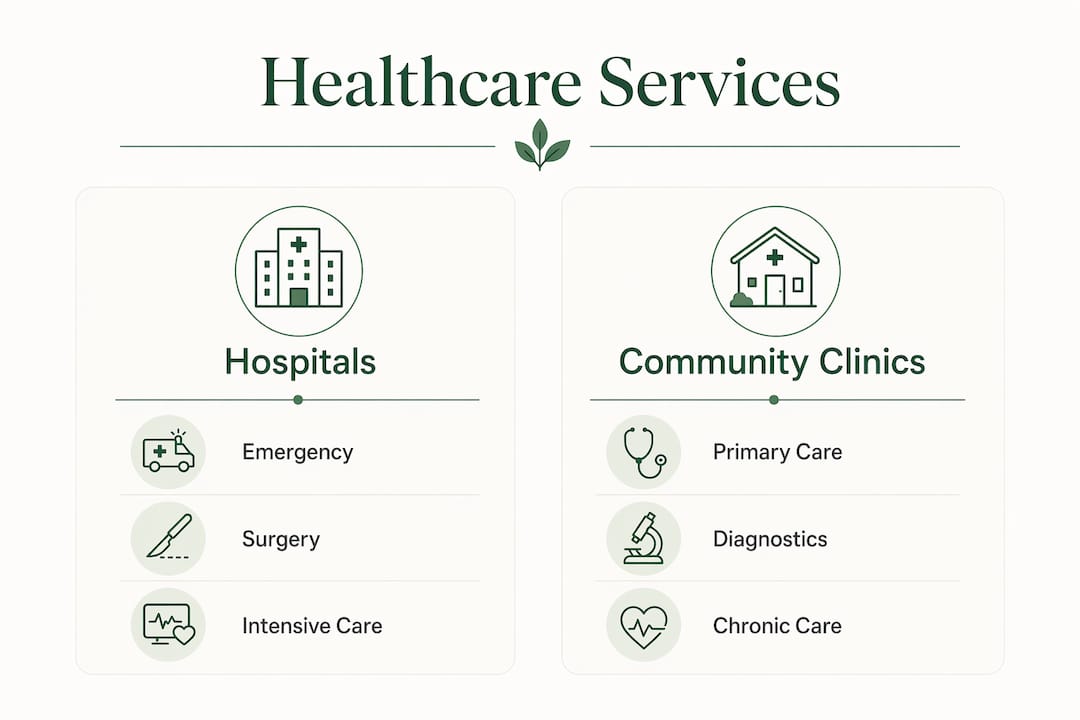
Here is a breakdown of the main types of healthcare facilities available in Secaucus:
- Secaucus University Hospital: Full-service acute care hospital with over 100 beds, emergency services, surgical suites, and specialty departments
- Urgent care centers: Walk-in facilities for minor injuries, infections, and routine needs without an appointment
- Nursing and rehabilitation facilities: Post-acute care for patients recovering from surgery, stroke, or injury
- Specialty clinics: Focused practices in areas like orthopedics, cardiology, and neurology
- Primary care offices: Including practices like Gardenstatemedicalgroup, which serves Secaucus residents with primary care services and preventive health programs
The table below compares the main facility types by service scope and patient need:
| Facility type | Services offered | Best suited for |
|---|---|---|
| Secaucus University Hospital | Emergency, surgery, ICU, specialty care | Acute illness, injury, complex conditions |
| Urgent care center | Minor injuries, infections, diagnostics | Non-emergency same-day needs |
| Nursing and rehab facility | Physical therapy, long-term nursing care | Post-surgical or post-acute recovery |
| Primary care practice | Preventive care, chronic disease management | Ongoing health management and checkups |
Hudson Regional Health owns and operates Secaucus University Hospital as part of a multi-hospital consolidation effort across Hudson County. This ownership structure affects how care is coordinated, how referrals flow between facilities, and what insurance networks are accepted at each location.
What specialized services and advanced technologies does Secaucus healthcare offer?
Secaucus University Hospital stands apart from many community hospitals because of its investment in surgical technology. The hospital is the first in the tri-state area to use the ExcelsiusGPS robotic guidance system for spine surgery, and it also operates the Da Vinci XI robotic surgical system for orthopedic and minimally invasive procedures. These are not standard tools in most community hospitals, and their presence here reflects a deliberate commitment to surgical precision.
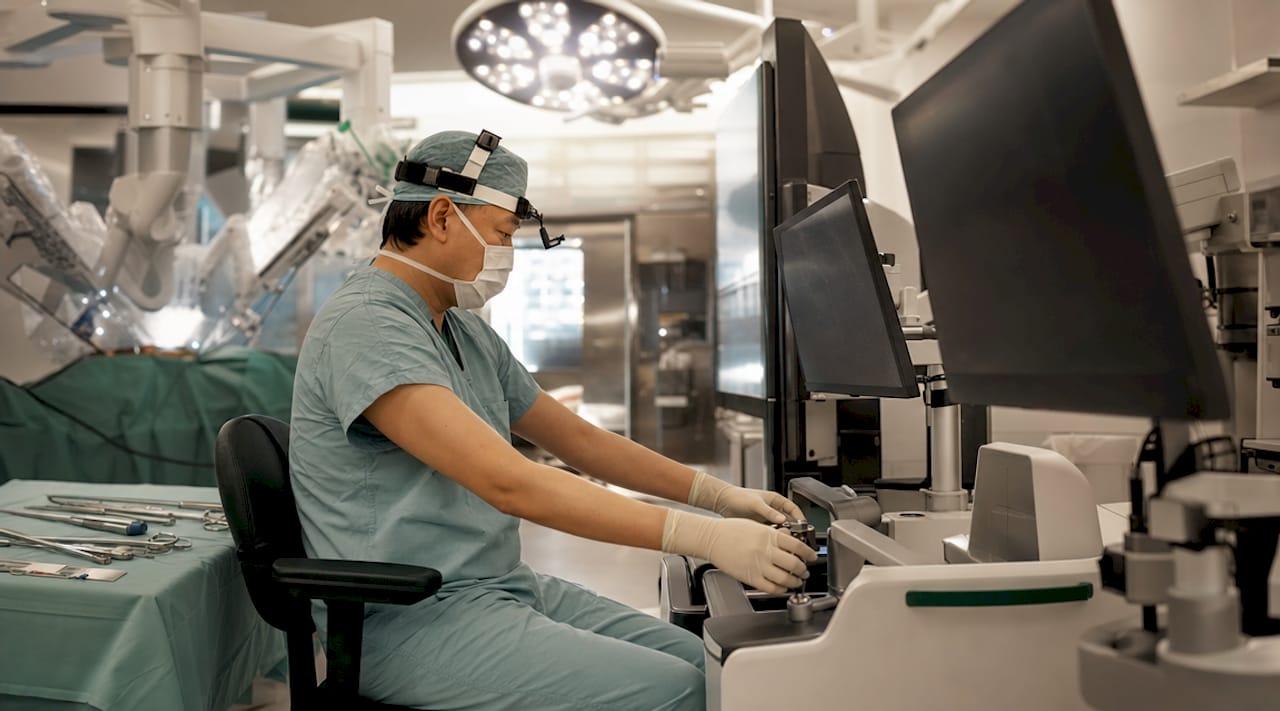
The practical benefit for patients is real. Robotic systems like ExcelsiusGPS and Mazor Robotics reduce operation time, lower radiation exposure during procedures, and improve surgical accuracy. Patients typically experience faster recovery times and fewer complications compared to traditional open surgery. For anyone facing a spinal or orthopedic procedure, this matters significantly.
The hospital’s specialty care extends across several clinical areas:
- Orthopedics and spine surgery: Supported by robotic guidance systems and accredited by the Surgical Review Corporation
- Cardiology: Full cardiac diagnostic and treatment services
- Neurology: Inpatient and outpatient neurological care
- Rehabilitation: Physical and occupational therapy following surgery or illness
- Maternity: Labor, delivery, and postpartum services
The Institute for Robotic Surgery at Hudson Regional received accreditation for excellence in spine surgery and earned Castle Connolly Top Hospital recognition in 2026. That designation reflects peer-reviewed quality standards, not just marketing claims. It places Secaucus University Hospital among a select group of facilities recognized for clinical outcomes and patient care quality in New Jersey.
Pro Tip: If you are scheduled for spine or orthopedic surgery, ask your surgeon specifically whether robotic assistance will be used. At Secaucus University Hospital, ExcelsiusGPS-guided procedures are available and may reduce your recovery time compared to conventional techniques.
How is Secaucus University Hospital becoming a teaching hospital?
Secaucus University Hospital is transitioning into a teaching hospital through a formal partnership with New York Medical College, with programs beginning in the 2026 to 2027 academic year. This is a significant development for the community, not just for medical students.
Teaching hospital status changes the care environment in concrete ways. Here is what the transition means in practice:
- Clinical rotations begin: Medical students from New York Medical College will complete clerkships, sub-internships, and elective rotations at the hospital, bringing fresh academic perspectives into daily care.
- Residency programs launch: The hospital will sponsor residency programs in internal medicine, surgery, and family medicine, meaning trained physicians will be working under supervision on-site.
- Specialist access increases: Teaching hospitals attract specialists who want to teach and conduct research, which expands the range of expert care available to patients.
- Research integration grows: Affiliation with New York Medical College connects the hospital to academic research, which means patients may have access to newer treatment protocols and clinical studies.
- Care quality improves: Teaching hospitals are consistently held to higher documentation and review standards because every case is a learning opportunity. This accountability tends to raise overall care quality.
For Secaucus residents, this transition means the local hospital is moving toward the standard of care typically found at major academic medical centers. You will not need to travel to Manhattan or Newark to access that level of expertise. The health education resources available to North Bergen and Secaucus adults are also expanding alongside these institutional changes, reflecting a broader push toward community health literacy.
How does Secaucus healthcare fit within the Hudson Regional Health network?
Secaucus University Hospital does not operate in isolation. It is part of Hudson Regional Health, a network working to consolidate four hospitals across Hudson County under unified ownership. That network includes facilities in Bayonne and Hoboken, creating a system where patients can move between hospitals with shared records, coordinated referrals, and consistent administrative processes.
This regional integration has direct implications for you as a patient. If you receive emergency care at Secaucus University Hospital and need a specialist available only at a Hoboken facility, the referral process within the same network is faster and more coordinated than transferring between unaffiliated systems. Insurance acceptance, billing, and medical records are also more consistent across network facilities.
The table below compares the key Hudson Regional Health facilities by location and primary focus:
| Facility | Location | Primary focus |
|---|---|---|
| Secaucus University Hospital | Secaucus, NJ | Acute care, robotic surgery, specialty services |
| Bayonne Medical Center | Bayonne, NJ | Community acute care and emergency services |
| Hoboken University Medical Center | Hoboken, NJ | Acute care and community health services |
The consolidation strategy also affects how healthcare professionals in Secaucus are recruited and retained. A larger network can offer physicians more resources, cross-facility collaboration, and career development opportunities. That tends to attract stronger clinical talent, which benefits patients over time. For residents researching local healthcare services, understanding this network structure helps clarify where to go for different types of care and how your providers communicate with each other.
Gardenstatemedicalgroup operates within this broader landscape as an independent, community-focused practice. Its cardiopulmonary care and primary care services in Secaucus complement the hospital system by providing preventive care, chronic disease management, and diagnostic services that keep patients out of the ER in the first place.
Key takeaways
Secaucus healthcare is a growing, technology-forward system anchored by Secaucus University Hospital and supported by Hudson Regional Health’s multi-facility network, with teaching hospital status and robotic surgery capabilities setting it apart from most community hospitals in New Jersey.
| Point | Details |
|---|---|
| Hospital scope and capacity | Secaucus University Hospital offers over 100 beds and covers emergency, surgical, ICU, and specialty care. |
| Robotic surgery leadership | ExcelsiusGPS and Da Vinci XI systems make the hospital first in the tri-state area for robotic spine surgery. |
| Teaching hospital transition | Partnership with New York Medical College begins in 2026 to 2027, adding residency programs and specialist access. |
| Regional network integration | Hudson Regional Health connects Secaucus to Bayonne and Hoboken hospitals for coordinated, multi-facility care. |
| Community care options | Primary care practices like Gardenstatemedicalgroup extend preventive and chronic care services locally. |
What I have learned about navigating healthcare in Secaucus
Most residents I speak with do not realize how much has changed at Secaucus University Hospital in the past few years. They still think of it as a small community hospital with limited capabilities. That perception is outdated, and it costs people real time and money when they drive to Manhattan for procedures that are now available locally.
The robotic surgery program is the clearest example. When a hospital is the first in the tri-state area to deploy a specific surgical guidance system, that is not a minor upgrade. That is a meaningful clinical distinction. Patients who know this can have an informed conversation with their surgeon instead of defaulting to a larger academic center out of habit.
The teaching hospital transition is the development I find most significant for the long term. Teaching hospitals operate under a different level of scrutiny. Every case is reviewed. Residents ask questions that attending physicians sometimes skip over. That culture of accountability tends to produce better outcomes, and it will take a few years for Secaucus residents to feel the full effect. But the direction is clearly right.
My practical advice: build a relationship with a primary care provider in Secaucus before you need urgent or specialty care. A physician who knows your history can navigate the hospital system, make direct referrals, and advocate for you in ways that a walk-in visit never can. Gardenstatemedicalgroup’s Secaucus office is one place to start that relationship, especially if you need cardiopulmonary monitoring or chronic disease management alongside your primary care.
— Krunal
How Gardenstatemedicalgroup supports your healthcare in Secaucus
Gardenstatemedicalgroup brings together primary care, cardiopulmonary services, and diagnostic programs at its Secaucus location, giving residents a trusted starting point for managing their health year-round.
Whether you need a primary care physician to coordinate your care, a diabetes prevention program to manage a chronic condition, or cardiopulmonary diagnostics to monitor heart and lung health, Gardenstatemedicalgroup offers personalized programs designed for the Secaucus community. The practice accepts a range of insurance plans and offers convenient scheduling to fit your life. Scheduling a consultation is the most direct way to understand which services apply to your specific health needs and how the practice can work alongside the broader Secaucus healthcare system on your behalf.
FAQ
What is Secaucus University Hospital’s bed capacity?
Secaucus University Hospital is an acute care facility with over 100 beds, providing emergency, surgical, intensive care, and specialty services to the community.
Is there urgent care available in Secaucus?
Yes. Secaucus has urgent care options for non-emergency conditions, offering same-day treatment for minor injuries, infections, and routine needs without a hospital visit.
What makes Secaucus University Hospital different from other community hospitals?
The hospital is the first in the tri-state area to use the ExcelsiusGPS robotic system for spine surgery and holds Castle Connolly Top Hospital recognition for 2026, distinguishing it from most community-level facilities.
When does Secaucus University Hospital become a teaching hospital?
The hospital’s partnership with New York Medical College begins in the 2026 to 2027 academic year, introducing residency programs in internal medicine, surgery, and family medicine.
How do I find a primary care doctor in Secaucus?
Gardenstatemedicalgroup operates a primary care practice in Secaucus, offering preventive care, chronic disease management, and diagnostic services with flexible scheduling and broad insurance acceptance.