
Your Guide to Choosing a Local Physician in North Bergen

TL;DR:
- Choosing a local physician involves matching your health needs, insurance coverage, and location preferences for ongoing care.
- Building trust and feeling comfortable with your doctor are the key factors that ensure long-term health benefits.
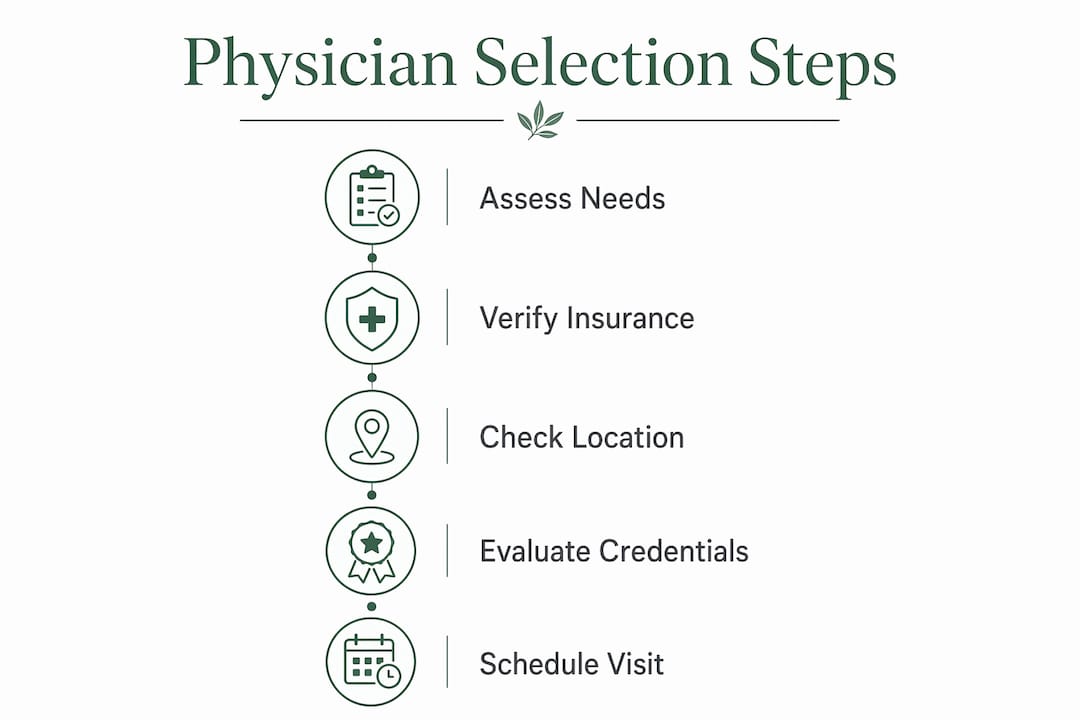
Choosing a local physician is the process of selecting a trusted healthcare provider who meets your medical needs, accepts your insurance, and is conveniently accessible from your home or workplace. This guide to choosing a local physician walks adults in North Bergen and Secaucus through every step, from clarifying your health needs to scheduling your first visit. The stakes are real: over 100 million Americans lack standard access to primary care, and that gap directly affects how quickly and consistently you receive treatment. Getting this decision right protects your long-term health in ways that a single urgent care visit never can.
What are your healthcare needs and preferences?
The first step in any local physician selection guide is understanding what you actually need from a doctor. Primary care providers fall into three main categories, and each serves a different patient profile.
- Family medicine physicians treat patients of all ages, making them the right fit for adults who want one doctor for the whole household.
- Internal medicine physicians specialize in adult health and are well suited for patients managing multiple chronic conditions like diabetes, hypertension, or heart disease.
- Pediatricians focus exclusively on children and adolescents, so adults typically look at family medicine or internal medicine when finding a family doctor for themselves.
Your age, existing health conditions, and family situation all shape which type fits best. A 45-year-old managing high cholesterol and pre-diabetes needs an internist who is comfortable with chronic disease management. A parent of young children may prefer a family medicine physician who can see every member of the household under one roof.
Communication style matters as much as specialty. Choosing a physician is similar to choosing a therapist: the relationship only works when you feel heard and comfortable. If you prefer a doctor who explains every decision in plain language, note that before you start calling offices.
Pro Tip: Write down your top three health concerns and your preferred communication style before you begin your search. This list will help you ask the right questions during your first call to any office.
How to verify insurance coverage and network participation effectively
Insurance verification is the step most patients skip, and it is the one that causes the most financial pain. Network participation changes frequently, and a physician who was in-network last year may not be this year.
Follow these steps to confirm coverage before you book:
- Start with your insurer’s online portal. Log in and search for primary care physicians in North Bergen or Secaucus. This gives you a starting list, but treat it as a draft, not a final answer.
- Call your insurance company’s customer service line. Ask them to confirm that the specific physician you are considering is currently accepting your plan. Get the representative’s name and the date of the call.
- Call the physician’s office directly. Insurance directories lag behind reality, so direct office confirmation is the only reliable way to avoid unexpected out-of-network expenses.
- Ask about your specific plan, not just the insurer. A practice may accept Aetna PPO but not Aetna HMO. The distinction matters.
- Confirm before every new calendar year. Network rosters reset in january, and your physician’s participation can change without notice.
Going out-of-network can mean paying the full cost of every visit, lab, and referral. That financial exposure is avoidable with one phone call.
Pro Tip: When you call the office, ask: “Do you accept [your plan name] and are you currently taking new patients?” Both questions matter. A physician can be in-network but have a closed panel.
Why does location, office hours, and availability matter?
Practical logistics determine whether you actually use your physician or avoid going until a problem becomes serious. Experts recommend selecting a physician located within a 15–20 minute travel radius from your home or workplace. That distance feels manageable when you are sick, not just when you are healthy.
Home vs. workplace proximity
Where you schedule appointments most often should guide your location choice. If you work long hours in Secaucus and rarely have morning flexibility, a physician near your office makes more sense than one near your home in North Bergen. Location preference depends on your scheduling flexibility and how often you expect to visit.
Office hours and appointment access
- Look for offices with at least one evening or Saturday slot per week.
- Confirm that the practice schedules new patients within 2–3 weeks. Long new-patient wait times predict equally long waits for sick visits, which defeats the purpose of having a primary care physician.
- Ask specifically: “How quickly can I be seen if I call with a fever on a Monday morning?” The answer tells you everything about how the practice operates.
- Check whether the office offers telehealth. Over 70% of physicians now use telehealth weekly, and virtual visits work well for medication refills and minor follow-ups.
Solo vs. group practice
Solo practitioners often provide stronger continuity because you see the same doctor every time. Group practices offer better coverage when your primary physician is unavailable, which matters if you need a same-day sick visit. Neither model is universally better. Your priority, whether that is consistency or availability, should drive the choice.
Pro Tip: Call the office at 8:30 AM on a weekday and note how long you wait on hold. That wait time reflects how the office manages patient volume on a busy morning.
How to assess physician credentials, patient reviews, and hospital affiliations
Credentials confirm that a physician has met a defined standard of training and knowledge. Board certification through the American Board of Medical Specialties is the benchmark for primary care physicians. You can verify certification directly on the ABMS website at no cost.

Beyond certification, check your state medical board for any disciplinary actions or license restrictions. New Jersey’s State Board of Medical Examiners maintains a public database. A clean record does not guarantee a great physician, but a disciplinary history is a clear warning sign.
Patient reviews add a layer of information that credentials cannot provide. Look for patterns across multiple verified reviews rather than reacting to one negative comment. Reviews that mention communication quality, wait times, and how staff handle calls give you a realistic picture of the day-to-day experience.
Hospital affiliations matter more than most patients realize. A physician’s affiliated hospital determines where you receive specialized or inpatient care. If that hospital is not covered by your insurance, a referral from your primary care physician can still result in significant out-of-pocket costs. Confirm that the affiliated hospital is in your network before you commit.
| What to check | Where to check it |
|---|---|
| Board certification | American Board of Medical Specialties (ABMS) website |
| Disciplinary history | New Jersey State Board of Medical Examiners |
| Patient reviews | Verified review platforms with confirmed appointment history |
| Hospital affiliations | Physician’s practice website and your insurer’s portal |
| Referral network | Ask the office which specialists they work with most often |
For more on what to look for when evaluating a primary care provider, Gardenstatemedicalgroup has published a focused checklist that covers the most critical factors.
Steps to meet and decide on your local physician
Once you have narrowed your list to two or three candidates, schedule a new patient visit with your top choice. Treat this first appointment as a two-way evaluation, not just a medical exam.
- Observe how the office staff treats you. Rude or dismissive front-desk staff signals a management culture that affects your entire experience as a patient.
- Note the wait time. A 45-minute wait for a scheduled appointment is a pattern, not a one-time event.
- Ask the physician directly about their approach. “How do you prefer patients to contact you between visits?” and “How do you handle referrals to specialists?” reveal communication style and workflow.
- Assess whether you feel heard. The physician should make eye contact, ask follow-up questions, and not rush you out of the room.
- Trust your instincts. If you leave feeling dismissed or confused, that feeling is data.
Switching physicians is always an option and should be encouraged if you do not feel comfortable, regardless of how strong the credentials look on paper. A long-term relationship with a physician you trust produces better health outcomes than staying with one you tolerate. Continuity with the same physician is linked to better health outcomes and lower mortality over time.
Pro Tip: Bring a written list of your current medications and any questions you want answered. Physicians respect prepared patients, and you will get more out of a 20-minute visit than someone who arrives without a plan.
Key Takeaways
Choosing the right local physician requires matching your health needs, insurance coverage, location preferences, and communication expectations to a provider who can meet all four.
| Point | Details |
|---|---|
| Define your needs first | Identify your health conditions and preferred physician type before starting your search. |
| Verify insurance directly | Call the physician’s office to confirm current in-network status, not just the insurer’s directory. |
| Prioritize location and access | Choose a physician within a 15–20 minute radius and confirm new-patient wait times are under three weeks. |
| Check credentials and affiliations | Verify board certification through ABMS and confirm the affiliated hospital is in your network. |
| Evaluate fit at the first visit | Assess communication quality, staff behavior, and wait times before committing long-term. |
What I’ve learned about picking a local physician that most guides won’t tell you
Most advice on how to select a doctor focuses on logistics: insurance, location, hours. Those details matter, but they are not what determines whether the relationship actually works. The factor that predicts long-term satisfaction is whether you feel comfortable enough to be honest with your physician.
Patients routinely underreport symptoms, skip follow-up questions, and avoid bringing up sensitive concerns because they do not feel at ease. That silence leads to missed diagnoses and delayed treatment. The best credentials in Hudson County cannot compensate for a physician who makes you feel rushed or judged.
The other misconception I see often is treating convenience as the primary criterion. Choosing the closest office or the first available appointment is tempting, but a physician who is five minutes away and a poor communicator will cost you more in the long run than one who is 18 minutes away and genuinely attentive.
Telehealth has changed the calculus somewhat. When a physician offers virtual visits for follow-ups and minor concerns, physical distance matters less than it did five years ago. That flexibility is worth factoring into your decision, especially if your schedule makes daytime appointments difficult.
The relationship you build with a primary care physician over years is one of the most valuable assets in your healthcare. Invest the time upfront to find someone who earns your trust. You will not regret it.
— Krunal
Primary care at Gardenstatemedicalgroup in North Bergen and Secaucus
Gardenstatemedicalgroup serves adults in North Bergen and Secaucus with a full range of primary care services designed for accessible, ongoing care. The practice accepts a wide range of insurance plans and offers convenient appointment scheduling at both locations.
Whether you are managing a chronic condition, due for a preventive checkup, or simply establishing care with a new physician, Gardenstatemedicalgroup’s team is ready to support your health goals. The practice also offers chronic care management programs for patients with ongoing conditions like diabetes or heart disease. Contact Gardenstatemedicalgroup to confirm your insurance coverage and schedule your first appointment at a location that works for you.
FAQ
What is a primary care physician?
A primary care physician is a doctor who manages your overall health, handles preventive care, treats common illnesses, and coordinates referrals to specialists. Family medicine and internal medicine physicians are the most common types for adults.
How do I know if a physician accepts my insurance?
Call the physician’s office directly and ask whether they accept your specific plan. Insurance directories are frequently outdated, so direct confirmation is the only reliable method.
How long should I wait to see a new primary care physician?
Practices that schedule new patients within 2–3 weeks are considered accessible. If the wait exceeds three months, expect similar delays for sick visits.
When should I consider switching physicians?
Switch if you consistently feel unheard, if communication is poor, or if the office is difficult to reach. Comfort and trust are as important as credentials in a long-term care relationship.
Does Gardenstatemedicalgroup serve patients in both North Bergen and Secaucus?
Yes. Gardenstatemedicalgroup operates locations in both North Bergen and Secaucus, New Jersey, offering primary care services with flexible scheduling and broad insurance network participation.