
Abdominal Ultrasound Fasting: What to Eat and Avoid

Most abdominal ultrasounds call for fasting lasting several hours, and small sips of water for medications are usually fine. This is the general rule, not a guarantee. Some exams need a different setup entirely, like a full bladder for a pelvic or kidney scan, and your facility’s own instructions always take priority over any general guidance you read online.
Here’s what to know before you commit to a fasting window:
- Most centers ask for several hours without food, depending on which organs are being examined.
- Water taken to swallow pills is typically allowed unless your facility says otherwise.
- Pelvic, bladder, and some kidney scans may require you to drink water beforehand, not avoid it.
- If your appointment letter and this general guidance conflict, call the imaging center and follow their answer.
Key Takeaways
Following your facility’s specific fasting instructions, rather than a generic rule, produces the most reliable results for an abdominal ultrasound.
| Point | Details |
|---|---|
| Typical fasting window | Plan for 6 to 12 hours without food, with the exact length set by your facility and target organ. |
| Water and meds are usually fine | Small sips of water to take medication are generally permitted; confirm with your provider. |
| Bladder-focused exams differ | Kidney, bladder, and pelvic scans often require a full bladder instead of an empty stomach. |
| Diabetes needs individualized planning | Patients on insulin or sulfonylureas should get specific guidance to avoid hypoglycemia during the fast. |
| Garden State Medical Group offers direct support | Our radiology team confirms individualized prep instructions before your scheduled ultrasound. |
This article is general information, not a substitute for advice from a qualified doctor. Consult a qualified healthcare professional about your own circumstances before acting on anything here.
Table of Contents
- How Long to Fast Before an Abdominal Ultrasound Depends on the Target
- Why Fasting Helps the Sonographer See Clearly
- Fasting With Diabetes: What Changes and Why
- Your Day-Before and Day-of Prep Checklist
- What Happens During the Scan and Why Prep Matters
- The Evidence on Prolonged Fasting Is Shifting
- Get Your Abdominal Ultrasound Scheduled With Individualized Prep Support
- Sources
- FAQ
How Long to Fast Before an Abdominal Ultrasound Depends on the Target
There isn’t one universal number, because the organ being imaged determines the prep. Many patient guidance pages from major medical centers list a fasting period of about 8 hours or more as the standard recommendation to reduce intestinal gas and sharpen image quality. Other facilities, including guidance published by the NHS, note that a shorter fast may be sufficient for some scans.
The organ matters more than the clock. Exams focused on the liver, gallbladder, pancreas, or aorta commonly use a longer fasting window, since these structures sit near the stomach and small intestine, where trapped gas and undigested food cause the most interference. Gallbladder imaging in particular depends on fasting because eating causes the gallbladder to contract, and a contracted gallbladder is hard to evaluate on screen.
Some facilities specify “NPO,” meaning nothing by mouth at all, while others allow clear liquids like water or black coffee up until a few hours before the exam. That distinction matters, so read your instructions carefully rather than assuming one term means the other.
Kidney, bladder, and pelvic ultrasounds flip the script entirely:
- These exams often need a full bladder, not an empty stomach, so you may be told to drink several glasses of water an hour before arrival.
- Combined exams (abdomen plus pelvis) sometimes require both fasting and bladder filling on the same day.
- When in doubt, ask which prep applies to your specific scan, not just “an abdominal ultrasound” in general.
Why Fasting Helps the Sonographer See Clearly
Digestion produces air. When you eat, your intestines start breaking food down and releasing gas as a byproduct, and that gas rises and spreads through the bowel loops that sit directly over the liver, gallbladder, and pancreas. Sound waves don’t travel well through gas. They scatter and bounce, creating what radiologists call acoustic shadowing, which can hide the very structures the exam is trying to capture.

An empty stomach also matters for a simpler reason: a full stomach physically pushes on nearby organs and changes their position slightly, which can throw off measurements. Harvard Health notes that digesting food increases intestinal air specifically, reinforcing why timing your last meal matters more than what you eat, within reason.
Fasting isn’t the only variable, though. A patient’s body composition and the sonographer’s experience level both influence image clarity, sometimes more than fasting does. A skilled technologist working with a challenging body type can often produce better images than a rigid fasting protocol alone would predict.
Fasting With Diabetes: What Changes and Why
Long fasts are riskier if you take insulin or a sulfonylurea medication, because both lower blood sugar, and skipping food for 8 to 12 hours without adjusting your regimen can trigger hypoglycemia. This is exactly the kind of situation where a general rule doesn’t apply evenly to everyone, and individualized instructions matter more than they do for most patients.
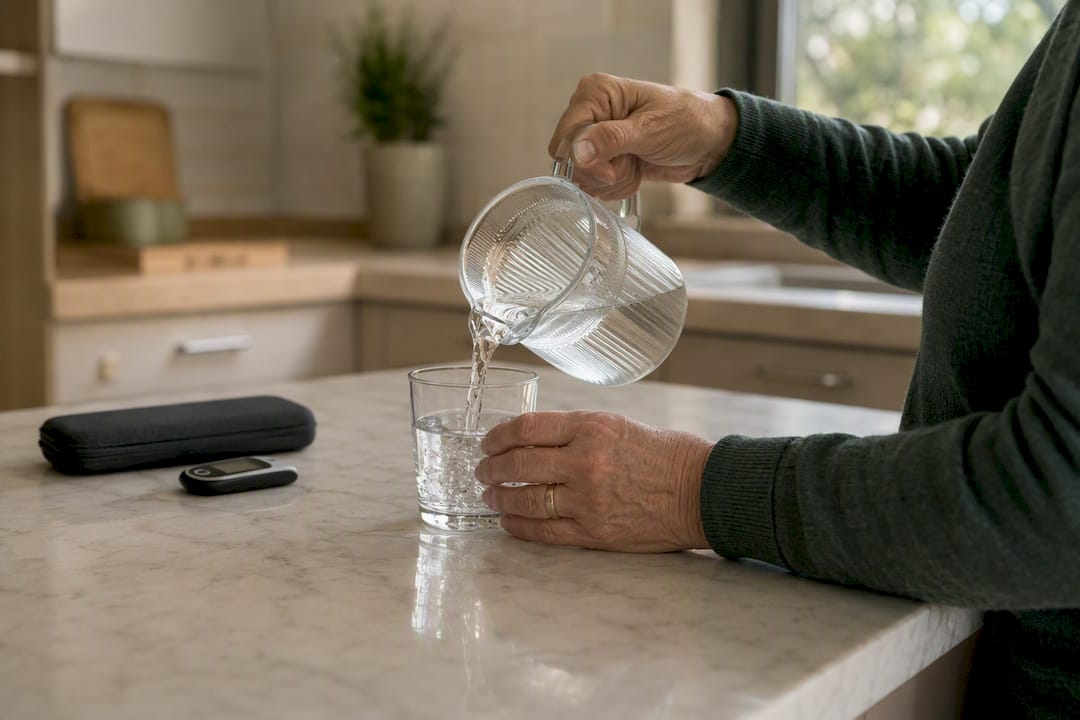
Recent guidance points toward proactive communication as the safest path: call your prescribing clinician or the imaging center in advance if you manage diabetes with medication, so someone can walk you through the day’s plan before you show up.
Practical steps that tend to work:
- Take medications with a small sip of water rather than skipping them outright, unless told otherwise.
- Never adjust your insulin dose on your own. Get specific instructions from the clinician managing your diabetes.
- Bring a fast-acting glucose source (tablets, juice box, or hard candy) to the appointment in case your blood sugar drops while waiting.
- Tell the front desk immediately if you feel shaky, sweaty, or lightheaded before your scan.
Most other medications, like blood pressure pills or thyroid medication, are generally fine to take with a small sip of water during a fasting window. Blood thinners and certain GI medications sometimes need clinic-specific guidance, so it’s worth asking rather than guessing.
Pro Tip: Write down your last insulin dose, timing, and any symptoms you’ve had with fasting before, and hand that note to the front desk when you check in. It saves time and gives staff exactly what they need to help you safely.
Your Day-Before and Day-of Prep Checklist
Preparation starts the night before, not the morning of. Here’s a simple sequence to follow:
- Eat a light, low-fat dinner the evening before, then stop eating solid food at the time your facility specifies (commonly 6 to 12 hours before your appointment).
- Avoid dairy, fruit juice, and alcohol the morning of the exam, since all three can increase gas or irritate digestion.
- Take only small sips of water if you need them to swallow medication, unless your facility has told you to drink a full bladder’s worth of water for a different type of scan.
- Watch for low blood sugar symptoms overnight and in the morning if you take insulin or a sulfonylurea, and keep a glucose source within reach.
- Arrive 15 minutes early, bring a photo ID and insurance card, and wear loose, comfortable clothing that lifts easily over your abdomen.
Following this order matters more than memorizing every rule at once. Get the eating cutoff right, and the rest tends to fall into place.
What Happens During the Scan and Why Prep Matters
Once you’re on the table, a technologist applies a warm gel to your abdomen and moves a handheld transducer across your skin, capturing images in real time. The exam typically takes around 20 to 30 minutes, though it can run longer if views are difficult to obtain.
Skipping your prep instructions has real consequences. Trapped gas or a recent meal can force the sonographer to spend extra time repositioning you or waiting for gas to shift, and in some cases the images still come back nondiagnostic.
- A poorly prepped exam sometimes means rescheduling for another day.
- Persistent gas or body habitus issues occasionally push a clinician toward a follow-up CT or MRI instead.
- Following instructions the first time is almost always faster than repeating the exam.
The Evidence on Prolonged Fasting Is Shifting
Clinical practice hasn’t fully caught up to newer research, and that gap is worth understanding. A 2003 review published in PMC examined existing studies on fasting and image quality and concluded that routine prolonged fasting may not be necessary for every abdominal ultrasound. More than two decades later, a randomized, examiner-blinded trial compared fed and fasting patients directly and found no clinically significant difference in diagnostic image quality across many abdominal targets.
The trial’s design, comparing patients who ate breakfast against those who fasted, addressed a question radiology had mostly assumed rather than tested: does skipping food actually change what the sonographer can see? For most structures examined, the answer was no.
That doesn’t mean fasting is pointless. Cleveland Clinic and other major centers still recommend it for many exams, since it reliably reduces gas and helps standardize gallbladder visualization, even where the measured differences are small. The practical takeaway sits in the middle: research is nudging the field away from blanket, prolonged fasting rules, but plenty of facilities still use them because they simplify scheduling and reduce repeat visits. Follow the instructions your own imaging center gives you.
Questions to Ask Before Your Appointment
Keep it short: “How long should I fast? May I take my medications? Do I need a full bladder for this scan? Who do I call about diabetes medication timing?” Ask for written instructions with a phone number, and call ahead if you’re feeling unwell or have low blood sugar symptoms.
A Note From Garden State Medical Group
Our on-site radiology team answers prep questions directly. Bring your medications and, if you manage diabetes, a glucose source to your visit.
Get Your Abdominal Ultrasound Scheduled With Individualized Prep Support
Garden State Medical Group gives you something a general prep guide can’t: a radiology team in North Bergen and Secaucus who can confirm your exact fasting window before you show up, rather than leaving you to guess between conflicting advice.
If you take insulin, manage another chronic condition, or simply want confirmation of what to eat the night before, our radiology and diagnostic testing team can walk you through prep specific to your scan. Patients managing diabetes can also connect with our diabetes prevention and education program for help planning medication timing around fasting days. For a broader look at getting ready for any screening, our guide on preparing for a health screening covers useful groundwork too.
Pro Tip: Bring a written list of every medication and dose you take, including over-the-counter supplements, so our staff can tell you exactly what’s safe to take with a sip of water on scan day.
Call our office or request an appointment online to confirm your fasting instructions before your scheduled ultrasound.
Sources
- Is fasting a necessary preparation for abdominal ultrasound? — PMC
- The influence of fasting on abdominal ultrasound image quality — Abdominal Radiology (Springer)
- Abdominal Ultrasound — Cleveland Clinic
- Abdominal ultrasound — Mayo Clinic
FAQ
What Should I Avoid Before an Abdominal Ultrasound?
Avoid solid food during your fasting window, plus dairy, fruit juice, and alcohol on the morning of your scan, since they tend to increase intestinal gas.
Should I Poop Before an Abdominal Ultrasound?
A bowel movement isn’t required, but a bowel loaded with stool and gas can obscure views, so avoiding constipating foods the day before can help image quality.
Am I Allowed to Drink Water While Fasting for an Abdominal Ultrasound?
Small sips of water to take medication are usually fine, but larger amounts of water may be restricted unless your scan specifically requires a full bladder.
How Long Do I Have to Fast Before an Abdominal Ultrasound?
Most facilities ask for 6 to 12 hours, with 8 hours being a common middle-ground recommendation for liver, gallbladder, and pancreas imaging.