
Explain Diabetes Care Programs: Your Practical Guide
TL;DR:
- Diabetes care programs support patients at every stage, beyond initial diagnosis, to improve management and outcomes.
- Effective management involves a multidisciplinary team and ongoing engagement through education, personalized plans, and lifestyle modifications.
Getting a diabetes diagnosis changes your daily life in ways most people aren’t prepared for. Diabetes care programs exist specifically to help you navigate those changes with confidence, but fewer than 7% of eligible patients actually participate in structured education within their first year after diagnosis. That gap matters because managing diabetes well requires more than just medication. This guide will explain diabetes care programs in plain terms, covering the main types available, who should be on your care team, and how to get the most out of every program you join.
Table of Contents
- Key takeaways
- Types of diabetes care programs explained
- Who is on your diabetes care team
- How to get the most from your diabetes program
- Common barriers and how to move past them
- My perspective on staying engaged in diabetes care
- How Gardenstatemedicalgroup supports your diabetes care
- FAQ
Key takeaways
| Point | Details |
|---|---|
| Programs go beyond diagnosis | Diabetes care programs support you at every stage, not just when you are first diagnosed. |
| Multiple program types exist | DSMES, the National DPP, and personalized care plans each serve a distinct purpose in your management. |
| Your team is multidisciplinary | Effective care involves primary care, educators, dietitians, pharmacists, and specialists working together. |
| Financial help is available | Medicare and community assistance programs cover many diabetes education services, but are underused. |
| Active participation drives results | Setting personal goals and re-engaging annually produces better long-term health outcomes than passive care. |
Types of diabetes care programs explained
Most people think of diabetes care programs as a one-time class after diagnosis. The reality is far more structured and far more useful than that. There are three core program types you should know about, and they work best when used together.
Diabetes Self-Management Education and Support (DSMES)
DSMES is an evidence-based program designed to teach you the practical skills you need to manage diabetes day to day. Think of it as hands-on training rather than a lecture. You learn how to monitor blood glucose, what different foods do to your numbers, how to handle sick days, and how to spot early warning signs of complications. The “support” part of DSMES means this education continues over time, adapting to wherever you are in your journey.
The National Diabetes Prevention Program (National DPP)
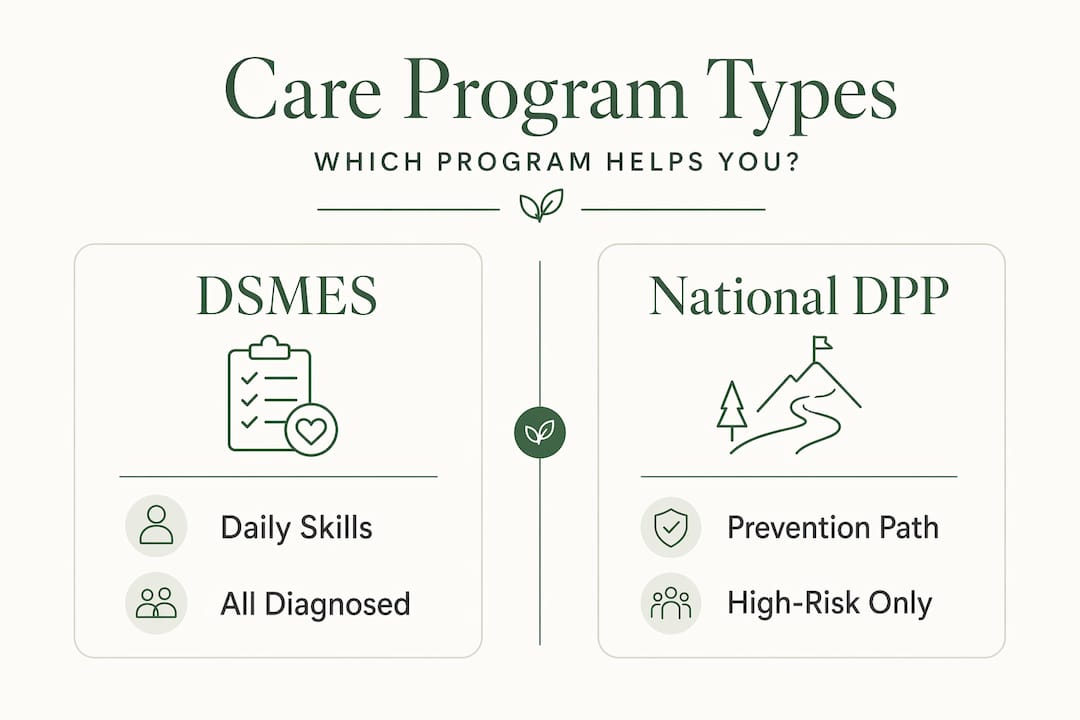
The National DPP targets people with prediabetes or those at high risk for type 2 diabetes. It follows a structured one-year lifestyle program that includes 16 weekly core sessions followed by 6 monthly post-core sessions. A trained lifestyle coach guides each group through achievable changes in eating, physical activity, and stress management. The goal is a 5 to 7 percent reduction in body weight, which research shows can delay or prevent type 2 diabetes. If you have already been diagnosed, this program’s framework still informs many of the habits your care team will encourage.
Personalized diabetes care plans
A personalized care plan is built around what clinicians call the ABCs of diabetes: A1C (a measure of average blood sugar over three months), blood pressure, and cholesterol. Your care team sets targets specific to your health history. For most people with diabetes, for example, a blood pressure goal below 140/90 mm Hg is standard. Your care plan also factors in your medications, any existing complications, and your personal health goals.
Here is a quick comparison of how these three program types differ:
| Program | Primary goal | Who it’s for | Format |
|---|---|---|---|
| DSMES | Daily self-management skills | All people with diabetes | Group or individual sessions |
| National DPP | Prevention or delay of type 2 diabetes | Prediabetes or high risk | Group sessions with lifestyle coach |
| Personalized care plan | Achieving individual clinical targets | All people with diabetes | Ongoing with healthcare team |
These three approaches complement each other. DSMES gives you the skills, the National DPP gives you a structured lifestyle framework, and your personalized care plan keeps your clinical numbers on track.
Who is on your diabetes care team
Understanding diabetes care means understanding that no single provider can manage everything on their own. A team-based approach consistently produces better outcomes because diabetes touches so many systems in the body.
Here is who belongs on your team and what each person does for you:
- Primary care provider (PCP). Your PCP coordinates your overall care, orders routine labs, manages prescriptions, and refers you to specialists. They are often your first point of contact.
- Endocrinologist. A specialist in hormone-related conditions including diabetes. Not everyone needs an endocrinologist, but if your blood sugar is difficult to control, this specialist is worth requesting.
- Certified diabetes care and education specialist. This person teaches you the practical self-management skills that your PCP may not have time to cover in a standard appointment.
- Registered dietitian. A dietitian creates a nutrition plan tailored to your health goals, cultural food preferences, and lifestyle. The goal is never a list of banned foods but a sustainable approach to eating well.
- Pharmacist. Your pharmacist reviews all your medications for interactions, explains how each drug works, and can flag issues your PCP might miss.
- Eye doctor (ophthalmologist or optometrist). Diabetes can damage the blood vessels in your eyes before you notice any symptoms. Annual eye exams are standard practice.
- Dentist. High blood sugar raises your risk of gum disease, which in turn makes blood sugar harder to control. Dental care is a direct part of diabetes management.
The most important detail here: the patient is the most important team member. You are the one who carries the knowledge from one appointment to the next. You are the one who makes daily decisions. Providers guide you, but you lead.
Pro Tip: Don’t wait for a referral to arrive on its own. Research shows that early referrals to educators and dietitians lead to better outcomes. At your next appointment, simply ask: “Can you refer me to a diabetes educator and a registered dietitian?”

How to get the most from your diabetes program
Joining a program is one thing. Staying engaged and applying what you learn is what actually moves your health numbers. Here is how to participate in ways that produce real, lasting results.
The right time to start or re-engage is not just at diagnosis. DSMES programs recommend ongoing engagement annually, during life changes like pregnancy or a new job, and whenever a complication arises or your medication changes. Life changes your diabetes management needs, and your education should change with it.
Setting personal health goals is more effective than following generic targets. Work with your care team to establish what glucose range, blood pressure reading, and cholesterol level makes sense for your specific situation. Write these down and bring them to every appointment.
Lifestyle changes are not about perfection. Regular physical activity of at least 150 minutes per week spread across most days is one of the most powerful tools you have. Nutrition adjustments focus on sustainable healthy eating and portion awareness rather than cutting out everything you enjoy. Stress management matters too, because chronic stress directly raises blood sugar levels.
You can also look into the lifestyle tips shared by Gardenstatemedicalgroup to reinforce what you learn in your programs with practical, day-to-day strategies.
Pro Tip: Medicare Part B covers Diabetes Self-Management Training and medical nutrition therapy. Many patients qualify but never use this benefit. Ask your care coordinator or social worker what you are entitled to before paying out of pocket.
Financial support is more available than most people realize. State programs, pharmaceutical assistance, and community health centers can offset the cost of supplies, medications, and education sessions. These resources are underutilized due to low awareness among patients and providers alike. Ask directly at your next appointment whether you qualify for any assistance.
Common barriers and how to move past them
Many people delay joining diabetes programs or stop attending without understanding what they are missing. The barriers are real, and naming them honestly is the first step toward removing them.
Low awareness is the most common barrier. Most patients do not know that DSMES exists, what it covers, or that it is covered by insurance. If your provider has not mentioned it, that is not a reflection of its value. Ask specifically.
Misconceptions about lifestyle restrictions keep many people from engaging. A common fear is that a diabetes program will hand you a short list of foods you can never eat again. In reality, diabetes programs focus on modification and sustainability, not elimination. You can still enjoy food. You will just have better tools for understanding how food affects your body.
Financial concerns and geographic access create real obstacles for some patients, especially in underserved communities. Telehealth options have expanded access significantly, and many programs now offer remote or hybrid formats. Checking whether your local Federally Qualified Health Center offers diabetes education can open doors you did not know were there.
The timing misconception deserves its own mention. Many patients believe these programs are only for people newly diagnosed. That belief leads to years of missed support. Annual re-engagement with education programs is not a sign that you are struggling. It is a sign that you are taking your health seriously.
My perspective on staying engaged in diabetes care
I have seen patients walk out of an initial diabetes appointment carrying a pamphlet, a new prescription, and very little else. The clinical system is good at diagnosing and mediating. It is less consistent at connecting people to the education they genuinely need to thrive. That disconnect is where health outcomes are often decided.
What I have learned from watching patients manage this condition over time is simple: the ones who do best are the ones who stay curious. They ask questions at every appointment. They re-engage with education when their lives shift. They do not wait for a complication to motivate them. They treat self-management as an ongoing practice rather than a problem they solved once.
The gap between clinical advice and patient reality is wide. A provider might say “eat healthier and exercise more” in a three-minute window. That advice is technically correct and practically useless without context, support, and skills. That is exactly what diabetes care programs exist to fill.
If you take one thing from this article, let it be this: you are allowed to ask for more. Ask for a referral to a diabetes educator. Ask what programs your insurance covers. Ask to be connected to a dietitian. The resources exist. The team exists. You just have to take the first step of reaching out.
— Krunal
How Gardenstatemedicalgroup supports your diabetes care
Gardenstatemedicalgroup provides a multidisciplinary approach to diabetes management across its North Bergen and Secaucus, New Jersey locations. Through its diabetes prevention and education program, patients gain access to structured education, lifestyle coaching, and personalized support that mirrors the evidence-based models described throughout this article.
The team includes primary care providers, specialists, and educators who collaborate to help you reach your individual health targets. Whether you are newly diagnosed or looking to deepen your understanding of your condition, the practice connects you with the right resources and helps you understand your insurance coverage and financial options. You can explore the full range of available health programs at Gardenstatemedicalgroup programs or speak directly with the primary care team to get started with a care plan tailored to your needs.
FAQ
What is a diabetes care program?
A diabetes care program is a structured set of education, clinical support, and lifestyle guidance designed to help people with diabetes manage their condition effectively. Programs like DSMES provide practical self-management skills, while care plans focus on personalized clinical targets including A1C, blood pressure, and cholesterol.
Who should participate in DSMES?
Anyone with type 1, type 2, or gestational diabetes can benefit from DSMES. Participation is recommended at diagnosis, annually, during life changes such as pregnancy, and when complications arise or medications change.
Does insurance cover diabetes education programs?
Medicare Part B covers Diabetes Self-Management Training and medical nutrition therapy for eligible patients. Many private insurance plans offer similar benefits. Contact your insurer or ask your care coordinator what is covered under your specific plan.
How do I build a diabetes care team?
Start with your primary care provider and ask for referrals to a certified diabetes care and education specialist, a registered dietitian, and any relevant specialists. You do not need to wait for complications to develop before requesting these referrals.
Can I join a diabetes program if I was diagnosed years ago?
Yes. Diabetes care programs are designed for ongoing engagement, not just new diagnoses. Re-engaging annually or during significant life changes helps you adapt your management strategies to your current health status and lifestyle.
Recommended
- Diabetes Prevention and Education Program | Programs | Garden State Medical Group
- 8 Steps for Good Diabetes Care! | Garden State Medical Group | Garden State Medical Group
- The 3 Steps to Better Management of Type 1 Diabetes | Garden State Medical Group | Garden State Medical Group
- Consulting an Internist for Diabetes Treatment: A Guide | Garden State Medical Group | Garden State Medical Group