Proven Ways to Improve Patient Outcomes in 2026

TL;DR:
- Healthcare professionals must balance clinical quality, efficiency, staff well-being, and patient expectations simultaneously. Effective patient outcome improvements rely on structured frameworks, appropriate technology, and patient-centered care processes, as evidenced by strategies like population health management and continuous safety monitoring. Implementing data-driven risk stratification, supporting clinicians with AI, and fostering real-time feedback loops are key to advancing healthcare quality in 2026.
Healthcare professionals today face a relentless balancing act. Clinical quality, operational efficiency, staff well-being, and patient expectations all pull in different directions at once. Finding the most effective ways to improve patient outcomes requires more than good intentions. It takes structured frameworks, the right technology, and care processes built around the patient rather than around administrative convenience. This article breaks down the evidence-based strategies that are actually moving the needle in 2026, from population health management to continuous quality improvement systems.
Table of Contents
- Key Takeaways
- 1. Implementing data-driven population health management
- 2. Leveraging AI and digital tools for clinical decision-making
- 3. Enhancing care coordination and patient-centered communication
- 4. Integrating preventive care and chronic care management
- 5. Building a culture of continuous safety surveillance
- 6. Aligning financial and clinical priorities
- My perspective on balancing technology and human-centered care
- How Gardenstatemedicalgroup supports better patient outcomes
- FAQ
Key Takeaways
| Point | Details |
|---|---|
| Risk stratification drives focus | Use EHR, claims, and social determinant data to prioritize patients most likely to deteriorate. |
| AI supports, not replaces, clinicians | AI tools reduce documentation burden and guide decisions while keeping the physician central to care. |
| Coordination reduces admissions | 24/7 care access and post-discharge navigation directly lower preventable hospital readmissions. |
| Prevention belongs in routine workflows | Embedding screenings and chronic care check-ins into regular visits closes care gaps before they widen. |
| Safety culture requires feedback loops | Real-time surveillance and frontline staff participation catch problems before they become clinical events. |
1. Implementing data-driven population health management
Population health management, or PHM, is the clinical term for organizing care around defined patient groups rather than individual visits. It means using data to find who is at risk, then acting before things get worse. Most practices still rely on reactive care. PHM flips that model.
Effective risk stratification draws from multiple sources: electronic health records, claims data, pharmacy records, and social determinants of health. Socioeconomic factors drive roughly 80% of health outcomes that occur outside clinical encounters, which means ignoring social risk screening leaves the largest driver of health completely unaddressed.
Once you stratify your panel, the next step is closing care gaps through multi-channel outreach. Texts, calls, patient portal messages, and in-person reminders each reach different patient segments. PHM frameworks targeting care gap closure aim for 60 to 75% closure rates and a 3 to 8% HEDIS lift. That kind of movement does not happen by accident.
Documentation and coding accuracy also matter here. Last-mile documentation accuracy is what translates better clinical performance into sustainable program revenue. If your coding does not reflect the complexity of care delivered, you lose both the financial signal and the clinical record.
Pro Tip: Investing in population health technology pays off significantly at scale. If your panel is under a few hundred patients, manual workflows can work. Above that, you need automated risk scoring and outreach tools to maintain consistency.
2. Leveraging AI and digital tools for clinical decision-making
Artificial intelligence in healthcare is most useful when it handles the work that pulls clinicians away from patients. That means documentation, risk flagging, and triage support. Not replacing the physician’s judgment. The physician stays central. The AI removes friction.
One of the clearest examples comes from virtual oncology. An AI-enabled virtual oncology model resolved 95% of patient needs virtually, reducing avoidable emergency visits through continuous 24/7 symptom tracking. That is not a minor efficiency gain. It is a structural shift in how patients access care between appointments.
The American Medical Association has been direct about this: digital transformation must complement, not replace, the patient-doctor relationship. Tools like ambient listening software and AI-assisted charting address documentation burden, which remains the number one complaint among physicians. When documentation feels lighter, physicians have more mental bandwidth for the clinical thinking that actually improves care.
Predictive analytics adds another layer. By identifying patients at high risk of deterioration, readmission, or non-adherence, care teams can intervene early. The key is making those predictions accessible at the point of care, not buried in a separate analytics dashboard no one checks.
“The right technology doesn’t make the physician less important. It makes the physician more effective.”
You can also explore how digital tools in practice are being used by clinical teams globally to strengthen provider-patient communication alongside technology.
3. Enhancing care coordination and patient-centered communication
Care coordination is where many of the best clinical intentions fall apart in execution. A patient leaves the hospital with a follow-up plan, and then no one confirms the appointment, reconciles the medications, or calls to check on them 48 hours later. That gap is where readmissions happen.
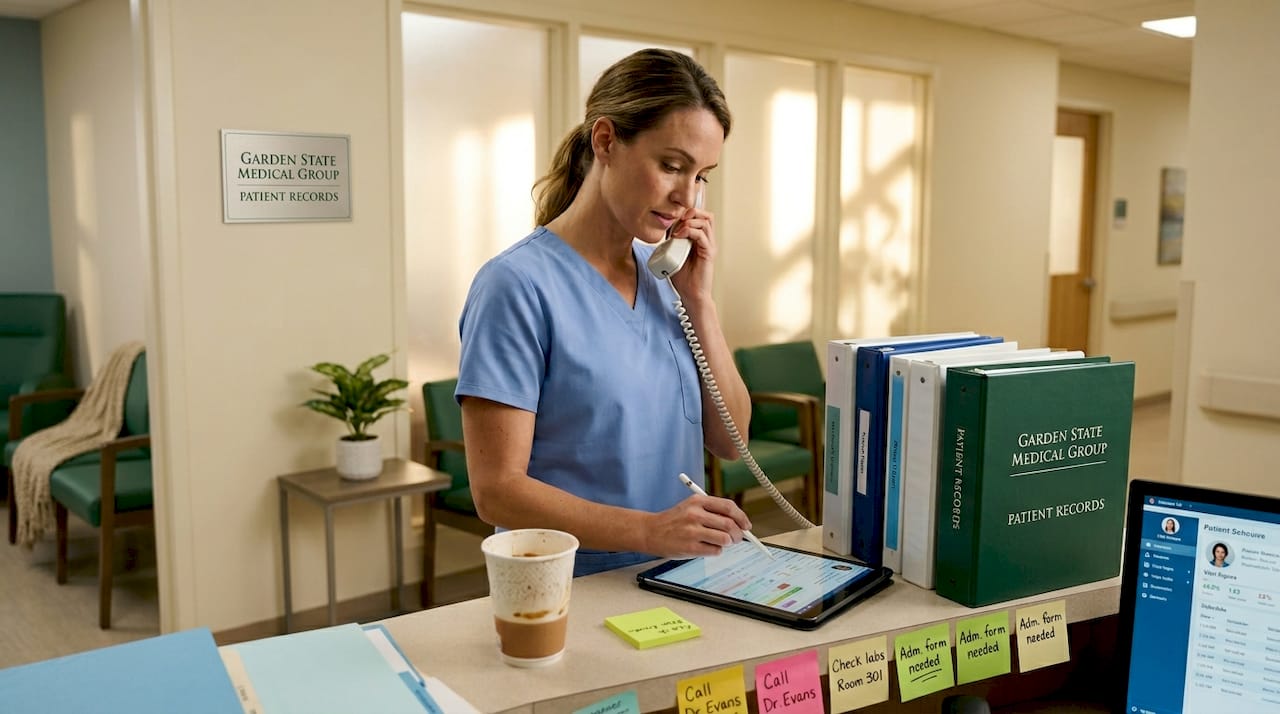
Care coordination programs with 24/7 access improve patient safety, lower hospital admissions, and reduce the administrative burden on frontline nursing staff. Virtual nursing models in particular allow experienced nurses to support multiple care settings simultaneously, triaging concerns without requiring in-person escalation every time.
Personalized communication makes a measurable difference. When you account for a patient’s language preference, health literacy level, and communication channel of choice, adherence improves. Structured communication and feedback loops between health plans, providers, and patients consistently enhance both satisfaction scores and care delivery quality.
Post-discharge navigation deserves its own workflow. Someone on your team should own the transition. That means confirming specialist referrals, checking that prescriptions were filled, and identifying social barriers like transportation or housing instability before they derail recovery. For a deeper look at why this matters, the evidence behind coordinated care reducing hospitalizations is well-documented.
Pro Tip: Do not rely on patients to self-navigate post-discharge care. Assign a specific team member to own each care transition, and define what “closed loop” means before the patient leaves the building.
4. Integrating preventive care and chronic care management
Preventive care and chronic disease management are often treated as separate programs. They should not be. When you integrate them into a single workflow, the clinical impact multiplies.
Here is how that integration works in practice:
- Embed screening into every routine visit, not just annual wellness exams. A patient coming in for a blood pressure check is also an opportunity to screen for depression, prediabetes, or tobacco use.
- Use chronic care management protocols to trigger proactive outreach between visits. Monthly check-ins for high-risk patients with diabetes or COPD catch deterioration before it becomes an emergency.
- Assign clear staff roles. Medical assistants can conduct screenings and brief behavioral health interventions. Care managers can handle the outreach calls and care plan updates.
- Track which gaps closed and which did not. Use that data to refine your protocols quarterly, not annually.
Embedding preventive care into routine interactions increases early risk identification at scale. It also reinforces behavior change more effectively than episodic counseling because the message is consistent and repeated across touchpoints.
Chronic care management programs, when structured around regular touchpoints and care plan reviews, reduce avoidable admissions significantly. The key is moving from reactive management of flares to proactive monitoring of stability. You can review practical guidance on managing chronic conditions in primary care settings to see how these workflows translate clinically.
5. Building a culture of continuous safety surveillance
Quality improvement is not a quarterly report. It is a real-time practice. Organizations that treat it as a periodic event miss the signals that matter most.
The SENTRY model, published in NEJM Catalyst, demonstrates what systematic safety surveillance can look like at the unit level. SENTRY’s real-time risk detection reduced aspiration-related events to zero and improved admission pathways by embedding continuous monitoring into clinical workflows rather than layering it on top as an audit function.
What makes that model instructive is not the technology. It is the structure. Diverse safety signals are collected, standardized review processes are applied, and frontline staff participate directly in feedback loops. That last element is where most quality programs fail. Frontline nurses and technicians see problems that leaders do not, and without a formal channel, those observations never reach the people who can act on them.
The table below outlines the core components of an effective continuous quality improvement system.
| Component | Function | Clinical Benefit |
|---|---|---|
| Real-time safety signals | Flags clinical deviations as they occur | Prevents escalation before harm occurs |
| Standardized review process | Applies consistent evaluation criteria | Reduces variability in safety response |
| Frontline staff participation | Channels direct care observations upward | Surfaces issues leadership cannot see |
| Adaptive workflow protocols | Adjusts procedures based on findings | Sustains improvement over time |
Cultural adaptation of EHR content is also part of this. EHR design misaligned with local workflows risks creating documentation that is paternalistic or disconnected from actual patient-centered values, which degrades care quality even when the technology itself is sound. Systems need to be configured to reflect the patient population they serve.
6. Aligning financial and clinical priorities
One strategic reality that does not get enough attention: balancing financial strength with clinical outcomes requires healthcare leaders to build operating systems that protect the clinical mission while demonstrating measurable outcomes as proof of that mission’s value.
This is more than a management principle. It shapes how you invest in staff, technology, and care programs. A quality improvement initiative that cannot show return on investment, whether in readmissions avoided, HEDIS performance, or patient retention, will lose resources at the next budget cycle. Tracking outcomes rigorously is not just good medicine. It is how you protect the programs that deliver good medicine.
My perspective on balancing technology and human-centered care
I’ve spent enough time working with clinical teams to know that technology adoption in healthcare rarely fails because the tools are bad. It fails because the implementation did not account for how care actually gets delivered.
The documentation burden point resonates deeply with me. Physicians cite documentation as their top source of burnout, and I’ve seen practices invest in AI scribing tools only to find that clinicians distrust the output and end up reviewing every line anyway, doubling the burden instead of halving it. The tool is only as good as the trust built around it.
What I’ve found actually works is starting small. Pilot one workflow, measure the time saved and the error rate, share that data transparently with your clinical staff, and let the results build the case for broader adoption. Clinicians respond to evidence, not sales pitches.
The deeper principle here is that EHR and AI systems must align with the real values and culture of your care setting. Technology that feels imposed rather than chosen creates resistance that no amount of training can fully overcome. The human-centered approach is not a soft preference. It is what makes every other strategy in this list actually work in practice.
— Krunal
How Gardenstatemedicalgroup supports better patient outcomes
At Gardenstatemedicalgroup, the strategies covered in this article are not theoretical. They are built into how care is delivered across North Bergen and Secaucus, New Jersey.
From primary care services focused on prevention and chronic disease management, to a dedicated chronic care management program designed to reduce emergency visits and improve disease control, the practice offers coordinated, multidisciplinary care designed around outcomes. The full range of patient programs includes disease-specific support for diabetes, bone health, lung health, and weight management. If you are looking to put these strategies into practice for your patients, Gardenstatemedicalgroup is structured to support that work at every level of care.
FAQ
What are the most effective ways to improve patient outcomes?
The most effective strategies combine risk stratification, care coordination, preventive care integration, and continuous quality improvement. Using data to identify high-risk patients early and closing care gaps through proactive outreach produces the most consistent results.
How does AI improve patient outcomes in clinical settings?
AI reduces documentation burden, supports clinical decision-making with predictive risk scores, and enables continuous virtual monitoring. One AI-enabled virtual oncology model resolved 95% of patient needs virtually, significantly reducing avoidable emergency visits.
Why does care coordination reduce hospital readmissions?
Care coordination closes the gaps between discharge and follow-up care by confirming appointments, reconciling medications, and addressing social barriers. Programs offering 24/7 patient access consistently show lower admission rates and improved safety outcomes.
What role does preventive care play in chronic disease management?
Integrating preventive screenings into routine chronic care visits allows teams to catch new risks early while managing existing conditions. This approach reinforces behavior change consistently and reduces avoidable admissions over time.
How can healthcare administrators build a culture of continuous quality improvement?
Administrators should implement real-time safety surveillance systems, establish standardized review processes, and create formal channels for frontline staff to report observations. Embedding feedback loops into clinical workflows, rather than treating quality as a separate audit function, produces sustained improvement.